Understanding the latest jihadist claims in Faso’s volatile regions
In a new chapter of Burkina Faso’s deepening security crisis, the Group for the Support of Islam and Muslims (JNIM)—Al-Qaeda’s Sahel affiliate—has claimed responsibility for two recent attacks targeting military and militia forces. The first involved the destruction of a government armored vehicle near Fada N’Gourma, while the second resulted in the reported deaths of three auxiliary fighters in Bam Province. Although these claims remain unverified by independent sources, they underscore the relentless pressure faced by security forces across multiple fronts.
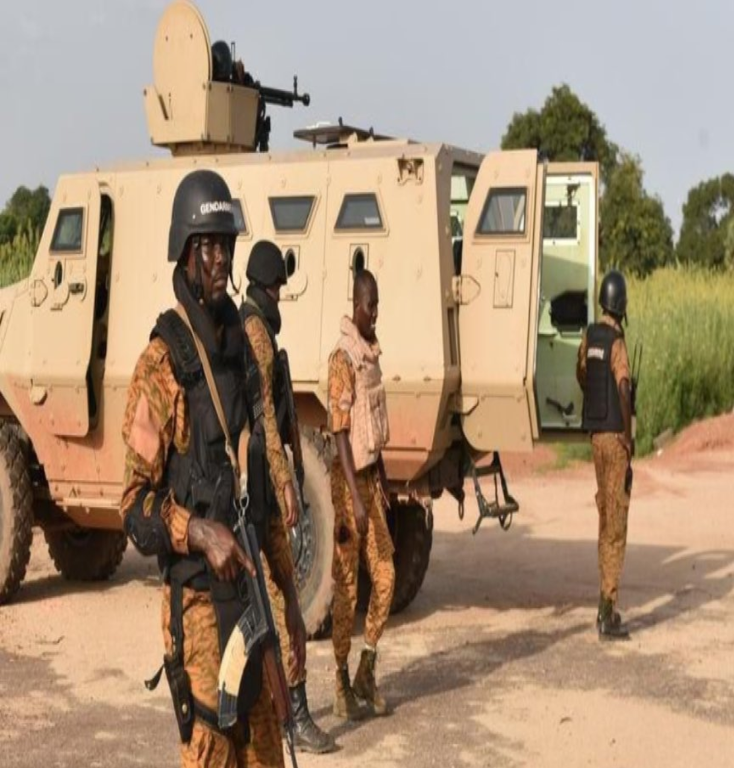
The assault on the military convoy near Fada N’Gourma, a critical transit hub in eastern Faso, highlights the strategic vulnerabilities exploited by armed groups. The use of improvised explosive devices (IEDs) points to a calculated campaign aimed at undermining mobility, weakening morale, and forcing costly tactical adjustments by the military. But this is not just a matter of direct combat—it’s a broader contest for control over territory where even fortified vehicles can become liabilities.
Breaking down the JNIM’s tactics: from ambushes to propaganda
The JNIM’s operational strategy includes more than traditional battlefield confrontation. By targeting supply routes and isolated posts, insurgents aim to erode the state’s presence in rural and peripheral zones. The claim of seizing automatic weapons in Bam Province further reinforces their narrative: a growing threat that extends beyond casualty counts and into systemic destabilization.
- Tactical Adaptation: The use of IEDs against armored vehicles demonstrates an evolution in insurgent tactics, forcing security forces to prioritize route safety and convoy security over offensive operations.
- Propaganda Value: Publicly announced attacks serve both operational and psychological purposes—undermining public trust in the military while boosting the group’s own perceived strength.
- Civilian Impact: Though focused on military hardware and local militias, the ripple effects are felt acutely by communities, whose access to markets, schools, and healthcare is increasingly restricted.
While the group’s claims have not been independently verified, history shows that such assertions often reflect real tactical gains—even if exaggerated for effect. What remains unchallenged is the growing erosion of safety across Faso’s eastern and central regions, where civilians continue to bear the brunt of the conflict’s escalation.
The human cost: how daily life is being reshaped by insecurity
Beyond the military dimensions of these attacks, the humanitarian toll continues to mount. Years of jihadist violence have displaced hundreds of thousands, disrupted agricultural cycles, and forced entire communities into survival mode. In provinces like Bam and the East, entire villages now lie abandoned, their markets shuttered and schools closed due to persistent threats.
The loss of auxiliary fighters—who serve as local defenders with limited training and equipment—further weakens the state’s ability to respond. Each reported death or weapon seizure isn’t just a tactical setback; it chips away at the fragile social fabric that holds communities together in the absence of state protection.
Families face impossible choices: flee to overcrowded displacement camps or remain under threat. The psychological strain is compounded by the collapse of basic services, turning once-thriving regions into humanitarian black holes.
What’s next for Faso’s counter-insurgency efforts?
The JNIM’s latest claims signal more than isolated incidents—they reflect a long-term strategy aimed at wearing down Faso’s defenses. While military offensives continue, the insurgency thrives on weak intelligence networks, porous borders, and communities caught between loyalty and coercion. For the government, the dual challenge remains clear: protect civilians without alienating local populations, and restore essential services without leaving ground uncontested.
Until these root issues are addressed, the cycle of attack, response, and displacement will sustain itself. The real question isn’t whether the military can hold the line—it’s whether Faso can reclaim its narrative of security before another generation is lost to fear and violence.
In the absence of official confirmation, these claims serve as a reminder: the insurgency’s reach extends far beyond headlines. It’s a shadow war being waged in the fields, villages, and roads of Faso—one where every unverified report carries the weight of lives hanging in the balance.