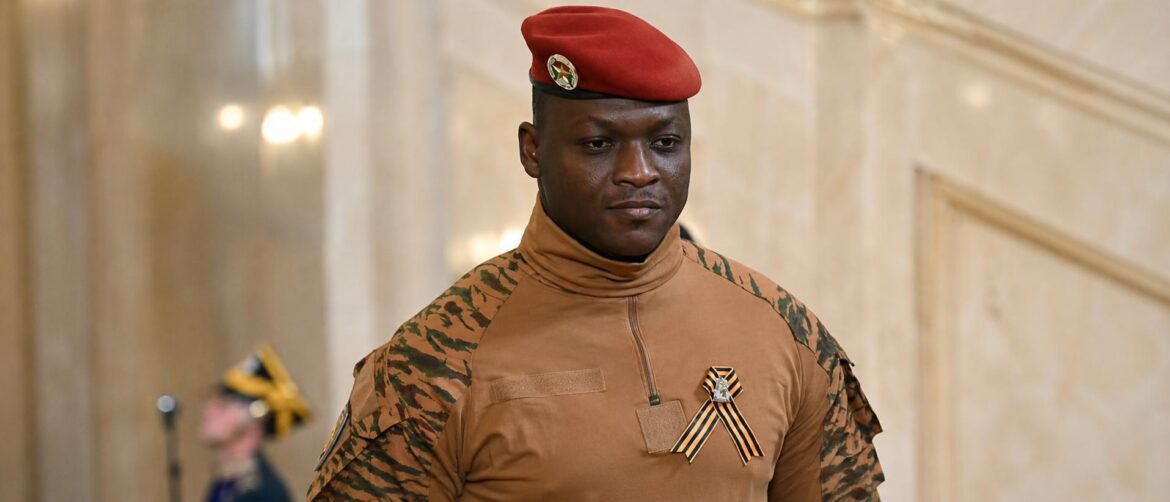
The restoration of capital punishment in Burkina Faso marks a stark shift in the military regime’s approach to governance under Captain Ibrahim Traoré. With the transitional legislature’s unanimous vote to reinstate the death penalty—abolished in 2018—Ouagadougou’s government is sending a chilling message to its enemies. While framed as a move toward national strength, this legal overhaul appears designed to permanently sideline rivals, particularly former transitional leader Lieutenant-Colonel Paul-Henri Sandaogo Damiba.
The legal chessboard: how Damiba became the regime’s prime target
Paul-Henri Sandaogo Damiba, currently facing charges of high treason and conspiracy against state security, sits at the center of this high-stakes gambit. Observers argue the timing of the death penalty’s restoration is no coincidence: by reviving capital punishment, the regime is preparing the legal framework to demand his execution during an upcoming trial. The elimination of clemency options under the guise of rejecting “sentimentalism” sends a brutal warning to dissenters, positioning Damiba as a cautionary tale for would-be challengers.
From coup architect to coup victim: the irony of Burkina Faso’s shifting power dynamics
The irony runs deep. Damiba, who once wielded military force to seize power from Roch Marc Christian Kaboré in January 2022, now faces the same weaponized justice his regime once employed. Traoré, who ousted Damiba in September 2022, is now repurposing the same tactics—shifting from patriotic liberation to treasonous conspiracy. The narrative flip underscores a dangerous precedent: might makes right, and today’s liberators can become tomorrow’s condemned.
A cycle of vengeance that threatens national stability
The return of the death penalty under Traoré’s leadership risks entrenching a cycle of political revenge rather than securing stability. By weaponizing the justice system against former allies, the regime risks perpetuating instability—proving that Burkina Faso’s military transitions are trapped in a loop where victors today may face the gallows tomorrow.
As the transitional government doubles down on its hardline stance, the question remains: is this a calculated purge, or has Burkina Faso’s leadership stumbled into a trap of its own making?