The hidden forces behind Niger’s deadly roadside ambush
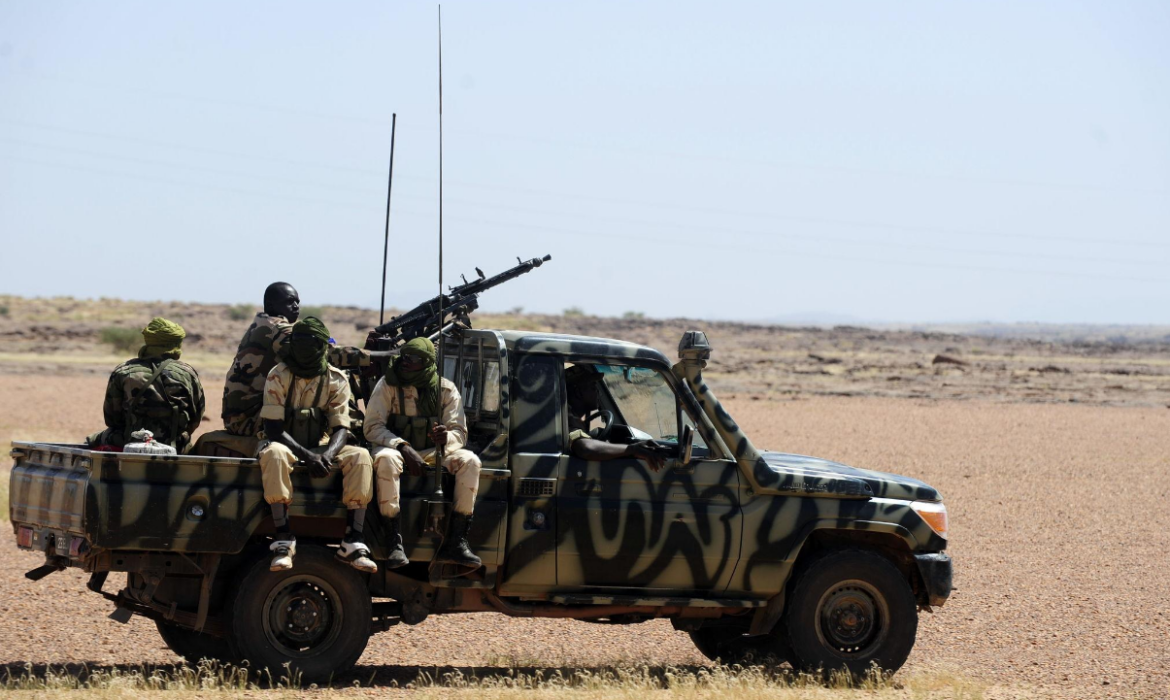
The October 20 attack near Agadez wasn’t just another casualty in the Sahel’s widening shadow war — it was a brutal reminder of how porous borderlands become killing zones when basic security measures fail. Eyewitness accounts, still unverified by official channels, suggest three armed vehicles intercepted civilian buses on a route that links Niger’s second-largest city to Arlit’s uranium corridor, leaving at least eleven people dead, including a member of the national security forces. While the exact sequence remains under investigation, a single detail already raises alarms: security personnel were present inside one of the targeted buses, yet the ambush unfolded with brutal efficiency.
This pattern of violence isn’t random. It follows a disturbing template: remote highway corridors, once lifelines for nomadic traders and migrant laborers, now serve as hunting grounds for armed groups exploiting gaps in surveillance, communication, and rapid response. The attack didn’t occur in a security vacuum — it happened where the state’s reach thins, where roads stretch endlessly under the Sahara sun, and where public trust in travel safety has eroded to a breaking point.
Why the Agadez-Arlit highway is a flashpoint for regional instability
Stretching across 250 kilometers of fragile desert terrain, the Agadez-Arlit axis isn’t just a road — it’s an economic lifeline. For decades, it has channeled uranium, livestock, and trans-Saharan trade between southern markets and northern Niger’s mining hubs. But today, it’s also a pressure point where geopolitical tensions, illicit trafficking, and militant activity converge.
When a transport bus becomes a target, the ripple effects extend far beyond the immediate victims. Local merchants report rising freight costs, as carriers reroute or hire armed escorts. Families cancel vital journeys to visit relatives or access medical care. Miners face delayed shipments, threatening regional output. The psychological toll is equally severe: a region accustomed to resilience now questions the safety of its own roads.
The strategic value of this corridor makes it attractive to both logistical planners and armed groups. While no group has claimed responsibility, the modus operandi suggests non-state actors familiar with the terrain — possibly linked to smuggling networks or insurgent factions exploiting porous borders. The absence of immediate claims doesn’t dilute the threat; it underscores the complexity of identifying the enemy in a landscape where lines between criminality, militancy, and survival blur.
The operational blind spots that allow such attacks
Several structural factors collude to create the conditions for tragedies like this one:
- Vast and inhospitable terrain: The Sahara’s remoteness limits real-time surveillance and rapid deployment of forces.
- Limited communication infrastructure: Cellular coverage drops sharply north of Agadez, delaying emergency alerts and coordination.
- Under-resourced security presence: Patrols are infrequent and often rely on outdated equipment, making interdiction nearly impossible during ambush windows.
- Ad-hoc security measures: The deployment of armed personnel on civilian buses — a temporary fix — may expose passengers to greater risk if targeted.
These conditions don’t justify failure — they explain it. In a nation stretching nearly one million square kilometers, securing every kilometer is impossible without systemic reform.
Human cost beyond the headlines: families shattered, futures deferred
Behind every provisional death toll are human stories abruptly truncated. A teacher returning from a family visit in Arlit, a young miner heading to a uranium site for his first job, a mother carrying medicine for a sick child — all became part of a tragic ledger. The provisional count speaks of eleven lives lost, but the emotional toll ripples through countless households in cities and villages across the Sahel.
For survivors, the ordeal isn’t over. Medical facilities in Agadez and Arlit are strained, and evacuation to southern hospitals often requires risky overland transfers. Psychosocial support remains scarce in a region where mental health services are nearly nonexistent. Families of the deceased face not only grief, but the burden of gathering evidence, identifying bodies, and navigating bureaucratic indifference — a secondary trauma that compounds the loss.
Meanwhile, transport operators face impossible choices: raise fares to cover security costs, cancel routes entirely, or gamble on armed escort services that may draw more attention than protection. This economic pressure risks shrinking mobility across northern Niger, isolating communities and stifling development.
The moment for truth: transparency must precede reassurance
As authorities scramble to verify details, public trust hangs in the balance. Delayed or contradictory statements only deepen suspicion. Credibility hinges on three immediate actions:
- Official identification of victims: Names, ages, and origins must be released to prevent misinformation and enable grieving families to find closure.
- Transparent chronology: A timeline of the attack, from initial contact to evacuation, must be published to clarify whether security personnel were overwhelmed or inadequately equipped.
- Clear communication pathways: Regular briefings should update the public on investigative progress, including forensic analysis and suspect profiling.
Without this foundation, rumors spread faster than facts. And in a region where fear already dictates decisions, uncertainty is the enemy of stability.
The road ahead: can Niger secure its lifelines without militarizing its people?
This attack wasn’t an exception — it was a symptom. To prevent the next ambush, a multi-tiered strategy is needed:
- Infrastructure investment: Installing solar-powered communication towers, emergency call boxes, and solar-powered lighting along high-risk segments.
- Community-based intelligence: Engaging local leaders, drivers’ associations, and tribal elders to share real-time alerts and suspicious movements.
- Dedicated rapid-response units: Deploying specialized desert-trained units with medical and extraction capabilities, not just patrol personnel.
- Victim-centered protocols: Mandating trauma-informed care for survivors and families, with clear protocols for identification and repatriation of remains.
The goal isn’t just to make the road safer — it’s to restore a sense of safety. That demands more than patrols; it requires trust. And trust, once broken, takes years to rebuild.
For the travelers of the Agadez-Arlit highway — and the families waiting for them — the question now echoes louder than ever: Will the next vehicle be the target?
Until the causes of this ambush are uncovered and addressed, the road to Arlit remains a gamble with life itself.
Key safety recommendations for road travelers in northern Niger
While waiting for systemic change, individuals can take cautious steps to reduce risk:
- Avoid traveling at night or during dawn hours when visibility and response times are lowest.
- Use registered transport cooperatives with verifiable safety protocols.
- Maintain a charged satellite phone with preloaded emergency numbers.
- Share real-time location with trusted contacts via encrypted messaging apps when possible.
- Carry minimal valuables and avoid wearing flashy jewelry or attire.