The long-anticipated showdown between Senegal’s President Bassirou Diomaye Faye and his former Prime Minister Ousmane Sonko has reached its breaking point. After months of simmering tensions, Sonko’s removal from office has forced him to retreat to the National Assembly, where he now wields significant influence—but at a steep cost.
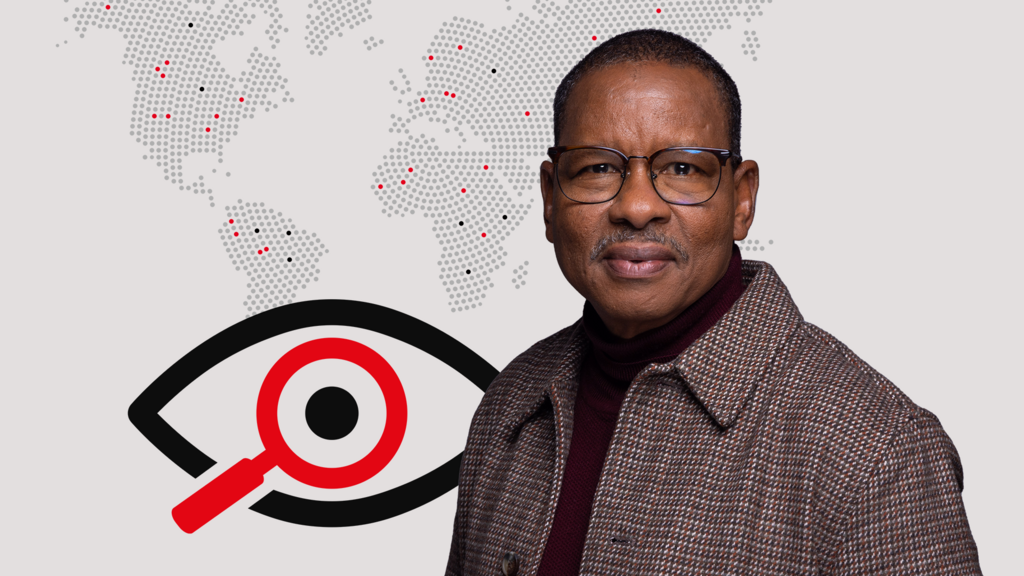
Sonko’s strategic move to secure his future by leveraging the National Assembly has backfired. Once viewed as a power broker capable of shaping Senegal’s political landscape beyond 2029, his position has become increasingly precarious. The Supreme Court’s July 2025 ruling, which upheld his ineligibility for the 2029 election, stripped him of his most potent political leverage. With Diomaye Faye’s administration consolidating control, Sonko’s maneuvering has left him isolated, prompting a desperate shift toward populist tactics that risk crossing red lines.
a power struggle rooted in Senegal’s political realities
Senegal’s hyper-presidential system leaves little room for cohabitation. While Sonko once operated as a kingmaker, Diomaye Faye’s ascent to the presidency has redefined the balance of power. The president, backed by institutions and international financial partners, now holds the upper hand. Meanwhile, Sonko’s party, the Pastef, remains a formidable force—but one that is increasingly hemmed in by legal and political constraints.
Sonko’s decision to occupy the National Assembly was a gamble, one that has temporarily solidified his base but at the expense of broader legitimacy. The opposition, though weak, has seized on the perceived illegality of his actions, leaving him vulnerable to constitutional challenges. Yet, for now, Diomaye Faye has chosen restraint, avoiding direct confrontation while quietly strengthening his position for the inevitable clash ahead.
what’s next for Senegal’s political chessboard?
Sonko’s newfound sanctuary in the National Assembly provides him with a platform, but it is one built on shaky ground. His party’s disciplined base remains loyal, yet the threat of dissolution looms large. Should the Constitutional Council rule against his parliamentary reinstatement, his influence could evaporate overnight.
Diomaye Faye, meanwhile, is playing a calculated game. Freed from Sonko’s shadow, he is focused on economic reforms and international engagements. His strategy appears to be one of patience—allowing Sonko’s frustrations to mount while preparing for the 2029 presidential race. With a fresh prime minister at his side, Faye is methodically reshaping Senegal’s political and economic trajectory, ensuring that when the inevitable confrontation arrives, he will be ready.
The stage is set for a high-stakes battle, one where the stakes extend far beyond personal ambitions—shaping the future of Senegal’s democracy.