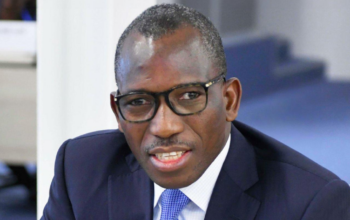
The issue of Senegal’s public debt has evolved beyond mere accounting calculations. Today, it sits at the heart of a significant political tension, where the long-term perspective of financial markets clashes with the short-term horizons of electoral mandates. This dilemma is at the core of Ndèye Nangho Dioum’s analysis, an inspector of taxes and domains, who frames the Senegalese debate within a broader, universal challenge: the unpopular decisions leaders must make to safeguard public finances.
The discussion begins with a quote from Bill Clinton, highlighting how every head of state eventually faces tough trade-offs, hoping that political winds will eventually turn in their favor. This reference is far from accidental—it underscores the paradox facing Senegalese authorities, who must balance fiscal austerity with the need to maintain social stability in a country where public expectations remain sky-high.
Political timelines that shape fiscal action
The concept of political timelines, inspired by public choice theorist James M. Buchanan’s work, reveals a fundamental flaw in representative democracies. Leaders often favor policies with immediate benefits, deferring costs beyond their terms in office. This structural tendency contributes to rising debt levels, even in advanced economies.
In Senegal, this bias has taken on a unique dimension following a 2024 public finance audit, which exposed a debt level higher than previously reported. The revelation of an upwardly revised debt stock has strained relations with multilateral partners, particularly the International Monetary Fund (IMF), and negatively impacted the country’s sovereign credit rating. Restoring fiscal transparency has become essential—but at a politically high cost.
The impossible balance between austerity and legitimacy
Trimming deficits requires unpopular choices: slashing energy subsidies, streamlining public sector payrolls, broadening tax bases, or adjusting public tariffs. Each measure creates immediate losers, while the benefits—debt sustainability and budgetary flexibility—only materialize over time. The author emphasizes how this time asymmetry is the biggest hurdle to implementing structural reforms.
Senegal’s situation also reflects a challenge common to economies within the Franc zone. The stability of the CFA franc, pegged to the euro, strips authorities of monetary tools to absorb economic shocks. Adjustments must therefore rely entirely on fiscal policy, amplifying the social impact of every decision. Simply put, each budgetary cut directly affects household budgets, with no monetary cushion to soften the blow.
Rebuilding sovereign credibility
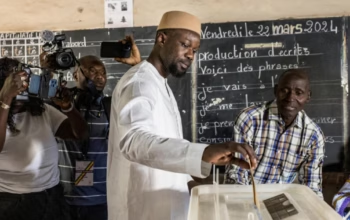
Since assuming office in April 2024, President Bassirou Diomaye Faye and Prime Minister Ousmane Sonko have pledged to overhaul the economy, framing their approach as a break from the past. Restoring credibility with international markets and donors ranks high on their agenda. Yet, recent spikes in Senegal’s eurobond spreads suggest lingering skepticism, as risk premiums remain elevated.
Boosting domestic revenue mobilization is another critical lever. The tax administration, where the author works, holds a pivotal role in securing income—through reducing exemptions and cracking down on tax evasion. While largely technical, this effort demands unwavering political backing, given the entrenched interests at stake.
The implicit takeaway is clear: political maturity now hinges on the ability to accept short-term sacrifices for long-term stability. Amidst a West African region where several nations are renegotiating debt or teetering on liquidity crises, Senegal’s choices resonate far beyond its borders. Fiscal discipline, when communicated with transparency, can once again become a political asset.