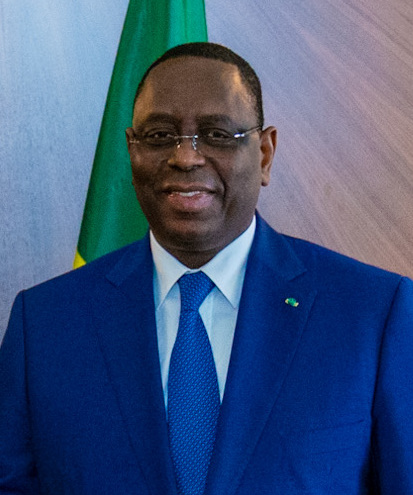
Three days after receiving him at the Republic Palace, Bassirou Diomaye Faye made his decision clear: Senegal will provide its « full support » to Macky Sall’s candidacy for United Nations Secretary-General. While this endorsement is significant, it may not be decisive in the grand scheme of global diplomacy.
Faye’s move reflects a departure from past tensions, signaling a pragmatic shift in Senegal’s political landscape. The decision underscores a broader narrative—one where national interests supersede personal grievances. For the international community, Senegal’s endorsement of its former president seems almost inevitable, given the symbolic and prestige-driven benefits the role could bring to the country.
The road to reconciliation
The two leaders share a complex history. Bassirou Diomaye Faye rose to power under extraordinary circumstances. After being imprisoned at Cap Manuel Prison in April 2023 following the crackdown on Ousmane Sonko’s movement, he was released just days before the election—a presidential pardon granted in the heat of a pre-electoral crisis. The resilience of Ousmane Sonko, his political ally, paved the way for Faye’s victory in the first round of voting. This unprecedented journey—from incarceration to the presidency in mere weeks—has shaped the new administration’s identity, founded on promises of systemic change and opposition to Macky Sall’s leadership.
Yet, in a striking display of political maturity, Faye has chosen to prioritize Senegal’s strategic interests over personal animosity. The presidency has framed this decision as a step toward « dialogue beyond political alternations, » emphasizing the collective pursuit of a cause deemed vital for Africa and multilateralism. Senegal’s diplomatic machinery is now mobilized to champion Sall’s candidacy on the global stage.
Internal politics paves the way
The president’s decision was not made in isolation. A major political rupture earlier this year played a pivotal role. In May, Faye dismissed his former mentor and Prime Minister, Ousmane Sonko, a move that dismantled a long-standing alliance. Sonko’s personal antagonism toward Macky Sall—stemming from his imprisonment and exclusion from the 2024 presidential race—had previously constrained Faye’s diplomatic flexibility. With Sonko sidelined, Faye gained the latitude to reframe his approach to Sall’s ambitions, shifting from a partisan stance to one rooted in national interest.
This strategic recalibration also serves Faye’s long-term political ambitions. Reports indicate he plans to launch his own political party, aiming to consolidate support by tapping into networks associated with both Macky Sall and former president Abdoulaye Wade. The warmth of Sall’s reception during his recent visit to Dakar highlighted his enduring influence, a factor Faye appears keen to leverage.
Diplomatic leverage and global expectations
For Macky Sall, Senegal’s backing is transformative. His candidacy, submitted in March by Burundi on behalf of the African Union’s rotating presidency, suffered from a critical flaw: the absence of support from his home country. In the high-stakes arena of UN leadership elections, such neutrality—or worse, silence—is often interpreted as a rejection, undermining a candidate’s credibility before negotiations even begin.
With Dakar’s official endorsement and the full mobilization of Senegal’s diplomatic corps, Sall’s campaign gains crucial legitimacy. This move neutralizes a major vulnerability, depriving rivals of a key argument against his bid. Yet, challenges remain. The unwritten rule of regional rotation favors Latin America this time, a region that has not held the UN Secretary-General position since 1991. Among the five declared candidates, four hail from Latin America: Argentina’s Rafael Grossi, Chile’s Michelle Bachelet (whose government withdrew its backing in March), Costa Rica’s Rebeca Grynspan, and Ecuador’s María Fernanda Espinosa.
Sall stands out as the sole non-Latin American candidate and the only former head of state in the race. While Africa’s underrepresentation in this role since Boutros Bouthos-Ghali’s tenure in the 1990s is undeniable, regional custom may prove difficult to overcome. Senegal’s support strengthens Sall’s position but does not guarantee victory. The ultimate decision rests with the UN Security Council, where the five permanent members hold veto power. Sall’s diplomatic ties—close to France yet maintaining balanced relations with Russia—may work in his favor, though no guarantees exist.
The verdict on his candidacy will arrive this autumn, marking the next chapter in a high-stakes global contest.