
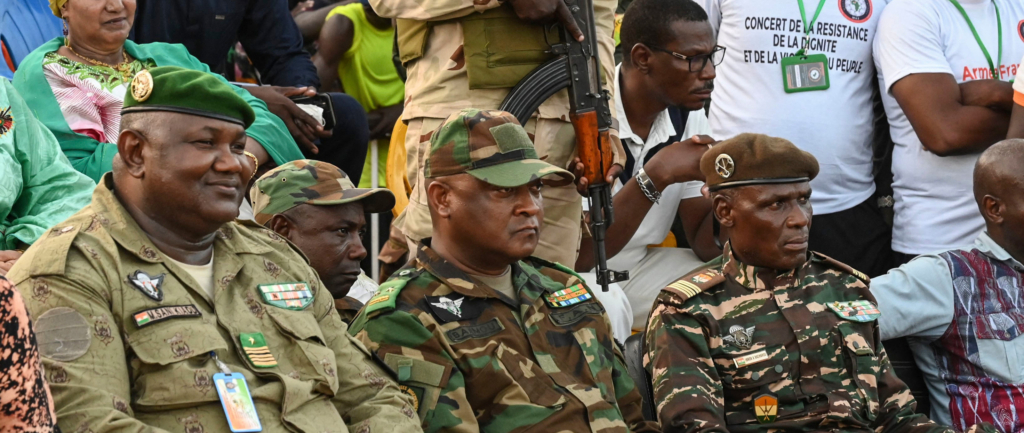
Media freedom in Niger is currently at a crossroads as the transitional government intensifies its crackdown on reporters covering security issues and the ongoing conflict, according to a recent statement by Amnesty International.
Since the military takeover on July 26, 2023—when Abdourahamane Tchiani ousted President Mohamed Bazoum—journalists have faced increasing pressure. The National Council for the Safeguard of the Homeland (CNSP) now oversees a landscape where self-censorship is becoming the norm due to fear of retaliation.
Samira Daoud, the Regional Director for Amnesty International in West and Central Africa, emphasized that this suppression of free speech comes at a critical time when the public needs reliable data on the conflict and the state’s response. She urged the authorities in Niger to immediately release all media professionals detained for their work and to ensure they can operate without the shadow of harassment.
The targeting of investigative journalism
On April 24, 2024, Soumana Maiga, who leads the publication L’Enquêteur, was taken into custody. His arrest followed a report regarding the alleged installation of surveillance technology by Russian operatives on government property. He currently faces charges of undermining national defense, a crime that carries a potential ten-year prison sentence.
The transitional leaders must uphold their legal commitments to protect and promote the human rights of every citizen within the nation.
Samira Daoud, Amnesty International Regional Director
Earlier in April, Ousmane Toudou, a journalist and former aide to the deposed president, was also apprehended. Following the 2023 coup, he had used social media to encourage democratic resistance against the military transition. Despite legal limits on custody, he has been held without seeing a judge and faces a military tribunal, a move that contradicts international standards requiring such courts to handle only military-specific offenses.
Forced exile and silencing voices
Tchima Illa Issoufou, a correspondent for the BBC’s Hausa service, was forced to flee Niger after being accused of attempting to destabilize the country. Her reporting on the security crisis in the Tillabéri region drew the ire of government supporters and security forces. Following her report, civil society member Ali Tera was arrested on April 26, 2024, after participating in an interview with her.
One media executive in Niger, speaking anonymously, noted that the professional environment has become incredibly hostile, forcing many to be extremely cautious with their reporting to avoid legal or physical consequences.
The situation worsened in January 2024 when the Maison de la Presse, an essential body for both private and public media organizations, was suspended. It was subsequently replaced by a committee controlled by the Ministry of the Interior.
Amnesty International reminds the transitional government that the rights to information and a free press are enshrined in both national law and international agreements like the African Charter on Human and Peoples’ Rights. Niger remains a party to these treaties and must honor its obligations to respect fundamental freedoms.
You may also like
Mamadi Doumbouya to return to Conakry on Monday after state visit to Côte d’Ivoire
Elversberg vs Bayern Munich: which channel is showing the Bundesliga clash?
JOJ 2026, Diomaye appelle la jeunesse sénégalaise à porter l’image de l’Afrique
Mali: près de 80 soldats tués dans l’attaque du camp de Dioura
Côte d’Ivoire : le Burida redistribue 795,4 millions FCFA à 5 435 ayants droit