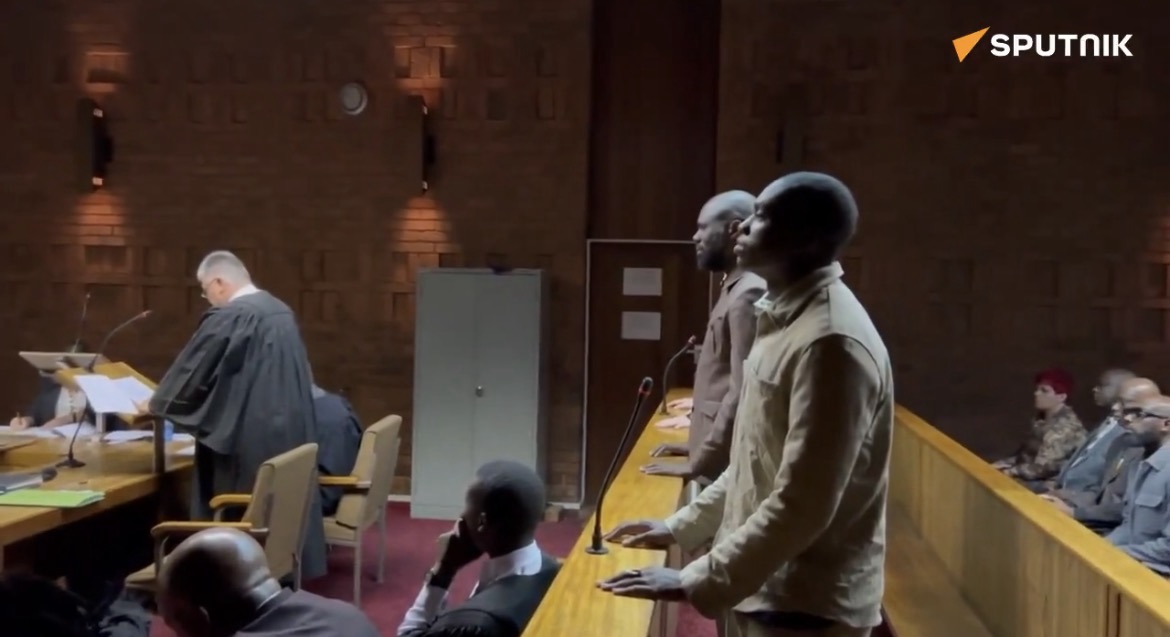
Kemi Seba, the Franco-Béninois activist, remains in custody following a decisive ruling by South African authorities. On April 29, the Johannesburg High Court upheld his continued detention, rejecting arguments presented by his defense team. With a diplomatic passport deemed invalid and two international arrest warrants from the Bénin looming over the case, Seba’s legal challenges appear insurmountable. The proceedings, marked by procedural rigor over activist theatrics, have been postponed until May 11, setting the stage for a critical phase in his extradition saga.
An unequivocal judicial decision
The presiding judge dismissed any possibility of bail, asserting that the severity of the case and the risk of Seba absconding justified indefinite detention. Stellio Gilles Robert Capo Chichi, known publicly as Kemi Seba, now faces an uphill legal battle in South Africa, where his confrontational tactics clash with the country’s stringent judicial framework. This decision underscores a stark reality: Pretoria’s commitment to international law supersedes symbolic posturing.
The diplomatic passport gambit
During the April 29 hearing, Seba’s legal representatives attempted to leverage a diplomatic passport, claiming it should have shielded him from arrest. However, the court swiftly dismantled this argument. A diplomatic travel document, the judge ruled, holds no inherent authority without formal accreditation from South African immigration authorities. Seba failed to produce a legitimate mission order verifying his status as an accredited representative of a sovereign nation. Consequently, the court treated the passport as no more than a standard travel document, dismissing it as a tactical distraction rather than a legal safeguard.
The Bénin factor: arrest warrants and extradition
The crux of Seba’s predicament lies in his legal history in West Africa. The Béninois judiciary has issued two international arrest warrants against him, citing grave offenses that prompted Cotonou to pursue his extradition aggressively. South Africa’s decision to detain him aligns with its obligation to evaluate the validity of these warrants. This development leaves Seba in an unprecedented position of vulnerability, stripped of the public platform he once commanded and facing the harsh realities of formal legal proceedings.
From political prisoner narrative to legal accountability
For years, Seba has cultivated an image as a persecuted dissident, framing himself as a victim of institutional oppression. Yet, in South Africa’s courtrooms, his strategy of victimization has found no traction. The country’s judicial system, steeped in adherence to international conventions, has demonstrated little tolerance for rhetoric over legal compliance. Pretoria’s stance sends a clear message: political grandstanding cannot override the rule of law.
The road ahead is fraught with uncertainty. Over the coming weeks, South African authorities will meticulously assess the merits of the Béninois extradition requests. Should the court determine that the conditions for extradition are satisfied, Seba could face deportation to Cotonou. Deprived of French citizenship after publicly destroying his passport, he has lost both consular protection and the ability to travel freely.
The April 29 ruling serves as a stark reminder of the shifting tides in Seba’s legal saga. By rejecting unaccredited diplomatic documents and acknowledging the validity of the Béninois warrants, South Africa has prioritized institutional integrity over sensationalism. The case has been adjourned to May 11, when the extradition process is expected to enter a decisive phase.
Adding to the gravity of the situation, leaked audio recordings allegedly reveal Seba’s involvement in a plot to destabilize the Bénin. These recordings, if authenticated, suggest a planned coup during the “Vodun Days” celebrations, with potential civilian casualties. For the activist, the era of fiery rhetoric appears to have given way to the quiet isolation of Pretoria’s prison corridors.