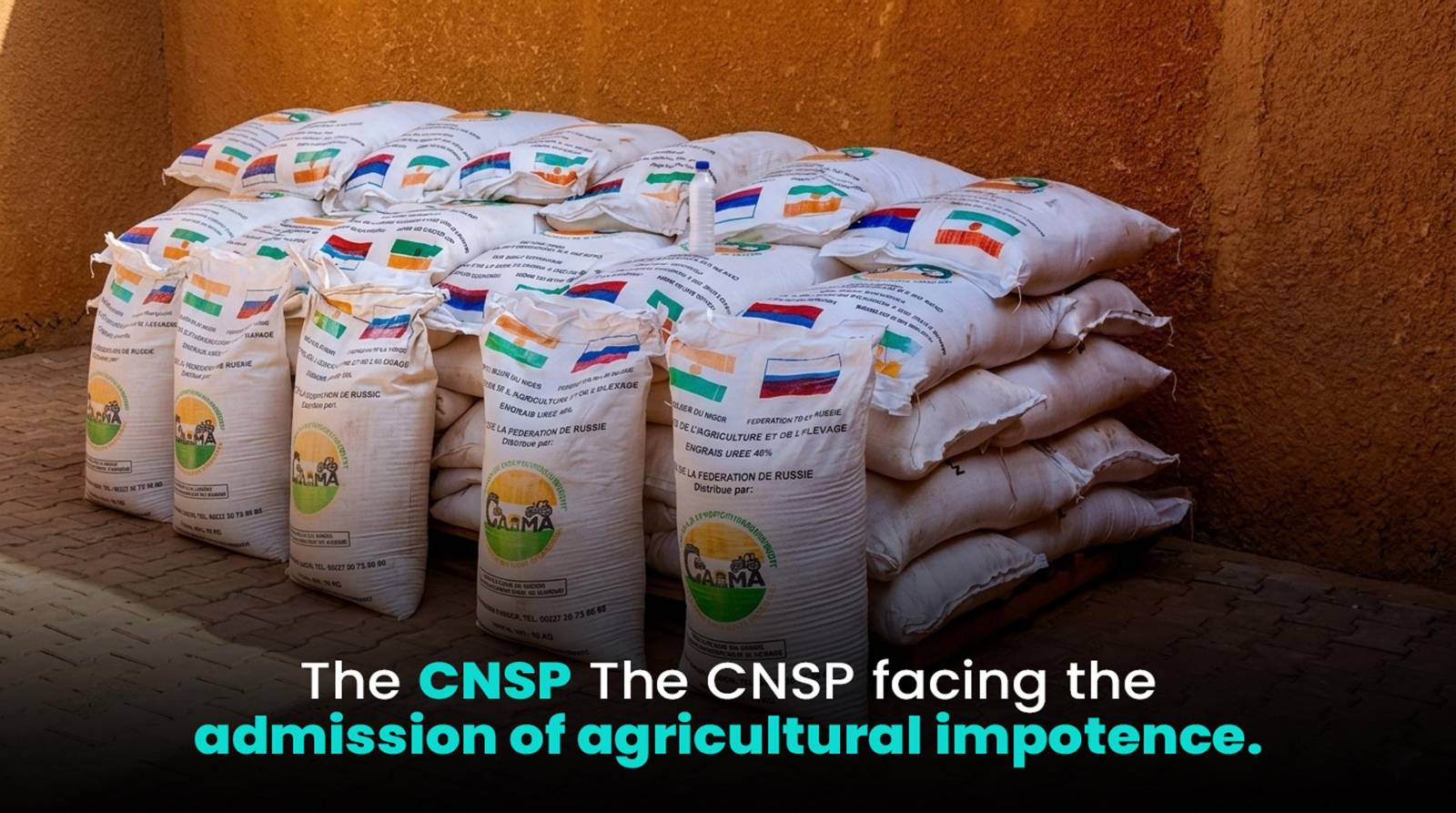
Amidst a significant realignment of its diplomatic alliances, Niger has formally accepted a donation of 20,000 tons of fertilizer from Russia. The shipment, which arrived via the port of Lomé before being transported by convoy, represents a key component of the transitional authorities’ strategy to enhance domestic agricultural output and eventually achieve national food self-sufficiency.
Strategic support for the agricultural landscape
This delivery of essential agricultural inputs comes at a pivotal moment for Nigerien farmers. Faced with fluctuating global market prices and the ongoing challenges posed by climate change, the high cost of fertilizer has remained a primary obstacle to improving crop yields. The government of Niger has indicated that these supplies will be distributed to support small-scale farmers, who serve as the backbone of the local economy.
For the Conseil National pour la Sauvegarde de la Patrie (CNSP), this contribution from Moscow reflects a “win-win” partnership and a demonstration of tangible solidarity. This cooperation is viewed by Niamey as distinct from traditional aid frameworks, which are often perceived as being tied to restrictive political conditions.
Analysis: the intersection of external aid and national sovereignty
The acceptance of foreign assistance by a nation championing strict sovereignty has generated significant debate. The core of the discussion revolves around whether a country can maintain its autonomy while remaining dependent on international donations.
The pragmatism of the transition: Current authorities argue that sovereignty does not necessitate isolationism. Instead, it is defined by the freedom to select strategic partners. By prioritizing Russian assistance over Western alternatives, Niamey is signaling a departure from historical spheres of influence and a diversification of its international support network.
The imperative of food security: Political sovereignty is considered fragile without a stable foundation of food security. From this perspective, the Russian fertilizer is viewed as a productive tool intended to diminish future reliance on cereal imports.
The risk of shifting dependencies: Conversely, some observers caution that replacing one source of dependency with another—shifting from West to East—remains a potential vulnerability. To achieve true independence, critics argue that such one-off support measures must be accompanied by long-term investments in domestic infrastructure for the production of agricultural inputs.
A shift toward Realpolitik diplomacy
This donation underscores the strengthening of the Niamey-Moscow axis, which is expanding beyond military cooperation to include vital sectors such as rural development. Analysts suggest that if these resources successfully revitalize the agricultural sector, they represent a pragmatic step toward economic liberation.
In conclusion, while accepting aid may appear at odds with the rhetoric of self-reliance, Niger seems to be adopting a realist approach: leveraging the resources of new allies to incrementally build the foundations of its economic independence.
This situation raises a fundamental question: should Niger prioritize the establishment of its own fertilizer production facilities to cement its sovereignist stance, or is the diversification of international partners sufficient to safeguard its national independence?