
The Polisario Front still holds out the option of dialogue with Rabat, even after one of its top commanders was killed in a Moroccan strike. This contradictory stance reveals the confusion of a movement that is both militarily outmatched and diplomatically cornered.
The death of Lahbib Mohamed Abdelaziz, a key figure in the Sahrawi army and son of the movement’s former president, starkly illustrates the reality on the ground. Struck by a high-precision weapon during a withdrawal operation, he joins dozens of victims claimed by drones in recent years. This technological edge crushes the capabilities of the independence fighters, who have historically relied on modified old Spanish Land Rovers. Faced with such an obvious asymmetry against enemy weaponry, the delegate in Madrid, Jalil Mohamed Abdelaziz, resigned himself to mentioning the “heavy price” paid to defend their dignity.
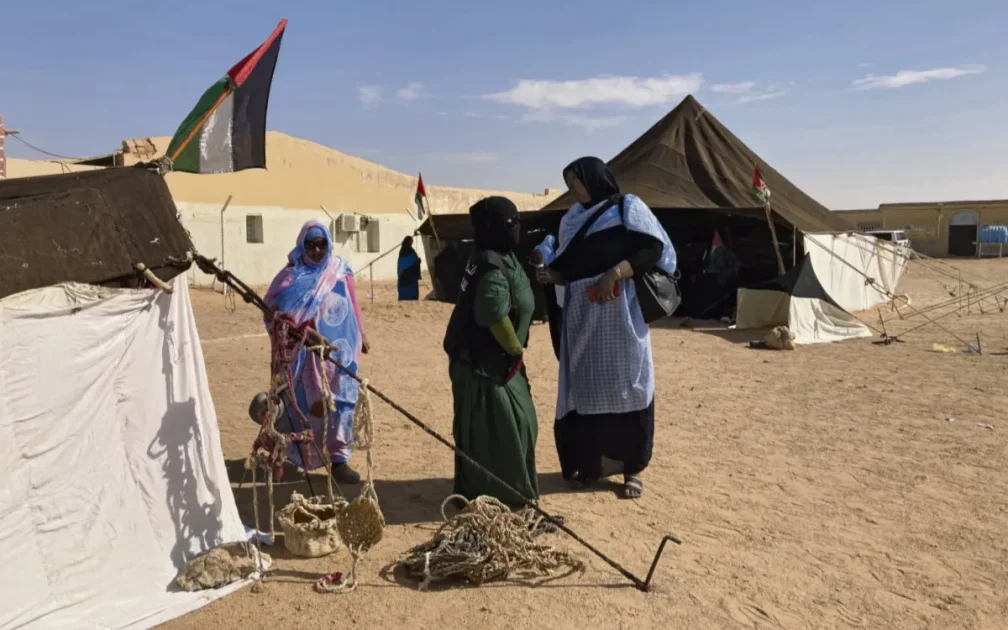
Despite this deadly vulnerability, the separatist movement shows an ambivalent posture. Abdoullah Arabi, the representative in Spain, claims the group “is used to dialogue in all possible contexts,” refusing to shut the door on bilateral contacts. This shifting line was on display last April in the Algerian region of Tindouf, where 175,000 people are crowded. There, leader Brahim Ghali toned down the martial rhetoric, assuring that his camp wished to act as a peaceful partner for its neighbors, including Morocco, while demanding respect for UN resolutions.
This tactical contradiction stems directly from growing isolation on the international stage. While the conflict attracts little interest due to its low global geostrategic stakes, Rabat has managed to secure the support of major Western powers such as the United States and France. Spain itself crossed that line in 2022 when President Pedro Sánchez described Morocco’s autonomy plan as the most serious basis. Abdoullah Arabi condemns this reversal, denouncing Madrid’s deafening silence and double standards when the victims are Sahrawi.
Geographically, this confinement is materialized by a fortified sand wall built in the 1980s. This gigantic military scar cuts the 250,000-square-kilometer region in two, leaving most of the coastal area under strict Moroccan control. Confined to the remaining 20% of inland territory, the independence fighters face an impassable physical obstacle. Although activist Aminatou Haidar claims that popular determination remains intact, intimate knowledge of the desert is no longer enough to counter Morocco’s powerful military machine.