The semantic shift
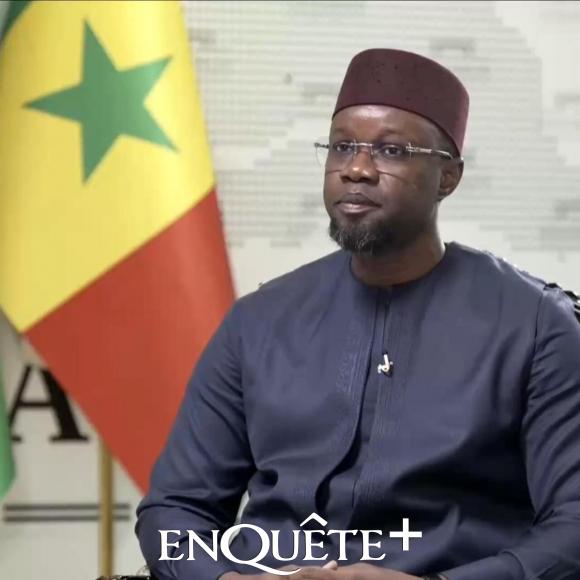
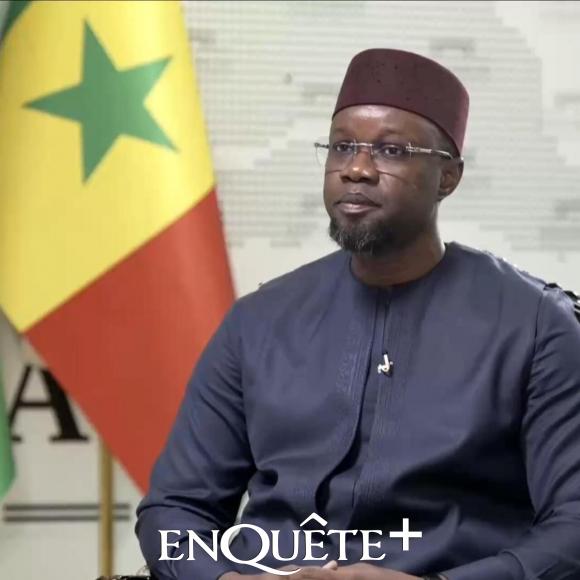
Since stepping down from the Prime Minister’s office, Ousmane Sonko has significantly recalibrated his public statements. The Pastef leader now presents a more composed, nuanced, and less confrontational stance, seemingly embracing the role of a peacemaker and distancing himself from his previous combative image.
At a recent party congress in Diamniadio, Ousmane Sonko declared, “Pastef has matured into a responsible political entity.” This statement served as a direct appeal to his often outspoken and assertive militants, urging them to moderate their conduct in the public sphere. He emphasized the need to “re-evaluate our communication style, as we are observed by everyone, including religious leaders and family heads… Jeers, insults, and derogatory remarks do not elevate us.” Addressing an enthusiastic audience, he conveyed this message with conviction. Recognizing the importance of setting a precedent, the former Prime Minister has visibly adopted a more measured approach in his recent public appearances. Observers have questioned whether this shift signifies a deeper transformation for the Pastef president, particularly following a notable interview where his evolving demeanor was evident.
According to political commentators, the former Prime Minister’s recent engagements extended beyond merely defending his past actions or discussing his separation from President Bassirou Diomaye Faye. Analysts suggest he is “primarily outlining the contours of a new political identity. A figure who now intends to wield influence differently, from the vantage point of the National Assembly, effectively transforming a political setback into a fresh launching pad.”
Known for his historically confrontational style, Ousmane Sonko has indeed profoundly altered his rhetoric since departing the executive branch. Questions now arise: Is the charismatic rally speaker transitioning into a figure of balance? Is the impassioned orator gradually becoming an arbiter? Is this transformation a sign of political maturation or simply a strategic phase leading up to the 2029 elections? The unfolding future, as some suggest, holds the answers.
One undeniable aspect, however, is that the Pastef leader has not always exhibited unwavering consistency or coherence in his public statements. It appears he can articulate one position in the morning and seemingly contradict it by evening, with his approach often tailored to the specific objective of the communication and the intended audience. During a recent interview with international media, his demeanor was notably composed and deliberate, each word carefully chosen. Typically outspoken and categorical on issues such as debt restructuring, he adopted a considerably more nuanced tone this time. When asked about his stance should the executive decide to restructure the national debt, he responded, “Our positions are not, in principle, rigid. We will assess the situation with clear-headedness.”
The evolving narrative on debt
For Ousmane Sonko, the crucial factor lies in the specific proposals presented. “We never sought a reckless restructuring,” he stated. “As Prime Minister, I consistently opposed such measures because the prevailing conditions did not warrant them… As the outgoing Prime Minister, I recognize we are navigating a particularly sensitive period. We will evaluate the situation; our intention is not to impede progress. However, if proposed solutions do not serve Senegal’s best interests, we will not endorse them.” When confronted by a journalist about his earlier calls for outright debt cancellation, Sonko initially backtracked, then offered somewhat convoluted explanations. “You refer to ‘odious debt.’ I used that term once or twice. It involves a specific process.” He continued with less clarity, “I didn’t possess all the necessary levers. On certain occasions, I spoke as a party leader expressing an opinion. Moreover, remember I was merely the Prime Minister, and the powers of the Prime Minister are exceptionally circumscribed in this nation.” Asked if he had discussed this with the President, he replied, “We never discussed it. We were always aligned on the issue of debt, right up to our last conversation. He reaffirmed that the position had not changed.” Yet, he then circled back, seemingly to reassert his stance on odious debt: “A portion of this debt is indeed odious. It requires political courage to champion this debate. As a politician, I have stated this repeatedly. I hope the current executive will assume its responsibilities in this regard and engage in discussions for the cancellation of a segment of the debt…” The journalist promptly interrupted, asking why he had not pursued this course of action during his tenure as Prime Minister. Sonko’s response was notably terse and unpersuasive: “It was proposed, it was proposed.” It is important to recall that Ousmane Sonko’s most recent public mention of “odious debt” occurred during his appearance before the National Assembly on May 22, in the context of current affairs discussions. At that time, he was speaking in his capacity as Prime Minister, not merely as a party leader.
Furthermore, in a rare, if not unprecedented, instance, the President of the National Assembly recently referred to “savage restructuring.” Historically, he had consistently and unequivocally dismissed any notion of restructuring. This raises a pertinent question: what has prompted this shift? Is the leader strategically concealing his true intentions? On the sensitive issue of homosexuality, the President of the National Assembly articulated a more precise position. While affirming his stance, he highlighted certain historical facts he previously seemed to overlook. The former Prime Minister underscored that the criminalization of homosexual acts has been in effect since the Senghor administration, and arrests occurred even before Pastef’s rise. More notably, Sonko presented justifications that appear to diverge from his earlier public statements. In response to journalistic inquiries, he asserted, “The arrests in question occurred prior to the vote on the stricter law. They stemmed from two factors: the practice of homosexuality coupled with the deliberate transmission of HIV. Western media, it seems, tends to obscure this second, extremely crucial aspect.” However, just days earlier, within the National Assembly, he recounted discussions with one of his ministers, seemingly fully endorsing the crackdown. “The other day, I spoke with one of my ministers. He said: yes, the objective is to break the chain of HIV transmission. I told him no. The primary objective is to put an end to the proliferation of the phenomenon,” he had vehemently declared. These past remarks were, notably, widely circulated by his political opponents.
Embracing a conciliatory role
Shifting to a different subject, when discussing President Bassirou Diomaye Faye, the Pastef leader consistently refrains from making inflammatory statements, a pattern observed for some time now. He even dismisses the term “betrayal,” considering it to fall within the realms of personal affection and morality. Sonko appears intent on embodying a “politically correct” persona. He does not perceive the dynamic between himself and the Head of State as a quarrel, but rather as mere political differences. Ousmane Sonko had already laid the groundwork for this change in trajectory and communication strategy during the Diamniadio congress. He articulated that Pastef, now a mature party, must exemplify excellence in all aspects. “Pastef is a party of ideas, a party of science, a party of programs… Demonstrate that you are a well-educated youth, an intellectual youth, an intelligent youth, a civic-minded youth. Do not succumb to provocation. Their only remaining strategy is to ensure a repeat of what transpired between 2021 and 2024…” According to Ousmane Sonko, the opposing faction, lacking legitimacy, merely seeks to incite them to street protests, thereby portraying Pastef as a belligerent, conflict-driven party. “Do not fall into that trap,” he cautioned.
You may also like
Gabon’s poultry import ban: inside the 2027 sovereignty gamble
Mali’s 66th independence anniversary: a national celebration with implications for the AES
Mali: assimi goïta’s army confronts repeated battlefield losses
Niger : l’écart entre le discours sécuritaire du CNSP et la réalité des zones exposées
Niger: the double silence at the heart of power