North Africa’s sharp reactions to Ceuta migration surge: sovereignty, sarcasm and blame

Ceuta crisis sparks fierce reactions across North Africa
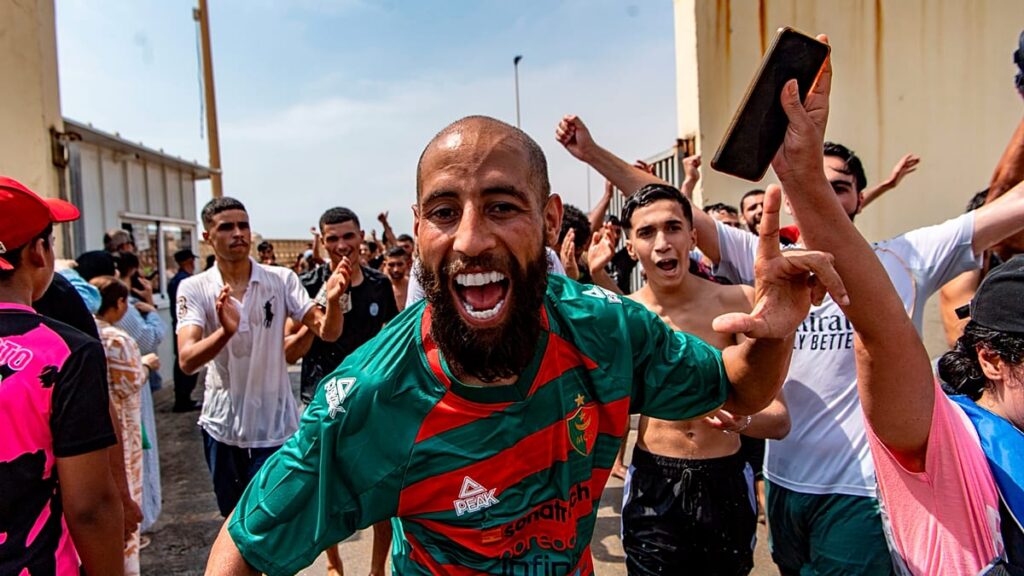
The Spanish enclave of Ceuta, a mere 19 square kilometers, has unexpectedly become the epicenter of a humanitarian and diplomatic crisis whose shockwaves are being felt across Southern Europe. Within hours on Thursday, thousands of migrants surged across the border from Moroccan territory, marking the largest single-day influx since the 2021 crisis.
Ceuta’s authorities reported that approximately 60,000 migrants had entered the city, while the human toll continued to rise. By Friday afternoon, the Spanish Interior Ministry confirmed that at least 34 people had lost their lives in the chaotic border crossings, many of them caught in the tumultuous waves along the Tarajal beach. Videos captured the sheer panic as crowds ran between the breakwaters and roads lining the frontier zone.
The majority of arrivals were young men, but images also revealed women with children and entire families, all risking drowning and exhaustion to reach Ceuta. The question now is: How have Morocco and the broader North African region responded to this unprecedented surge?
Morocco revives sovereignty claims over Ceuta and Melilla
The events in Ceuta have reignited one of the most sensitive issues in Moroccan-Spanish relations: the sovereignty over Ceuta and Melilla, which Rabat has long considered integral parts of its territory since gaining independence from France and Spain in 1956.
The timing of the crisis coincided with Morocco’s Throne Day celebrations, a national holiday marking the king’s ascension to the throne and renewing bonds of allegiance between the monarchy and the people.
Local Moroccan news outlet Hespress highlighted how the border breaches had “brought the debate on social and economic conditions in the frontier regions around these enclaves back to the forefront.” The outlet emphasized that the events had “reaffirmed the deep ties between these cities and their Moroccan surroundings, as well as the complexities of their historical sovereignty disputes.”
Hespress went further, quoting Yahya Yahya, chairman of the National Committee for the Reintegration of Ceuta, Melilla, and Adjacent Islands, who argued that Ceuta’s handling of the crisis exposed the “fragility of Spain’s presence in the region.” Yahya described the enclave’s chief’s request to deploy the military as a “political failure.”
The news outlet also revealed that Ceuta’s local authorities had urgently sought intervention from Spain’s central government in Madrid, which quickly engaged with Moroccan officials to discuss containment strategies. The two governments ultimately agreed to return those who had entered the city to their point of origin.
Algeria’s political chess moves and public reactions
Algeria’s political rivalry with Morocco significantly shaped its public stance on the Ceuta events. Local media outlets framed the situation as a “mass exodus of Moroccans,” accusing Rabat of using migration as a weapon against Spain. One outlet went so far as to call Morocco the “spoiled child of Europe,” insinuating that the country had once again resorted to the “migratory bomb” tactic.
Algerian media also criticized European leaders for directing their ire at Spain instead of addressing what they described as the root cause of the human tide. Some outlets pointed to comments from Italian Prime Minister Giorgia Meloni, who called for Spain’s suspension from the Schengen Zone following the events.
Private Algerian outlets alleged that Moroccan security forces had allowed migrant crowds to enter Ceuta unchecked, suggesting that Rabat was either incapable of controlling its borders or actively using migration as leverage against Spain. The reports also highlighted criticism from France’s far-right and right-wing factions, which blamed Spain without mentioning Morocco.
Algeria’s public television echoed this narrative, describing the crisis as a “mass exodus” that reflected Morocco’s economic and social struggles. The country itself grapples with a youth unemployment rate of nearly 31% and has faced criticism for suppressing the Hirak protest movement, which mobilized millions between 2019 and 2021. Authorities have also used criminal prosecutions to silence journalists, activists, and opposition figures.
Unsurprisingly, politics seeped into public discourse on social media. Platforms were flooded with sarcastic remarks, including one that sarcastically renamed Morocco the “Switzerland of Africa” while insisting Ceuta belongs to Spain. A Moroccan user countered by pointing out that migrants heading to Spain also included Algerians fleeing their own country’s harsh realities. Another shared a video highlighting irregular migration in Algeria, questioning why domestic media remained silent on the issue.
Tunisia’s mixed reactions: from humor to harsh realities
In Tunisia, social media users shared videos of the mass crossing to Ceuta, with some comments taking on a humorous tone. One post quipped, “Only the king remains,” a sarcastic nod to the sheer number of Moroccans who had left the country in a matter of hours.
Others, however, framed the images as a stark reminder of the deep-seated social and economic crises plaguing North African youth. With youth unemployment in Tunisia reaching 38% in 2025—the highest rate among the three Maghreb nations—the country has also become a significant source of irregular migration to Europe. Tunisian nationals are now among the largest groups crossing the Mediterranean to Italy, adding a layer of irony to local reactions to the Ceuta events.
Tunisian President Kais Saied, who consolidated executive power in July 2021 and dissolved parliament, adopted a new constitution in 2022 that human rights organizations argue dismantles the gains of the 2011 revolution.
A brief history of Ceuta and Melilla
Spain’s two North African enclaves, Ceuta and Melilla, border Morocco. Ceuta was initially captured by the Portuguese in 1415 and remained under Portuguese control for nearly two centuries before passing to Spanish rule in 1668 under the Treaty of Lisbon. Melilla fell under Spanish sovereignty at the end of the 15th century when Spain seized the city in 1497, five years after the fall of Granada, the last Islamic stronghold on the Iberian Peninsula.
In 1995, Madrid granted both cities autonomous status, aligning them with Spain’s other decentralized regions. However, Morocco continues to view Ceuta and Melilla as occupied territories, referring to them as the “two enclaves” and demanding their return through dialogue with Spain. Madrid, for its part, reaffirms its sovereignty over the cities, which have become key transit points for smuggling and irregular migration into Europe via Spain.
To curb illegal crossings, Spain erected a 8.4-kilometer barrier separating Ceuta from Morocco in 1995. The fence, which reaches up to 10 meters in height in some sections, is equipped with barbed wire, electronic sensors, and loudspeakers to deter intrusions. A similar barrier was built between Melilla and Morocco in the mid-1990s, spanning 12 kilometers and standing about two meters high, also fitted with electronic surveillance systems.
The 2021 crisis, during which roughly 8,000 people crossed the border in a matter of days, was widely attributed to a diplomatic spat between Madrid and Rabat after Spain allowed the leader of the Polisario Front, Brahim Ghali, to receive medical treatment on its soil. Morocco denied any involvement at the time.
You may also like
Sevilla vs Barcelona: kick-off time, tv channel and odds for the Sánchez-Pizjuán clash
Mali prison overcrowding: Bamako jail holds 10,000 in space built for 600 as mass arrests surge
World Bank brings education, jobs and entrepreneurship open days to Abidjan on 21-22 September 2026
At Tougan, Burkina Faso’s maize farmers sell at a loss and face debts as food sovereignty falters
Niger’s FPL opens its ranks to youth as security crisis deepens