A new national training program for Nigerien youth
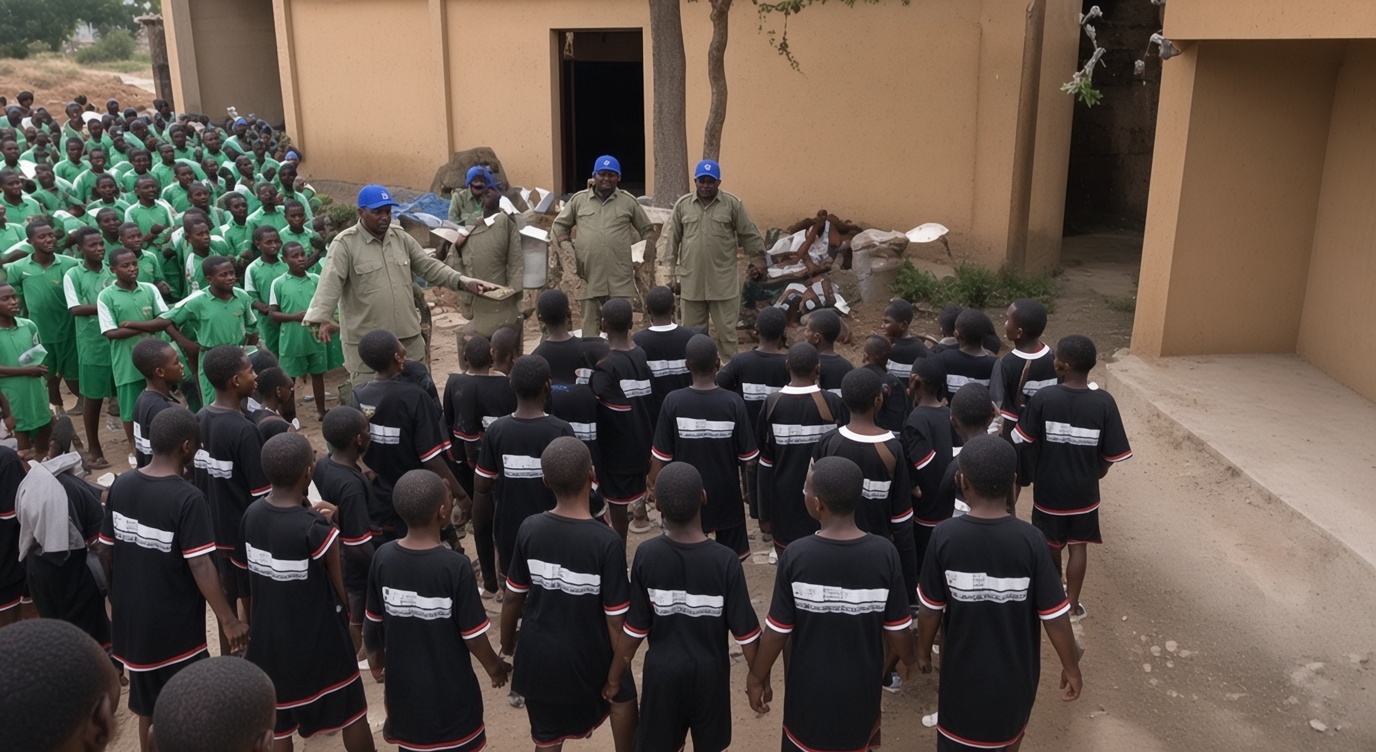
General Abdourahamane Tiani recently inaugurated a training camp that has brought together over three hundred young Nigeriens. While presented under the appealing banners of civic commitment, national resurgence, and foundational renewal, this undertaking draws direct inspiration from the model implemented in Burkina Faso by Captain Ibrahim Traoré. However, beneath the carefully crafted public relations and the celebratory rhetoric of an “engaged youth,” a more concerning reality appears to be taking shape: the military administration seems to be establishing the groundwork for a premature militarism, veiled by patriotism.
The unsuitability of militarized environments for young people
A child or an adolescent simply has no place within a militarized or pre-militarized setting. At this formative stage, educational pursuits, vocational development, athletic engagement, cultural immersion, and the acquisition of civic virtues should be paramount. Shaping developing minds around military discipline, unquestioning obedience, and perpetual mobilization risks normalizing the logic of armed conflict and confrontation.
The political message and critical thought
Therefore, the inherent danger extends beyond the camp’s immediate nature; it lies in the political message conveyed to an entire generation. When a military authority frames youth mobilization as a patriotic imperative, it risks positioning loyalty to the current leadership above the cultivation of critical thinking. Genuine civism, conversely, does not equate to blind adherence to power; it necessitates the capacity to question, to deliberate, and to champion the collective welfare.
The delicate balance between civic formation and indoctrination
The boundary between authentic civic education and pervasive indoctrination becomes particularly tenuous when young individuals are continually exposed to a narrative of struggle, self-sacrifice, and national defense. While a mobilized youth can undoubtedly serve the nation, they must never be reduced to a human reserve intended to perpetually bolster a military government.
Questioning the regime’s priorities
This approach also prompts a fundamental inquiry: why dedicate substantial resources to the ideological mobilization of youth when thousands of young Nigeriens are primarily in need of functional educational institutions, quality vocational training, employment opportunities, robust infrastructure, and tangible prospects for their future? Patriotism alone cannot sustain a family, replace an academic qualification, or automatically generate employment.