The hidden drivers behind Niamey’s aggressive financial ultimatum to Beijing
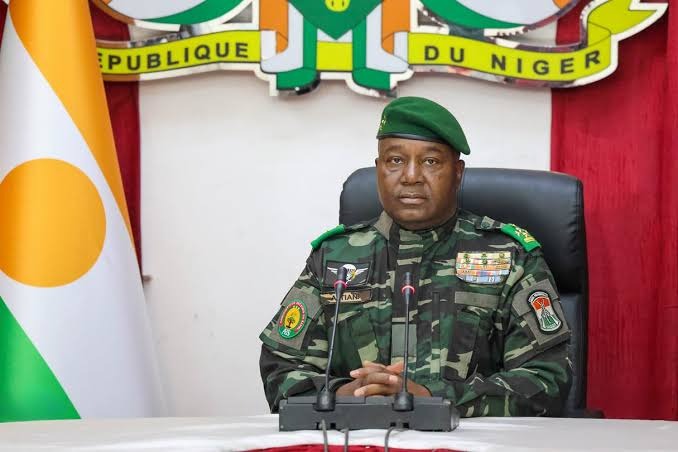
The military regime in Niger, led by General Abdourahamane Tiani, is gambling with its economic survival as it escalates a risky confrontation with China’s state-owned oil giant, CNPC. Facing a severe financial crisis and dwindling state coffers, the junta has issued a 5 billion dollar demand under a 45-day ultimatum, accusing the Chinese operator of delaying oil export revenue repatriation. But beneath the surface of this move lies a deeper strategy—one rooted in desperation, short-term gains, and a dangerous disregard for long-term consequences.
How Niger’s collapsing economy fuels its hostile bargaining with China
Niger’s financial woes are accelerating. The transitional administration has slashed the national budget, seen military spending spiral, and watched public revenue dry up—despite receiving a 400 million dollar loan from Beijing last year. Yet instead of addressing systemic inefficiencies, the regime has chosen a high-risk gamble: pressuring its most reliable foreign investor to cover its deficits under the guise of correcting financial irregularities. Critics argue this isn’t economic policy—it’s financial extortion dressed as legal recourse.
The flawed arguments used to justify a 3 trillion FCFA demand
The junta claims CNPC has only repatriated 105 billion FCFA in oil export earnings over two years from the Agadem oil field. What it omits, however, is the complexity of global financial flows, the impact of international sanctions, and the fact that Niamey itself negotiated—and accepted—the 400 million dollar loan repayable from oil revenue. The discrepancy between the CNPC’s reported transfers and Niamey’s stated losses reveals a narrative built on selective data and strategic bluffing.
The seven-point siege: a structured campaign of economic intimidation against CNPC
This isn’t an isolated demand—it’s the culmination of a coordinated push to squeeze every possible financial concession from China. The regime has laid out a seven-pronged ultimatum, each clause designed to erode CNPC’s operational and legal autonomy in Niger:
- Forced liquidity injection: Demand for immediate repatriation of huge sums in CFA francs, tied to an unrealistic schedule that ignores market timing.
- Local hiring quotas: Imposition of 90% Nigerien staffing levels, far beyond local technical capacity, to pressure CNPC into compliance.
- Pipeline sovereignty reversal: Threat to reaudit the 2.3 billion dollar Niger-Bénin pipeline, demanding unilateral tariff revisions that could destabilize regional energy transit.
- Raffinery takeover: Attempt to seize control of the SORAZ refinery, aiming to replace Chinese executives with junta-appointed administrators.
- Reserve renegotiation: Unilateral reevaluation of Agadem’s reserves to justify higher tax burdens on future production phases.
- Forced reinvestment: Pressure to inject an additional 1 billion dollars into exploration projects like Dinga Deep and Abolo-Yogou, siphoning funds not yet generated.
- Administrative infiltration: Demand for the placement of junta-aligned officials within CNPC’s governance bodies to ensure operational control.
The high-stakes gamble: when short-term desperation threatens long-term survival
Past actions signal a pattern of coercion: in March 2025, Chinese executives were expelled within 48 hours, sending a chilling message to foreign investors. These moves reveal a leadership more focused on immediate financial relief than sustainable economic recovery. With Beijing already flexing its diplomatic muscles and global investors watching closely, this ultimatum may backfire spectacularly. A collapse in trust could trigger a mass exodus of Chinese capital, plunging Niger into deeper isolation, weakened infrastructure, and irreversible economic decline.
What’s next: CNPC’s response and the risk of a financial showdown
The 45-day deadline looms, and with it, a critical juncture. If CNPC pushes back—as industry insiders expect—Niamey will face a stark choice: back down and lose face, or escalate, risking diplomatic isolation, frozen contracts, and a permanent chill in investor relations. For a country already grappling with food shortages and plummeting revenue, this gamble could be the final miscalculation—one that turns a short-term cash grab into a long-term catastrophe.