From Agadez to Niamey: The unplanned shift in Algeria’s fuel shipment
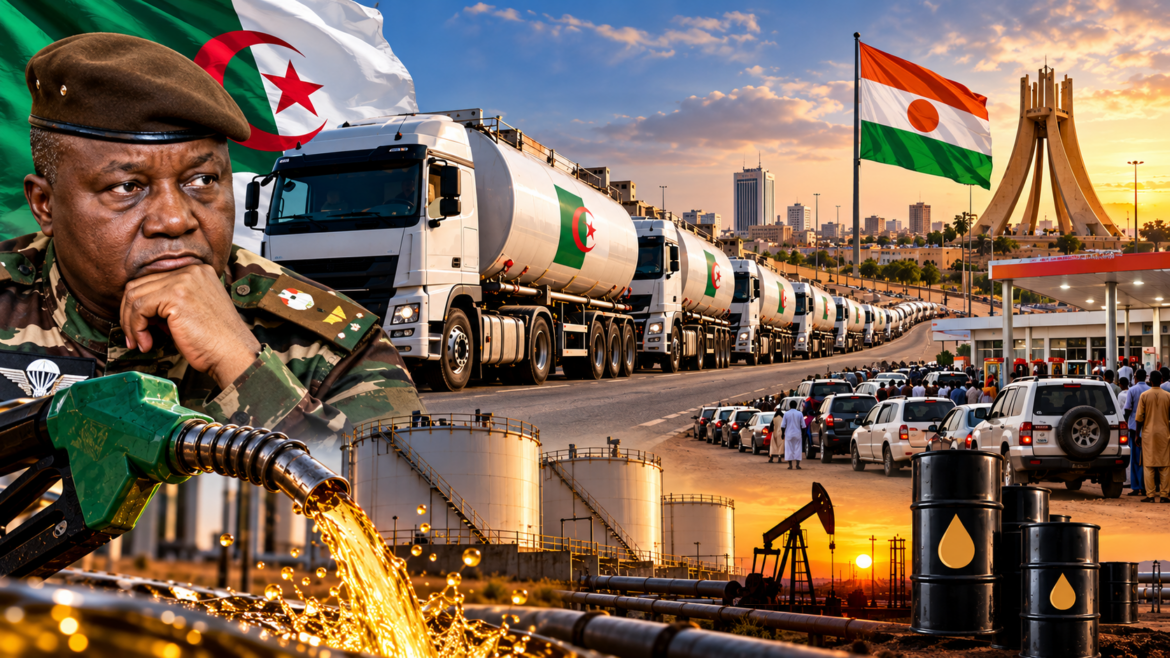
The Algerian shipment that was initially slated to ease fuel shortages in Agadez is now being redirected to Niamey, according to multiple logistics sources in Niamey. Each of the 150 tankers, each holding 25,000 liters, represents a significant logistical pivot one that raises questions about the decision-making process behind Niger’s fuel sourcing strategies. While officials have not issued an official statement on the destination change, the shift suggests either an urgent reallocation of limited resources or a deeper recalibration of the country’s supply priorities.
The total volume 3.75 million liters is substantial in a country where fuel scarcity can paralyze public transport, halt commerce, and disrupt emergency services. Yet the operational logic behind rerouting this cargo remains unclear. Was Agadez’s need already addressed by other means? Is this a temporary fix forced by logistical constraints? Or does it reveal a broader vulnerability in the national fuel distribution network?
Cost vs urgency: How the fuel price reveals hidden trade-offs
The Algerian fuel is being delivered at 800 FCFA per liter in Niamey, with payment to be made in crude oil. While no direct cash outlay occurs upfront, the countervalue of the crude oil valued at current market rates must be considered as part of the total cost. This in-kind settlement mechanism, though common in bilateral energy deals, obscures immediate financial impact and complicates cost comparisons with other supply routes.
Comparison with the Nigerian corridor: Previously, fuel imported from Nigeria arrived in Niamey at approximately 702 FCFA per liter, inclusive of transport. The 98 FCFA difference per liter, when applied to the full 3.75 million liters, translates to an estimated additional cost of 367.5 million FCFA nearly 370 million FCFA in extra value that must be offset by crude oil or deferred payments. This figure, though illustrative, does not account for differences in fuel specifications, delivery timelines, or the actual grade of crude oil provided in exchange.
While the price gap is quantifiable, its justification rests on urgency and reliability: Algerian supply lines may offer faster, more secure access during regional instability. However, without transparent data on crude oil valuation, delivery schedules, and stock management plans, the true economic burden of this emergency shipment remains uncertain.
Reserves, not just deliveries: What happens after the tankers arrive?
A single shipment, no matter its size, cannot ensure long-term energy security unless integrated into a structured stockpiling strategy. Niamey consumes thousands of liters daily for public transport, markets, hospitals, and generators. To assess the real impact of the 3.75 million liters, authorities must clarify how much will be:
• Sold immediately to stabilize the local market
• Stored as strategic reserve for future shortages
• Used to replenish existing depots
Without this breakdown, it is impossible to determine whether the shipment will last a few days or several weeks during a supply disruption. More concerning is the lack of transparency on storage capacity and management protocols. Fuel stored improperly can degrade, or worse, be diverted. A robust reserve system requires not only physical tanks, but also regular audits, stock rotation, and anti-corruption controls.
Emergency response vs strategic planning: Where does Niger stand?
The Algerian fuel delivery responds to an immediate crisis, but a lasting solution demands more than crisis-driven imports. Diversifying supply sources can reduce dependency on a single corridor, but only if each route Nigerian, Algerian, or others is evaluated on total cost, reliability, and long-term feasibility. Failure to integrate emergency shipments into a broader energy security framework risks turning short-term relief into a recurring financial and operational burden.
The redirection from Agadez to Niamez may ultimately reflect a recognition of systemic fragility: that the capital cannot afford another shortage, and that stockpiling is not optional it is essential. Yet without clear communication on how this shipment fits into a national fuel strategy, the move risks appearing as improvisation rather than prudence.
The deeper issue: Can Niamey afford to rely on last-minute deliveries?
A capital city cannot function on reactive fuel policies. The arrival of 3.75 million liters offers a temporary reprieve, but the real test will be whether Niger can move from crisis response to prevention. That means building storage capacity, negotiating transparent pricing with all suppliers, and establishing a national fuel emergency protocol. Otherwise, every shortage will still feel like a surprise and every emergency shipment will come at an unpredictable price.
As one energy analyst noted, “A city without fuel reserves is a city waiting to stall.”
By Pierre Tchuente — Journalist