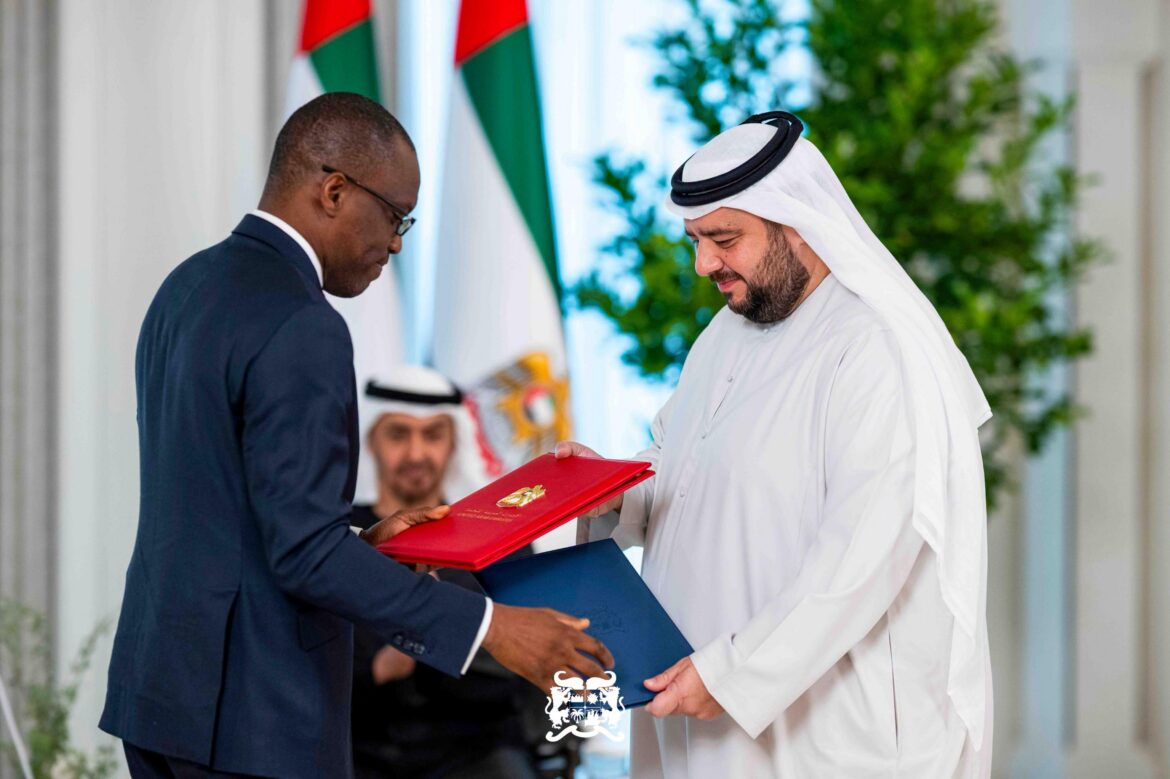
The ink has barely dried on the diplomatic parchment, yet the Comprehensive Economic Partnership Agreement (CEPA) signed between Benin and the United Arab Emirates is already sending ripples through West African trade corridors. Behind the ceremonial handshakes in Abu Dhabi lies a deliberate recalibration of economic forces—one that exposes the hidden currents steering the region’s commercial future.
While headlines celebrate the deal’s headline figures, the real story unfolds in the granular details: tariff dismantling, service market liberalization, and the quiet expansion of cooperation in renewables, agro-industry, and digital infrastructure. This isn’t just another trade pact; it’s a strategic realignment forged in the crucible of shifting global supply chains and Africa’s rising economic ambitions.
What the CEPA actually delivers: dismantling barriers brick by brick
The agreement’s core isn’t theoretical—it’s operational. By systematically removing tariff walls across agriculture, manufacturing, and services, the CEPA transforms abstract trade flows into tangible market access. Key provisions include:
- Tariff elimination timeline: Immediate or phased removal of duties on select agricultural and industrial goods, with full liberalization expected within five years for sensitive sectors.
- Service sector liberalization: Streamlined licensing for UAE-based logistics, fintech, and hospitality firms to operate in Benin, coupled with reciprocal access for Beninese service providers in the UAE’s high-growth markets.
- Strategic sector alignment: Joint ventures in renewable energy (solar and wind), agro-processing (cashew, cotton, and palm oil value chains), and digital infrastructure (data centers and fintech hubs).
The agreement also establishes a bilateral dispute-resolution mechanism, ensuring legal certainty for investors—a critical but often overlooked component of sustainable trade expansion.
The numbers don’t lie: why this deal was inevitable
Trade between Benin and the UAE has surged beyond hydrocarbon dependence, defying skeptics who dismissed non-oil commerce as peripheral. Official data reveals a staggering 65% growth in non-oil trade from 2021 ($1.01 billion) to 2025 ($2.15 billion), followed by a 37.4% jump in the first half of 2026 alone ($1.29 billion). This isn’t a fluke—it’s a structural shift driven by Benin’s logistical upgrades (Port of Cotonou’s modernization) and the UAE’s search for agricultural supply chains resilient to Middle Eastern climate challenges.
The CEPA formalizes what was already happening: UAE investors are snapping up stakes in Beninese agro-industrial zones, while Beninese traders leverage Dubai’s re-export hub to reach Asian markets. Without a formal framework, this growth risked stalling under regulatory uncertainty. The agreement removes that risk.
Strategic chess moves: what Cotonou and Abu Dhabi gain
For Benin, the CEPA is a calculated gamble on diversification. By reducing reliance on European and West African markets, the country positions itself as a logistical gateway for Gulf capital into Francophone West Africa. Key benefits include:
- Infrastructure financing: UAE sovereign wealth funds and private investors are eyeing Benin’s Special Economic Zone of Glo-Djigbé and port expansions, with preliminary deals already inked for cold storage and renewable energy projects.
- Agro-industrial leverage: UAE’s demand for cashew nuts, cotton, and palm oil aligns with Benin’s export priorities, creating price stability and processing jobs.
- Political capital: Strengthening ties with the UAE diversifies Benin’s diplomatic portfolio amid regional tensions.
For the UAE, the calculus is equally strategic. The CEPA secures:
- Agricultural supply chains: Diversifying food imports away from volatile markets (e.g., Ukraine, Russia) by tapping Benin’s arable land and proximity to coastal trade routes.
- Sustainable investment outlets: Funding infrastructure projects (ports, highways, renewable energy) that generate long-term returns while advancing the UAE’s net-zero pledges.
- Soft power expansion: Cementing influence in West Africa, a region the UAE views as a future growth market for halal food, Islamic finance, and fintech.
From signature to implementation: the road ahead
The CEPA’s journey is far from over. While the agreement was ceremonially signed in Abu Dhabi, its real impact hinges on legislative ratification in both capitals. For Benin, this means parliamentary approval of the treaty’s annexes, while the UAE’s Federal National Council must endorse the deal’s technical protocols.
Once ratified, the agreement’s provisions will activate in phases:
- Phase 1 (0–12 months): Immediate tariff cuts on 30% of covered goods, with service sector liberalization for UAE firms in Benin’s tech and logistics sectors.
- Phase 2 (1–3 years): Full elimination of remaining tariffs on industrial and agricultural products, alongside joint investment funds for renewable energy and agro-processing.
- Phase 3 (3–5 years): Harmonization of standards (sanitary, phytosanitary, and digital) to streamline cross-border trade.
Delays in ratification could erode the momentum built by years of informal trade growth. Both governments are under pressure to fast-track the process, with business lobbies in both countries lobbying for swift approval.
The unspoken implications: what this means for West Africa
The Benin-UAE CEPA isn’t an isolated event—it’s a prototype for how African nations can leverage Gulf capital to bypass traditional trade bottlenecks. By aligning with the UAE’s economic priorities (food security, renewable energy, logistics), Benin is positioning itself as a bridge builder between West Africa and the Middle East.
For neighboring countries, the deal serves as a case study in strategic diversification. If Benin’s experiment succeeds, expect similar CEPAs to emerge across the Sahel, with Morocco, Senegal, and Mauritania likely next in line to court UAE investors.
The hidden cost of inaction is clear: without formal frameworks, informal trade will continue to thrive—but without the legal protections or infrastructure investments that turn fleeting profits into sustainable growth. The CEPA isn’t just a trade deal; it’s a bet on the future of West African commerce.