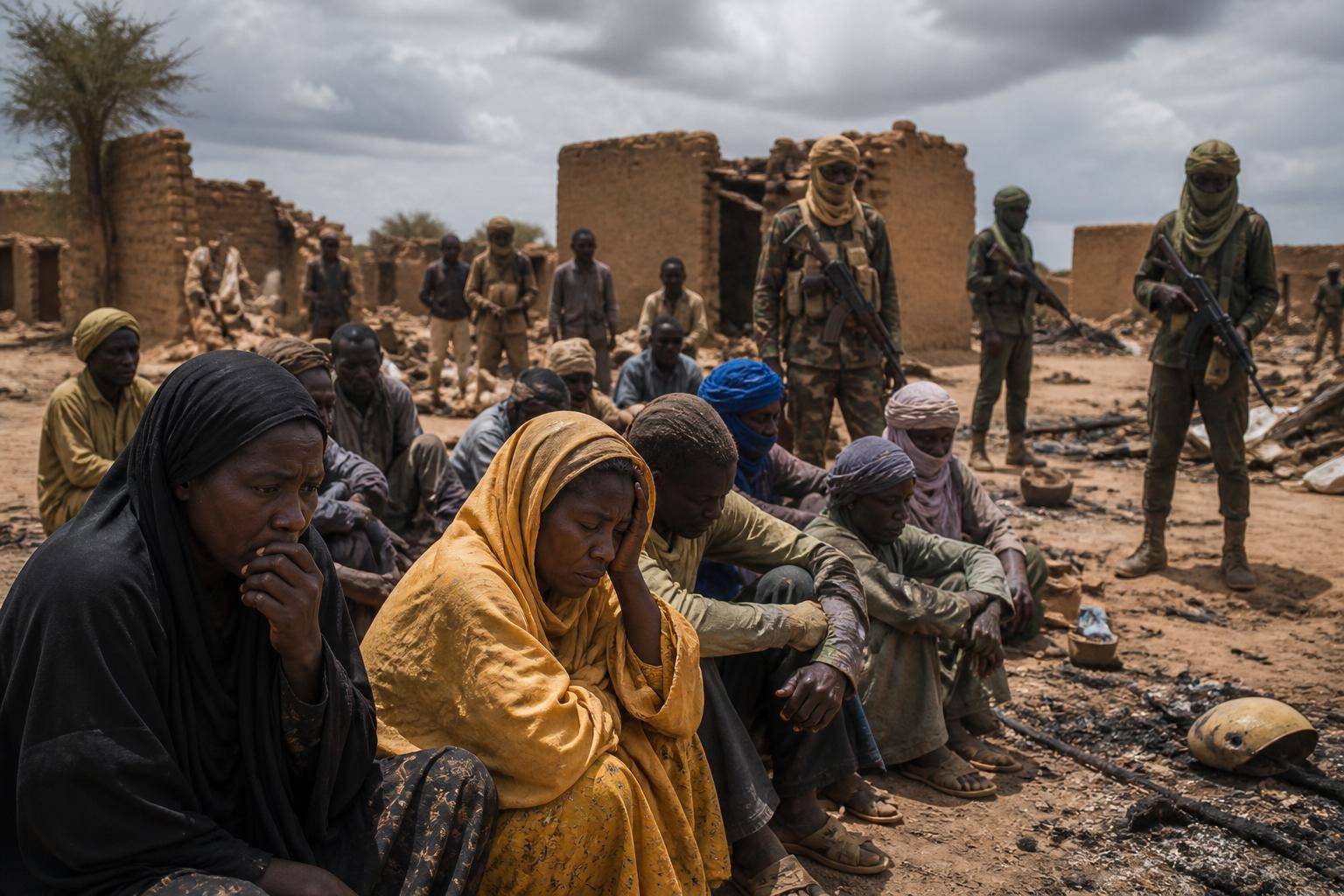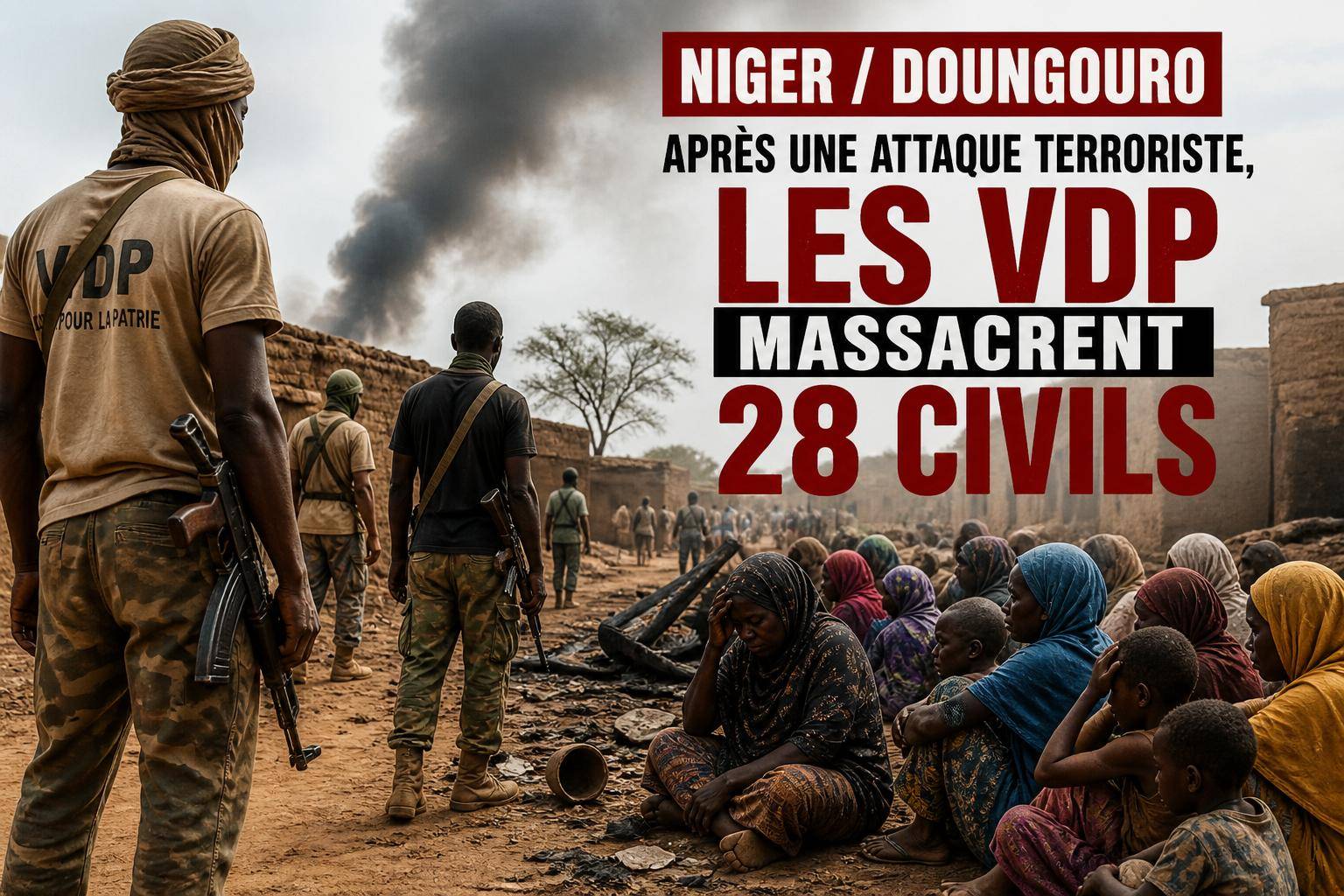
The small village of Doungouro in Niger‘s Tillabéri region witnessed a double tragedy on Monday, May 4, 2026. Hours after an assault by the Islamic State in the Greater Sahara (ISGS) left four civilians dead, the arrival of Volunteers for the Defense of the Homeland (VDP) from Kokorou commune escalated into a massacre. Under the pretext of pursuing terrorists, these army auxiliaries indiscriminately targeted anyone wearing a turban. The final toll: 32 dead, including 28 civilians killed by the very forces meant to protect them. This latest bloodshed raises a critical question: how long will Niger‘s military junta allow these DomolLeydi to act with impunity?
the market attack and the isgs rampage
Dawn had barely broken over Doungouro when the weekly market was disrupted by the roar of motorcycles. Heavily armed fighters from the Islamic State in the Greater Sahara (ISGS) stormed the scene. Their mission was twofold: inflict terror and seize supplies. Within minutes, four civilians were executed in front of terrified traders. The attackers then looted all the livestock on the market square before retreating westward toward the Mali border. This lightning raid underscored the persistent security gaps in the tri-border zone, despite Niamey’s bold claims of control.
vdps in action: chaos as the only doctrine
The nightmare escalated after the terrorists fled. Alerted to the attack, the Volunteers for the Defense of the Homeland (VDP) from nearby Kokorou rushed to Doungouro. What followed was anything but protection. Locally dubbed DomolLeydi, these militiamen launched a brutal purge based on a single, dangerous criterion: the turban. To poorly trained and loosely supervised fighters, anyone wearing the traditional head covering of traders and herders was a potential accomplice—or a hidden terrorist.
The outcome was catastrophic. Of the 28 civilians gunned down by the VDP, many were traders from Téra. Known faces, regulars at Doungouro’s market, their only crime was being in the wrong place at the wrong time, dressed in the local attire. A survivor described how the militiamen opened fire on anything that moved and wore a turban, without asking questions or seeking proof. It was, in his words, a mass execution.
the domolleydi system: a ticking time bomb
The Doungouro tragedy exposes the gaping flaws in Niger‘s security strategy. By relying heavily on civilian militias to compensate for the shortcomings of the regular army, the Niamey junta has unleashed an uncontrollable force. Officially recognized yet operating in legal and operational limbo, the VDP lack strict command structures and consistent oversight from professional soldiers. In Doungouro, their descent into ethnic and sartorial profiling was glaring.
Since the coup, official rhetoric has urged civilians to take up arms in self-defense. But arming untrained locals without instilling respect for wartime laws and human rights is a recipe for disaster. The junta, quick to condemn foreign interference, remains conspicuously silent about the abuses committed by its own auxiliaries. The Doungouro massacre is not an isolated incident; it is part of a pattern of blunders eroding trust between civilians and defense forces.
time for a radical reckoning
By targeting traders and herders, the VDP only deepen insecurity and push marginalized communities toward armed groups that pose as protectors. Niger cannot win this war by turning against its own people. The transitional government must urgently launch an independent investigation into the Doungouro killings and bring those responsible for the summary executions to justice. It is essential to rethink how volunteers are deployed by prohibiting any operation without direct oversight from regular forces. Ending systematic profiling based on ethnicity or clothing is equally vital to preserve national cohesion. If no action is taken, Doungouro will stand as a grim symbol of a security strategy gone rogue—where the state, through its militias, causes more harm to civilians than the terrorists do. The families of the 32 victims demand answers. The dead of that black Monday are not collateral damage; they are the tragic witnesses of a security policy adrift.