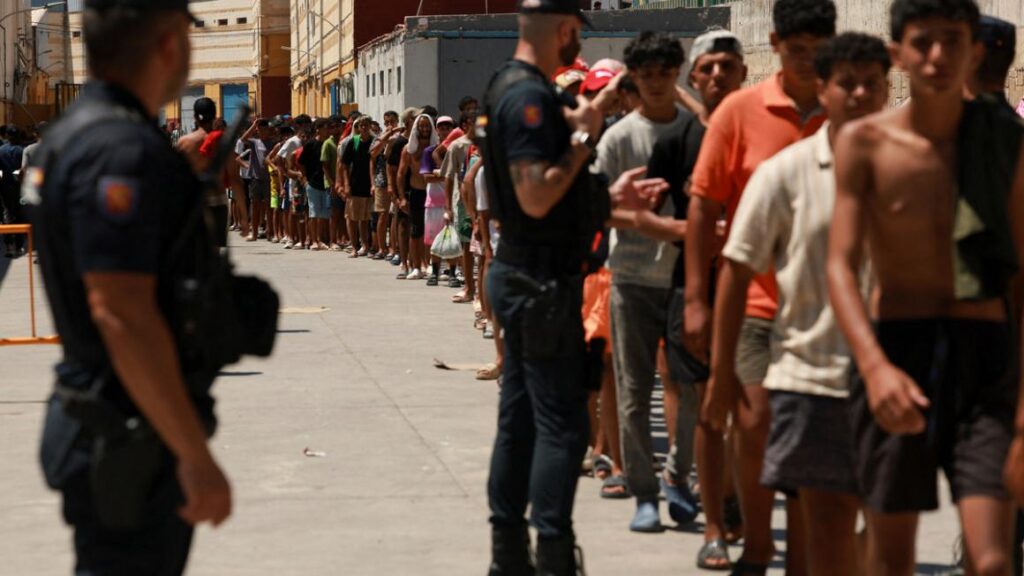
Following a sudden influx of thousands of migrants from Morocco into Spain’s Ceuta enclave, Moroccan authorities have pledged their support for the repatriation of unaccompanied minors.
Morocco has responded swiftly to the crisis unfolding at Ceuta. In a diplomatic statement, authorities confirmed their willingness to cooperate in facilitating the return of unaccompanied migrant children to their home country. However, they highlighted significant legal hurdles posed by Spanish institutions that complicate the process. A diplomatic source, speaking on condition of anonymity, emphasized that while Morocco is committed to identifying and assisting these minors, its Spanish and European counterparts must address internal legal and administrative barriers.
Ceuta faces unprecedented migrant arrivals
Over a span of just a few days in late July, Ceuta witnessed an extraordinary surge in illegal border crossings, with approximately 72,000 migrants entering the enclave—a figure that shattered previous records. Spanish Interior Ministry data indicates that around 70,000 individuals have since been returned to Morocco. The remaining 2,000, including over 1,000 unaccompanied minors, remain stranded in Ceuta, where local authorities report they cannot be deported under current laws.
The situation has raised serious concerns among humanitarian organizations, which warn of the heightened risks faced by these vulnerable children. Reports indicate growing threats of exploitation, trafficking, and abuse, underscoring the urgency of coordinated action.
Tragically, the crisis has already claimed lives. Spanish forensic experts confirm at least 80 deaths, primarily due to drowning. Meanwhile, Moroccan authorities have reported 11 fatalities on their side of the border.
You may also like
Can Nigeria’s security forces ever shut down the kidnapping economy in the north?
Can Benin’s defense strategy survive on diversification alone?
Can the CEMAC capital market finally bankroll Cameroon’s real economy?
Mali: can justice deliver for civilians after Amnesty’s war crimes findings?
Mali’s fuel lifeline: can a single BOAD loan of 8 billion CFA truly steady the nation’s energy sector?