
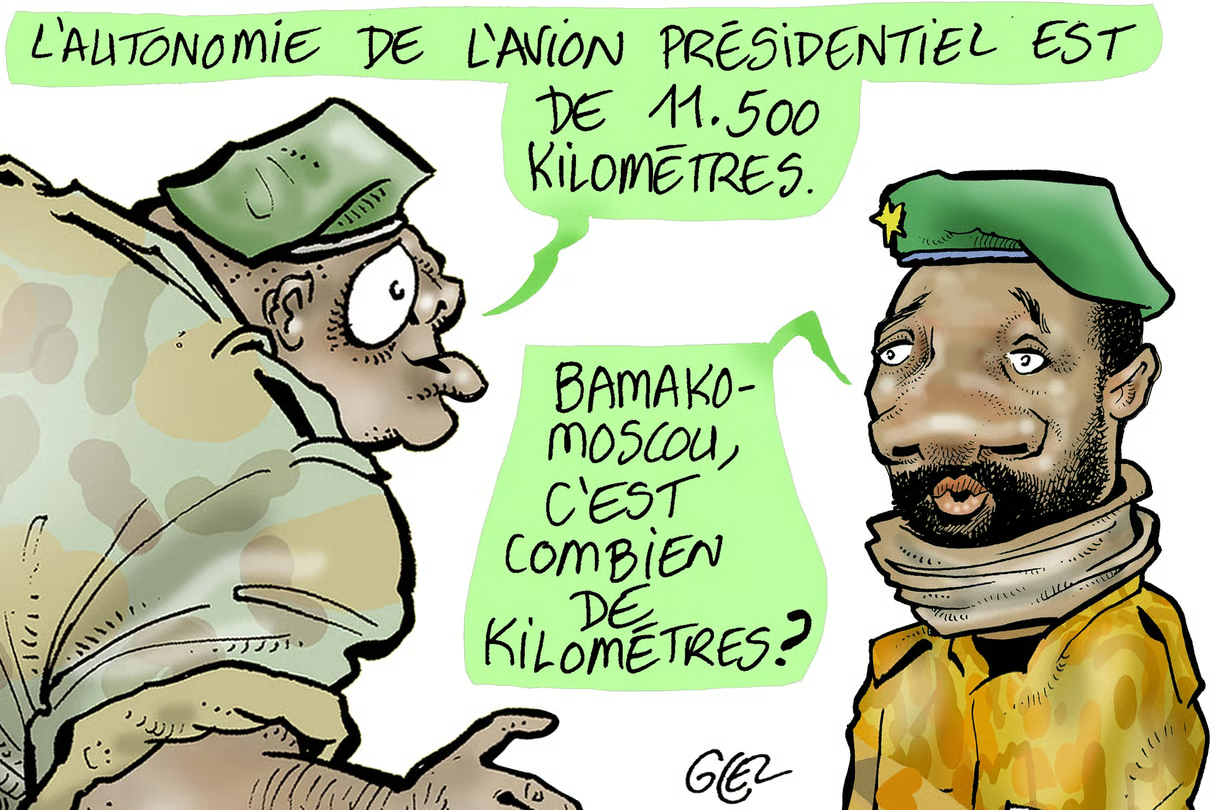
The Malian head of state, Colonel Assimi Goïta, has recently taken delivery of a new presidential aircraft, a move that has sparked public discussion. The acquisition comes at a time when the country continues to navigate complex political and economic challenges. The aircraft, designed for official state travel, replaces an older model that had been in service for several years.
Reasons behind the upgrade
While official statements have not detailed the specific motivations, observers point to several potential factors. Enhanced operational efficiency is likely a priority, given the demands of modern diplomatic engagements and internal travel requirements. The new aircraft may also reflect a broader strategy to modernize state infrastructure, aligning with broader national development goals.
Public and political reactions
The decision has drawn mixed responses. Supporters argue that reliable presidential transport is essential for effective governance and international representation. Critics, however, question the timing and cost of the acquisition, particularly in light of pressing national priorities. Social media platforms have become active spaces for debate, with citizens and analysts weighing in on the implications.
Historical context and comparisons
Presidential aircraft have long been a symbol of state prestige and operational capability in West Africa. Previous administrations in Mali have utilized such assets to facilitate high-level travel, both domestically and abroad. The current administration’s choice of aircraft appears to prioritize reliability and long-term utility over extravagance, though public scrutiny remains inevitable.
Technical specifications and features
The newly acquired aircraft boasts advanced avionics, extended range capabilities, and enhanced passenger comfort. These features are intended to support extended missions and ensure the safety of the head of state during official duties. The selection process likely involved consultations with aviation experts to ensure the model meets both national and international standards.
Economic and diplomatic considerations
From an economic perspective, the investment in a new aircraft may be viewed as a strategic allocation of resources. Diplomatic missions often require prompt and flexible travel arrangements, and a modern fleet can facilitate smoother engagements with international partners. This is particularly relevant for Mali, which plays a key role in regional stability and cooperation efforts.
The arrival of the new presidential aircraft underscores the government’s commitment to maintaining operational readiness in an evolving geopolitical landscape. As the nation continues to address security and development challenges, the role of such assets in supporting leadership mobility remains a topic of keen interest.
You may also like
Benin’s rating leap to AA-: the moment regional capital started taking Cotonou seriously
Brigitte Tchede’s Cairo surge: Benin’s discus medal breakthrough that changes everything
Burkina Faso’s armored vehicles: the moment of truth arrives on the battlefield
Togo presses pause on press freedom as a reporter’s sidelining marks a decisive shift
Benin-Rwanda breakthrough: Wadagni’s Kigali mission redefines strategic partnership