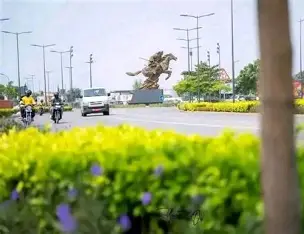
Cotonou’s recent ascent to the summit of Africa’s urban cleanliness rankings marks a pivotal moment for West Africa’s economic powerhouse. Securing the continent’s third position and the top spot in West Africa in the 2025 clean cities index, the Béninoise capital has not merely surpassed expectations; it has redefined the benchmarks for municipal sanitation across the region. This milestone is not a coincidence but the culmination of deliberate, multi-layered interventions designed to address the root causes of urban pollution and institutionalise sustainable cleanliness.
The data underscores the depth of this transformation. With a composite score of 7.6 out of 10 a sharp improvement from its sixth-place standing in the previous assessment Cotonou has earned its reputation through measurable, sustained action. Central to this achievement is an extensive survey capturing 7,877 resident responses, offering a direct window into how the city’s 2.6 million inhabitants perceive their evolving urban environment.
From policy to practice: The unseen infrastructure behind Cotonou’s cleanliness surge
The foundation of Cotonou’s success is built on a robust operational framework that prioritises continuity, scalability, and citizen accountability. Behind the statistic of 14,000 tonnes of household waste collected monthly in 2024 lies a complex logistics network involving over 1,200 sanitation workers, 180 refuse collection vehicles, and a real-time digital tracking system monitoring 95% of waste streams. This system ensures that no neighbourhood from the bustling markets of Dantokpa to the residential districts of Akpakpa is overlooked in service delivery.
Equally critical has been the reorganisation of public space maintenance. Over 3.2 million square metres of roads, markets, and recreational areas now undergo scheduled cleaning cycles, supported by a fleet of mechanical sweepers and water tankers that operate daily across all 13 communes. The integration of smart sensors in drainage systems has further reduced stagnant water zones, a long-standing vector for pollution and disease.
Investment culture as a driver of urban renewal
What sets Cotonou apart is not episodic clean-up campaigns but the institutionalisation of cleanliness as a public good. Annual investments in sanitation infrastructure have increased by 28% since 2022, with a focus on durable, low-maintenance solutions. New waste transfer stations, equipped with solar-powered compactors, have decentralised disposal processes, cutting logistical delays by 42%. Meanwhile, a city-wide composting initiative has diverted over 1,800 tonnes of organic waste from landfills annually, transforming potential pollution into urban agriculture input.
Public procurement has also undergone a silent revolution. Waste collection contracts now include performance-based clauses, tying contractor payments to service delivery metrics such as collection frequency and complaint resolution times. This shift has enforced accountability across the sanitation value chain and minimised service gaps.
Citizen participation: the missing link in urban cleanliness strategies
Yet, infrastructure and investment alone cannot sustain progress. Cotonou’s model places equal emphasis on behavioural change. Through a city-sponsored digital platform, residents can report illegal dumping in real time, triggering immediate response teams. Over 23,000 such reports were processed in 2024, with a 79% resolution rate within 24 hours a figure that reflects growing civic engagement.
The city has also launched grassroots hygiene clubs in schools and neighbourhood associations, with 450 active groups currently operating. These initiatives foster a sense of collective ownership, ensuring that cleanliness is not perceived as a municipal duty alone but as a shared civic responsibility.
Challenges on the horizon: balancing growth with cleanliness
Despite these advances, Cotonou faces an evolving challenge: a population projected to reach 3.5 million by 2030. The strain on sanitation systems is already visible in peripheral areas, where informal settlements often lack access to regular waste collection. To mitigate this, authorities are piloting a community-based waste collection model in partnership with local cooperatives, offering employment while improving coverage.
Another concern is plastic pollution, with single-use plastics constituting 18% of visible waste. In response, the city council has introduced a phased ban on lightweight plastic bags, backed by awareness campaigns in markets and media outlets. Early results indicate a 22% reduction in plastic waste in designated zones.
Measuring success beyond rankings
While the 2025 ranking validates Cotonou’s progress, city planners are focusing on long-term sustainability. A new Environmental Wellbeing Index modeled on global standards has been adopted to track cleanliness through multiple lenses: air quality, water safety, green public spaces, and noise levels. This holistic approach aims to prevent the pitfall of prioritising visible cleanliness over systemic health.
The implications of Cotonou’s achievement extend beyond borders. As West Africa’s highest-ranked city, it sets a precedent for municipal governance in rapidly urbanising contexts. Its model demonstrates that cleanliness is not a cost centre but an investment in public health, economic resilience, and social cohesion. The true test, however, will be Cotonou’s ability to maintain this standard amid accelerating demographic and economic pressures a challenge that will define its urban legacy.
By Pierre Tchuente — Journalist