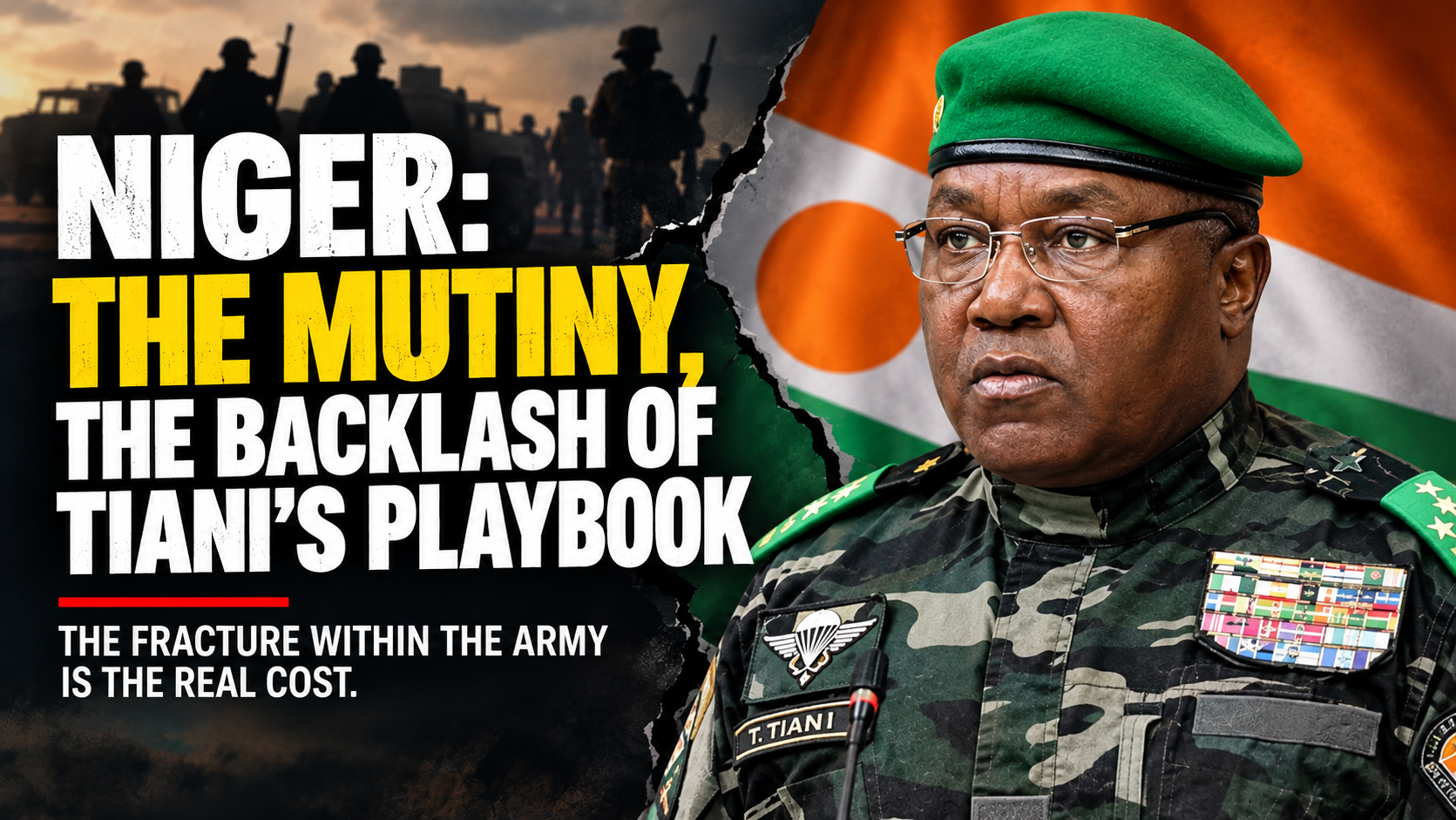
The political choices of General Tiani have fundamentally reshaped the armed forces of Niger, shifting their primary role from national defence to a tool for consolidating political power. Since taking control, the head of the junta has systematically appointed loyalists, sidelined independent officers, and prioritized personal allegiance over professional merit. This disruption of traditional military hierarchies has eroded the internal cohesion that once kept the armed forces united, sowing seeds of deep mutual suspicion among the troops.
A command structure fractured by political loyalty
When military advancement is perceived to depend on political connections rather than professional dedication, a sense of deep injustice inevitably spreads through the ranks. The mutiny that occurred on August 28 and 29 cannot be dismissed as a minor breach of discipline or a random act by a few isolated soldiers. Instead, it stands as a clear manifestation of systemic frustration and growing distrust that have quietly accumulated within the security apparatus over several years.
The operational cost of internal divisions
This internal divide poses a severe threat to Niger, a nation facing constant security challenges from armed groups across multiple fronts. A military burdened by internal rivalries and suspicion cannot operate with the cohesion required to defend the territory. When soldiers view their peers with distrust, operational solidarity collapses, creating critical vulnerabilities that external threats can easily exploit.
The strategic use of silence and media narratives
The government’s complete silence regarding the fate of the detained soldiers reflects a deliberate strategy of opacity. By withholding information about who has been arrested, where they are held, and what charges they face, the administration fosters an environment of fear. This uncertainty serves as a mechanism of control, leaving every soldier to wonder if they might be the next target of a purge.
Furthermore, this lack of transparency prevents any genuine resolution to the crisis, allowing rumors to flourish and further damaging the credibility of the military command. Instead of addressing the core issues, the regime has chosen to broadcast images of seized military vehicles and equipment on national television. This media campaign seeks to convince the public of an organized conspiracy, yet it fails to answer critical questions regarding the mutineers’ actual grievances, individual responsibilities, or the breakdown of internal discipline.
Confusing regime survival with state security
The ongoing purges of experienced officers carry a heavy operational price. Sidelining seasoned command staff weakens units precisely when Niger needs maximum efficiency to counter highly adaptable armed groups. A glaring paradox lies at the heart of the current governance: while the regime’s rhetoric champions national sovereignty and territorial defense, substantial energy is diverted toward monitoring and neutralizing internal dissent within the security forces.
Ultimately, prioritizing the survival of the regime over the cohesion of the national army risks weakening the country’s main shield. By transforming the military into a political safeguard, the current leadership may secure short-term political control, but at the cost of long-term strategic stability. The current crisis is the logical result of a governance model built on mistrust, centralized power, and the systematic politicization of the armed forces.