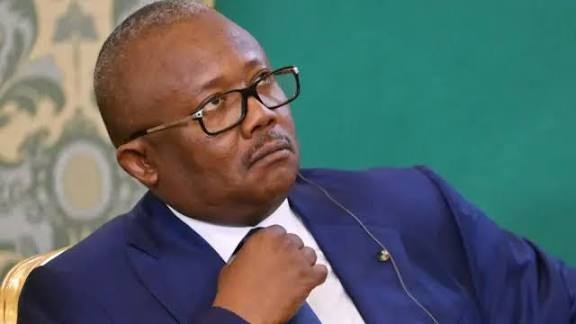
Bissau’s political fog has finally lifted. After months of hedging, Umaro Sissoco Embaló has formally declared he will seek a second term as Guinea-Bissau’s head of state. The president, who had repeatedly hinted he might step aside, has instead answered the calls of his loyalists and coalition partners.
The move places him squarely at the centre of a political contest that will define the country’s next chapter — and raises a hard question: will another Embaló mandate steady a nation long accustomed to institutional turbulence, or deepen the fault lines that have defined his first term?
A presidency defined by diplomatic wins and domestic friction
Since his contested 2019 victory and his swearing-in the following year, Embaló has pursued an agenda centred on elevating Guinea-Bissau’s international profile and upgrading its infrastructure. His tenure included a stint at the helm of the regional bloc ECOWAS, a role that brought Bissau rare global attention.
Yet the same period has been punctuated by persistent internal unrest:
- Repeated parliamentary dissolutions: The president twice dissolved the National People’s Assembly, in 2022 and again in late 2023, citing destabilisation plots and institutional deadlock.
- Opposition friction: The PAIGC-led opposition alliance has frequently accused the government of authoritarian drift and of narrowing public freedoms.
- Security threats: The administration has weathered several episodes of military tension and alleged coup attempts in the capital.
What to watch in the months ahead
With his candidacy now official, Embaló has fired the starting gun on a campaign season. The coming months will hinge on two critical tests: whether the electoral machinery can be organised credibly, and whether opposition forces choose to participate or boycott.
Regional observers and international partners are watching closely. For them, the benchmark remains an inclusive, transparent and calm process — one capable of protecting the still-fragile stability of this West African state.