Gabon’s manganese production dipped to 9.1 million tonnes, drawing attention to critical weaknesses in the country’s logistics network. Repeated breakdowns and bottlenecks along the Transgabonais railway, which connects mining sites to Owendo port, disrupted operations for much of the year. However, the final quarter of 2025 marked a clear rebound in output.
The recovery was driven by the restart of operations at Moanda and Franceville mines, pushing national production up by 10.8% compared to the previous quarter, according to figures from the Directorate General of Economy and Fiscal Policy. Beyond mere extraction, the sector is gradually shifting toward local processing—a move aimed at adding value before export.
Major investment pledges to boost local manganese processing
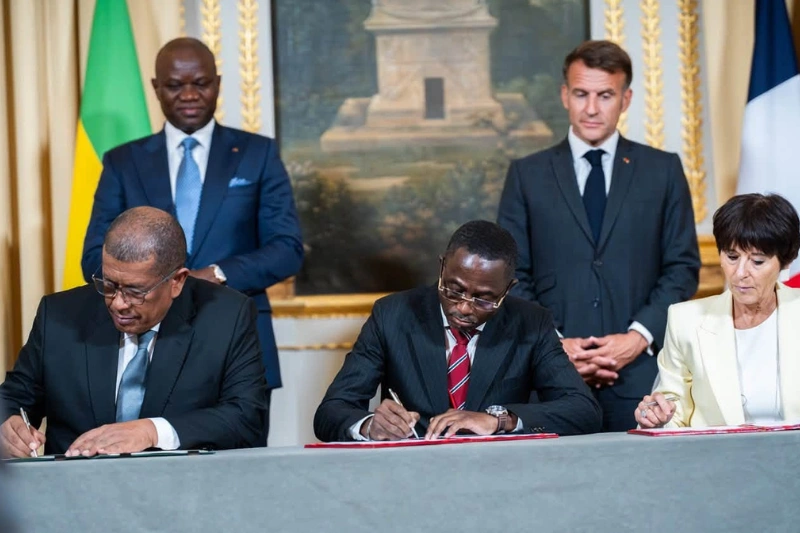
In July 2026, Gabon’s government and the French multinational Eramet formalized a landmark agreement in Paris. The deal commits Eramet to processing up to 700,000 tonnes of manganese ore annually within Gabon by the end of 2031. Three development pathways are under review: upgrading the metallurgical complex in Moanda, establishing new processing facilities at Owendo, or building an oxide manganese plant for battery production near Libreville.
Addressing public skepticism, the Ministry of Industry clarified that the 700,000-tonne commitment applies solely to Eramet. Other mining operators are expected to contribute to the national transformation effort as well.
Energy and sustainability at the core of Gabon’s manganese strategy
Eramet’s plans include securing a stable energy supply and integrating biocharcoal into operations. These initiatives reflect a broader industrial transition ahead of the 2029 deadline, when Gabon will prohibit the export of raw manganese ore. The shift underscores the country’s ambition to build a more resilient, value-added mining sector while meeting global demand for processed minerals.
You may also like
Thali oil permit: can Prime Global Energies’ $15 million rescue finally unlock Cameroon’s stalled Njom-3 well?
Can West Africa’s peace hold without the Entente Council and UNOWAS pact?
Can Lomé’s quiet diplomacy finally deliver peace to eastern DRC?
Can Nigeria’s security forces ever shut down the kidnapping economy in the north?
Can Benin’s defense strategy survive on diversification alone?