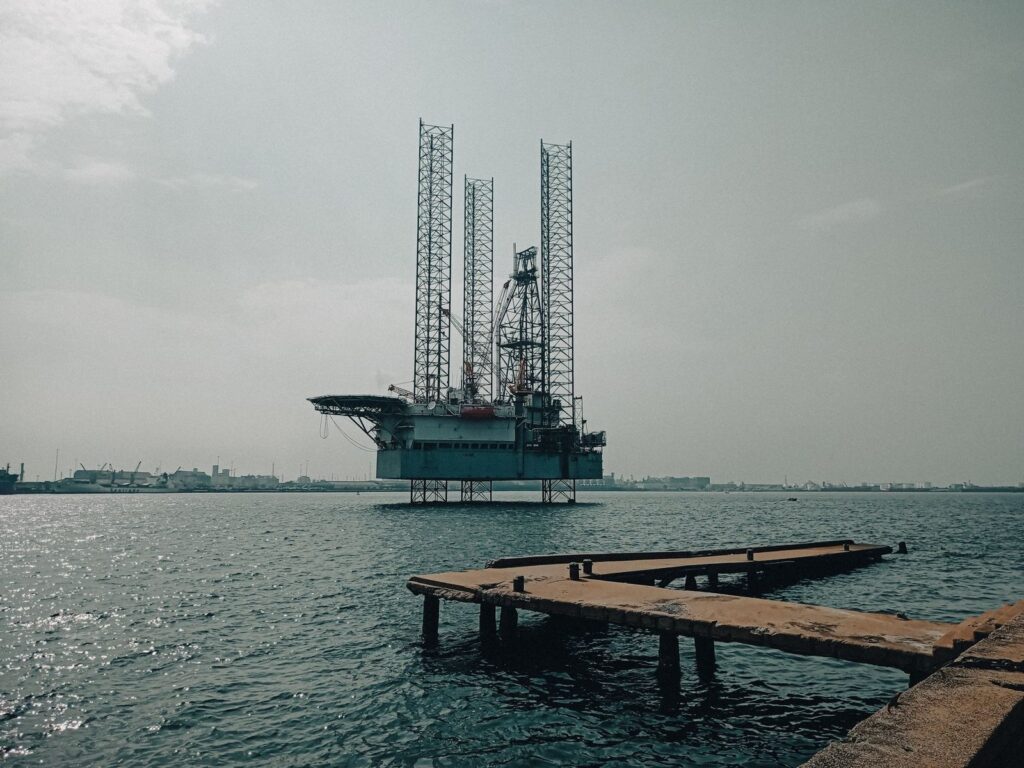
Cameroon’s Thali offshore oil permit has reached a critical crossroads, and the question on everyone’s lips is whether the entry of Prime Global Energies can finally break the deadlock. Tower Resources, the British operator of the license, has secured approval from the presidency in Yaoundé to farm out a 42.5% working interest to Prime Global Energies. The deal, which still requires administrative completion, involves a $15 million investment commitment toward the work program, with the Njom-3 appraisal well as the main target. Converted at the European Central Bank’s reference rate of September 28, 2026, that sum equals roughly 8.65 billion CFA francs.
The arrangement is not a direct cash payment to Tower. It is an investment commitment, the classic farm-out mechanism in which a partner funds a share of the technical program in return for an equity stake. Prime Global Energies will join Thali as a non-operating partner, while Tower Resources Cameroon, the London group’s local subsidiary, retains operational control.
Yaoundé’s approval is not the final step
Despite the presidential green light, the administrative process is far from complete. In its half-year accounts to June 30, published on September 28, Tower said it had seen a copy of the presidency’s letter addressed to the Prime Minister’s office, the Ministry of Mines, Industry and Technological Development (Minmidt), and the National Hydrocarbons Corporation (SNH). Minmidt must still draft the decree extending the initial exploration period and send the formal letter approving the farm-out.
Until those duly executed documents are in the parties’ hands, the transaction remains on hold. Tower acknowledges that the completion timeline is uncertain at this stage. That caution is telling: the exploration program is already several years behind schedule due to insufficient funds to launch drilling operations.
Prime Global Energies, registered in the United Kingdom and focused on upstream oil and gas, is no stranger to the sector. The company was still called Prime Pakistan Limited until December 2024, having previously operated as Eni Pakistan Limited. That lineage with Italy’s Eni gives it operational experience that could reassure Cameroonian authorities about the technical strength of the new partner.
Njom-3 drilling pushed to second quarter 2027
Prime’s entry is primarily aimed at securing financing for Njom-3, the next appraisal well planned on Thali. Tower has revised its schedule: drilling is now expected to start in early Q2 2027, from April onward, compared with an earlier assumption of the first quarter. An earlier start is not entirely ruled out, but management prefers to stick with the more conservative window in its forecasts.
“We currently plan to start drilling in early Q2 2027,” says Jeremy Asher, chairman and CEO of Tower Resources. The choice of drilling rig has not yet been contracted. The company continues to review available units on the market and has decided not to comment further until a firm contract is signed. Draft agreements with other service providers needed for the operation are, however, already in place.
Some logistics are even ready in Douala. Tower has stored there, along with other equipment for Njom-3, a system to suspend the well after testing and later reuse it for production, should test results prove encouraging.
A cash-starved operator makes the deal vital
Prime’s contribution is almost existential for Tower. The group states in its accounts that it must either complete the Cameroonian farm-out, conclude another transaction on its assets, or raise additional capital to meet its commitments. As of June 30, 2026, the company had only $66,583 in cash against $2.91 million in current liabilities. It has never produced a barrel and generates no revenue.
In the first half, $453,000 in spending was capitalized in Cameroon, down from $982,000 a year earlier. These commitments cover Njom-3 preparation, engineering studies, drilling planning, and the Douala office’s operations. The $15 million promised by Prime should cover the remaining amount needed for the appraisal well. Subsequent testing and any commercial development of the field will require further funding rounds.
What to watch next
Niger’s oil: why Bamako and Ouagadougou struggle to benefit · BOAD releases 8 billion CFA francs for Malian fuel · Cotco: Savannah demands 228 billion CFA francs from SNH and Chad
You may also like
Can West Africa’s peace hold without the Entente Council and UNOWAS pact?
Can Lomé’s quiet diplomacy finally deliver peace to eastern DRC?
Can Nigeria’s security forces ever shut down the kidnapping economy in the north?
Can Benin’s defense strategy survive on diversification alone?
Can the CEMAC capital market finally bankroll Cameroon’s real economy?