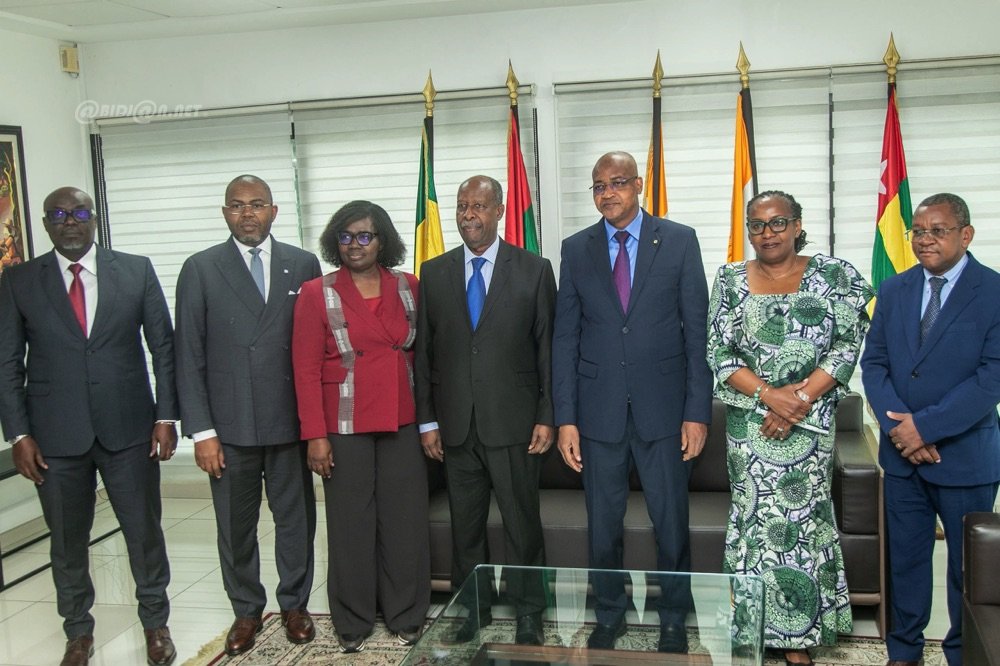
What does it take to keep a region from sliding further into instability? That question hung over Abidjan-Cocody on Tuesday, September 29, 2026, as the Conseil de l’Entente and the United Nations Office for West Africa and the Sahel (UNOWAS) signed a Memorandum of Understanding to deepen their cooperation on peace, stability, political dialogue and regional cooperation across West Africa and the Sahel.
With the region still facing persistent security, political, humanitarian and institutional challenges, the two bodies aim to pool their efforts more effectively. The partnership is also designed to preserve and strengthen spaces for consultation between states and regional organisations.
Three priorities shaping the new cooperation
The cooperation rests on three main pillars. The first centres on preventive diplomacy, mediation and political dialogue, including the possibility of strategic consultations, good offices initiatives and facilitation efforts.
The second focuses on peace and resilience in border areas. Both institutions plan to work on conflict prevention, strengthening social cohesion and boosting the participation of young people and women in peace initiatives.
The third pillar is dedicated to institutional strengthening and strategic analysis, through information sharing, joint studies, advisory assistance and capacity development for the Conseil de l’Entente.
A platform for dialogue and diplomatic facilitation
The Memorandum also enshrines the role of the Conseil de l’Entente as a platform for dialogue, consultation and diplomatic facilitation. Where circumstances require it, the organisation could help bring states closer together and bridge different regional configurations.
To ensure the agreement is implemented, both institutions will draw up annual joint work plans, designate focal points and hold regular follow-up consultations. Joint assessment, dialogue or diplomatic facilitation missions may also be carried out.
The Memorandum of Understanding is concluded for an initial period of three years.
Why the stakes are high for regional stability
Leonardo Simão, Special Representative of the UN Secretary-General for West Africa and the Sahel, attended the signing ceremony and stressed the importance of this cooperation for promoting peace and stability in the region.
“There are always threats to peace. We cannot take peace as something definitive. We must always make efforts to maintain peace where it already exists, but also to recover peace where it does not exist,” he said.
Simão also highlighted the experience of the Conseil de l’Entente, created in 1959, before both the Organisation of African Unity and the Economic Community of West African States (ECOWAS). In his view, this experience of cooperation between states provides a foundation on which new peace initiatives in the region can be built.
Recognition of a longstanding regional role
For Idi Ali, deputy executive secretary in charge of the interim executive secretary of the Conseil de l’Entente, the agreement reflects recognition of the role the organisation can play in the current security context.
“The Conseil de l’Entente is today a privileged framework for consolidating peace in the sub-region,” he said, noting in particular the presence within the organisation of both Sahelian and coastal countries.
He welcomed the signing of the Memorandum with the United Nations Office for West Africa and the Sahel, saying it would help consolidate relations between the two institutions and strengthen their contribution to peace in the sub-region.
You may also like
Can Lomé’s quiet diplomacy finally deliver peace to eastern DRC?
Can Nigeria’s security forces ever shut down the kidnapping economy in the north?
Can Benin’s defense strategy survive on diversification alone?
Can the CEMAC capital market finally bankroll Cameroon’s real economy?
Mali: can justice deliver for civilians after Amnesty’s war crimes findings?