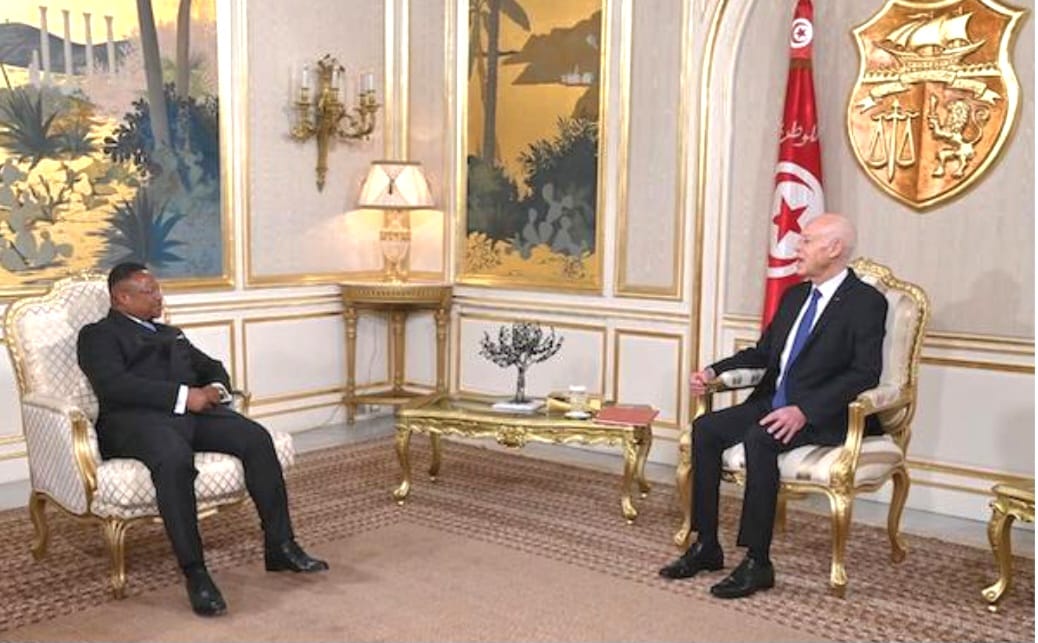
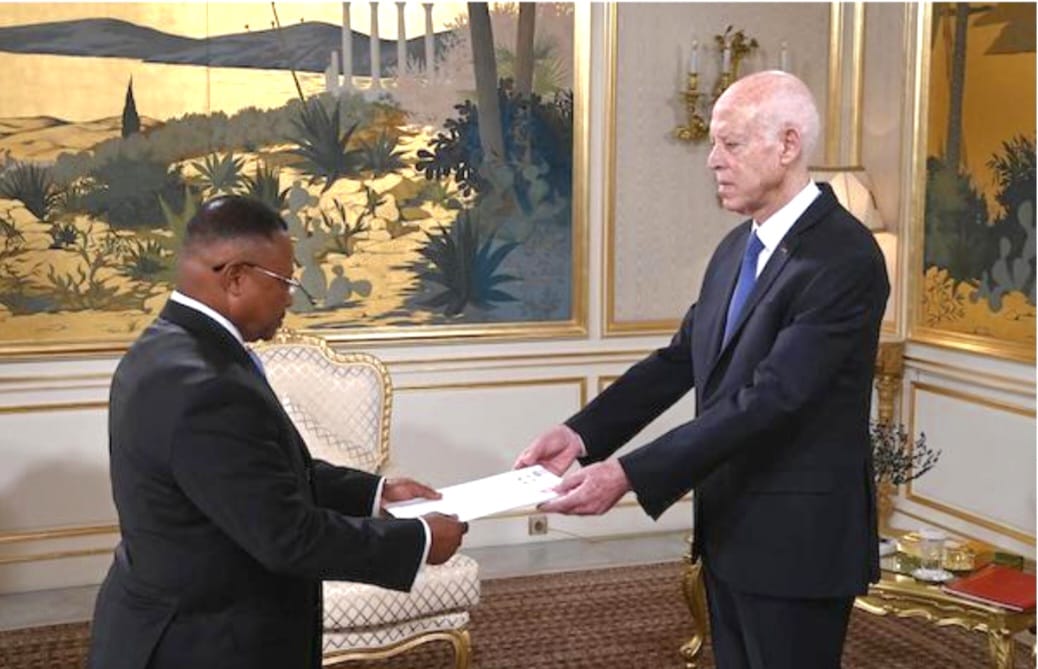
Ambassador Extraordinary and Plenipotentiary of Gabon to the Tunisian Republic, Pierre Ntsiet Ngolo, has outlined the key objectives of his diplomatic mission. Appointed in March 2024 and having presented his credentials to Tunisian Head of State Kaïs Saëd on November 6, 2025, the seasoned diplomat expressed his unwavering commitment. He pledged to work diligently with his team and the support of Libreville to strengthen the bonds of friendship and cooperation along the Libreville-Tunis axis, while prioritizing the protection and welfare of the Gabonese community residing in Tunisia.
Among the initial undertakings by Gabon’s new diplomatic and consular authorities in Tunisia was the revitalization of community cohesion. This initiative, mirroring similar efforts by Gabonese diasporas globally, led to the establishment of two vital consultation and solidarity frameworks.
One of these is the unifying ‘Conseil des Gabonais de Tunisie’ (C.G.T.), which brings together approximately one thousand Gabonese citizens in the country—including students, interns, professionals, and married individuals—under principles of charity, humanitarian mutual aid, equity, and fraternity. The second, primarily for students and interns, is known as the ‘Association des étudiants et stagiaires gabonais en Tunisie’ (A.E.S.G.T.).
“The newfound unity and cohesion within the community became particularly evident during the first edition of the Gabonese Cultural Days, held on April 24th and 25th. These events clearly showcased our community’s ability to unite around shared values of solidarity and fraternity,” Ambassador Pierre Ntsiet Ngolo proudly affirmed.
Building on established foundations
A significant aspect of the bilateral relationship between Gabon and Tunisia is academic cooperation. This is underscored by the substantial presence of Gabonese students and interns across various Tunisian universities. These young individuals often face considerable challenges, particularly given the stringent immigration policies, highlighting a critical need for robust support mechanisms.
Operating within a landscape shaped by migration-related complexities, some students encounter severe administrative hurdles, notably in renewing their residency permits. These issues frequently stem from delays in the payment of tuition fees.
“I wish to use this platform to issue an urgent appeal to families and the National Scholarship Agency of Gabon (ANBG) to explore prompt solutions for financial support. This would alleviate the difficulties faced by our young compatriots grappling with Tunisia’s strict immigration regulations,” pleaded the Ambassador.
Health cooperation also stands as a top priority for the new leadership of Gabon’s diplomatic representation in Tunis. This includes a standing agreement between Gabon’s National Health Insurance Fund (CNAMGS) and Tunisian specialized medical evacuation providers, leveraging Tunisia’s high-quality technical infrastructure and expert medical proficiency.
“Our responsibility involves consolidating these existing achievements and forging new partnerships that can advance the development ambitions of both our nations. This entails enhancing dialogue with our institutional partners and directing a significant portion of our efforts towards economic diplomacy. It also involves exploring diverse, mutually beneficial new avenues that capitalize on the expertise and potential available in both countries, fostering a framework for co-development,” Pierre Ntsiet Ngolo suggested.
Core strategic focus
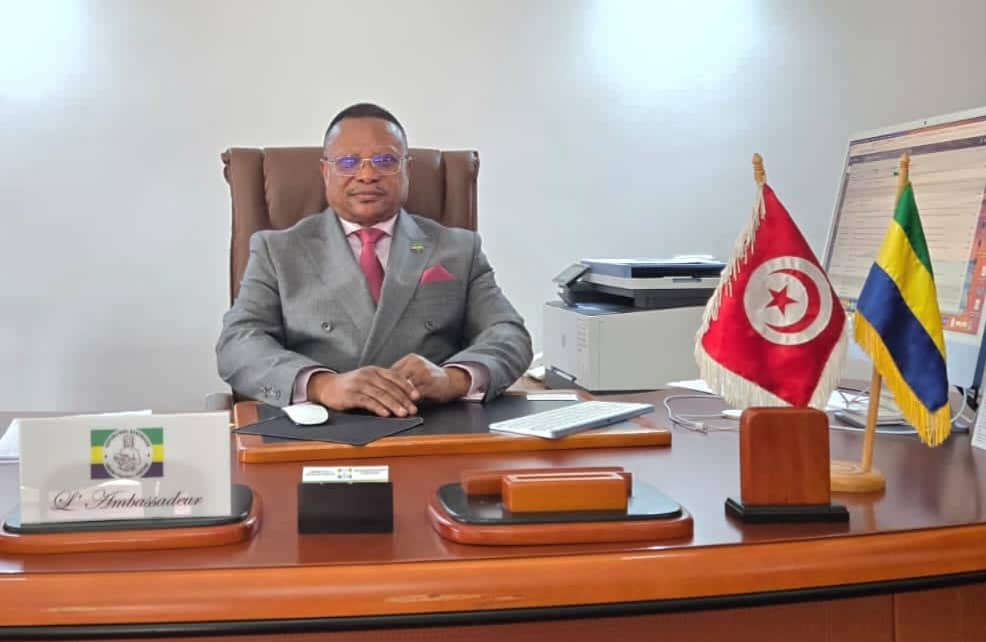
“All these efforts target key economic players who align with a sustainable pan-African vision for shared prosperity. In this regard, organizing economic missions led by Tunisian operators serves as an encouraging sign, with anticipated outcomes including the signing of investment agreements and partnerships,” the Gabonese Ambassador to Tunisia affirmed.
Beyond animating the diplomatic relationship itself, Pierre Ntsiet Ngolo takes immense pride in having developed various consular assistance mechanisms for Gabonese residents immediately upon assuming his duties. “This message advocating for unity has been positively received by the community, which had long felt a sense of abandonment,” he concluded.