Under the guise of dismantling colonial legacies and diversifying international partnerships, the Burkinabè transitional government’s strategic and financial decisions are prompting a critical inquiry: Is the nation truly achieving liberation, or merely exchanging one custodian for another?
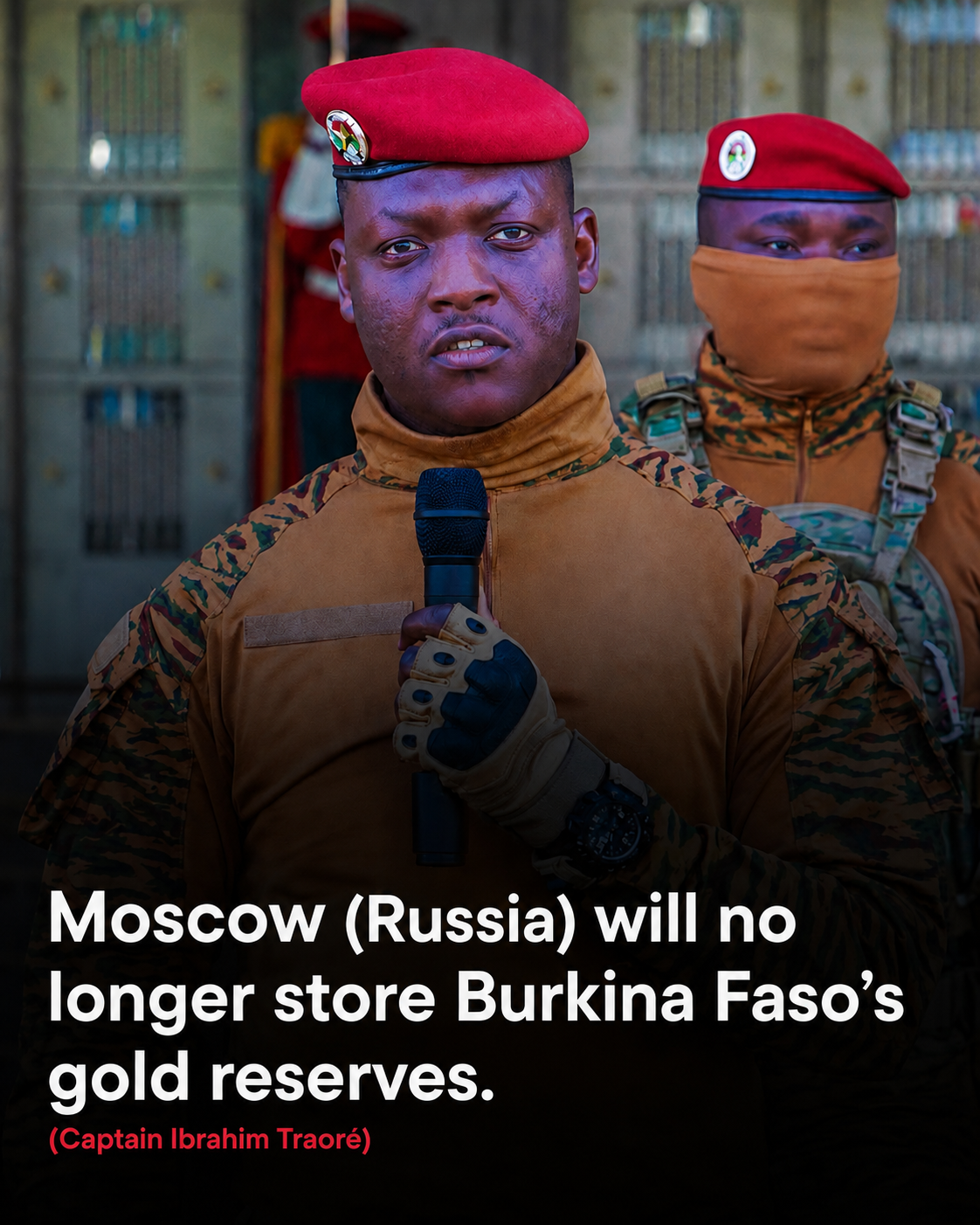
Since Captain Ibrahim Traoré assumed leadership of the transition, Ouagadougou has consistently articulated a clear mandate: the reclamation of national sovereignty. This compelling rhetoric has resonated widely, particularly among a youth yearning for emancipation from the former colonial power, France. However, the increasingly rapid and uncompromising alignment with the Russian Federation is beginning to expose cracks in this illusion. Far from the promised autonomy, Burkina Faso’s current trajectory increasingly resembles a transfer of economic and military reliance, directly challenging the very essence of its proclaimed sovereignty.
the exorbitant cost of financial asymmetry
Recent discussions surrounding mechanisms for securing and managing national resources, particularly the vital gold sector—which accounts for nearly 80% of the country’s export revenues—underscore the extreme vulnerability of the Burkinabè state.
By engaging in partnerships where the financial or logistical terms imposed by Russian entities appear disproportionate, Ouagadougou risks undermining its own economy. Entrusting the control, storage, or concessions of its primary commodities to foreign institutions, under the pretext of ‘shielding’ them from the West, represents a historical contradiction. A truly sovereign state does not secure its wealth by alienating itself to another economic superpower; it fosters the internal conditions for its own self-reliance. Paying a premium to Moscow to safeguard Burkina Faso’s mineral wealth transcends cooperation; it becomes a form of tribute.
the security reliance: a subcontracting trap
On the security front, the outlook offers little more reassurance. The strategic pivot towards Russia, marked by the deployment of instructors and paramilitary forces (formerly Wagner, now operating under the Africa Corps banner), was intended to swiftly alter the balance of power against armed terrorist groups.
Yet, the cost of this military assistance is astronomical for the state budget, while tangible results in achieving lasting stability across the country remain elusive. This reality has been starkly highlighted by recent waves of exceptionally violent attacks endured by the Forces of Defense and Security (FDS). By tethering the nation’s security fate to the geopolitical agenda of a Kremlin preoccupied with its own conflicts, Burkina Faso places itself in a precarious position of subordination. Should the Russian partner decide to reallocate its priorities or escalate its financial demands, what leverage will Ouagadougou possess to resist?
from françafrique to “russafrique”: merely a change of colonizer?
The sharpest critique stems from the regime’s doctrinal inconsistency. How can the legitimate rejection of Western paternalism be justified if it leads to an uncritical embrace of Moscow’s opportunistic imperialism?
« Replacing one form of guardianship with another has never constituted an act of liberation. It is an admission of powerlessness. »
Russia does not deploy its influence in Africa out of altruism or anti-colonial solidarity. Its motives are rooted in circumventing international sanctions, securing strategic resources, and cultivating diplomatic leverage against the Western bloc. By casting itself into Moscow’s embrace to escape Paris, Burkina Faso has not broken its chains; it has merely exchanged jailers.
an isolated and weakened diplomacy
Finally, this exclusive bilateral engagement with Russia risks isolating Burkina Faso on the regional and international stage. By severing ties with traditional donors and straining relationships with several neighboring countries in the sub-region, the transitional government significantly curtails its diplomatic room for maneuver. A truly sovereign nation diversifies its partnerships to balance external influences; it does not confine itself to an exclusive and asymmetrical bilateral relationship where it remains in a perpetual state of dependency.
For the Burkinabè populace, the awakening could prove painful. Sovereignty is not measured by the intensity of anti-Western rhetoric, but by a country’s genuine capacity to determine its future without requiring external approval—whether that comes from Paris, Washington, or Moscow. By divesting its national assets and outsourcing its security to Russia, the current regime risks compromising Burkina Faso’s tangible independence for decades to come.