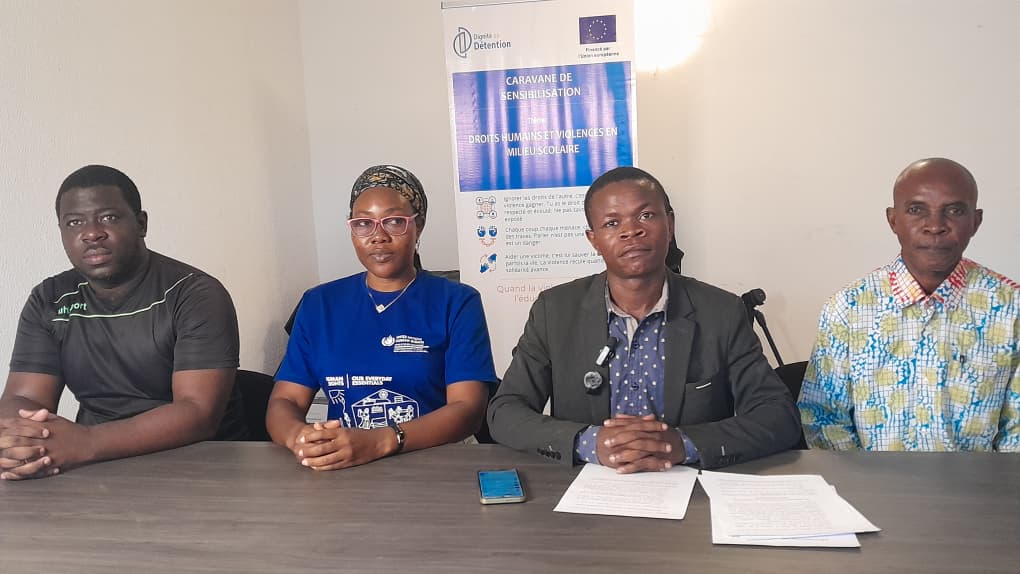
A coalition of several Gabonese civic organizations announced Saturday in Libreville that they have initiated legal proceedings to challenge the escalating wave of cyberattacks, primarily targeting WhatsApp and Facebook accounts.
The collective has documented approximately fifty complaints from Gabonese citizens across various social strata. Their analysis suggests that the widespread adoption of virtual private networks (VPNs) – a method employed by many to circumvent the social media suspension in effect since February 17th – is a significant factor contributing to these attacks.
“The phone numbers originating these attacks typically begin with +500 or +600. These are foreign dialing codes. This strongly indicates that the perpetrators are not necessarily operating from within Gabon,” explained Patrice Thérence Mezui, president of the National Human Rights League and the collective’s designated spokesperson.
According to the collective, this phenomenon, once uncommon, has proliferated significantly since the High Authority of Communication (HAC) officially suspended social media access on February 17, 2026.
“This action constitutes a violation of the Constitution, specifically the chapter safeguarding fundamental liberties,” Mr. Mezui asserted.
“The Court declared itself without jurisdiction, deeming the contested act administrative in nature,” he further elaborated.
The court of first instance similarly declined jurisdiction. Consequently, the collective lodged its final complaint with the Council of State. “We are currently awaiting the Council of State’s decision,” he concluded, though without specifying the exact date this complaint was filed.
Immediate reversal of social media suspension demanded
The collective argues that the ongoing suspension of social media platforms leaves Gabonese citizens vulnerable to these cyberattacks. They are demanding an immediate lifting of this suspension, which was initially temporary but has become nearly permanent. Furthermore, they urge the President of the Republic to enact the recently adopted social media usage law and propose opening negotiations on the issue to forge a national consensus.
The HAC had justified its measure by citing the necessity to combat misinformation, cyberharassment, and hateful content. However, civil society groups contend that the ban is disproportionate and contradicts the fundamental principles of a rule of law state.