Gabon strengthens national security with major military contracts
Libreville, June 22, 2026 — With security threats intensifying across the Gulf of Guinea and global conflicts evolving rapidly, Gabon has taken a decisive step to bolster its military capabilities. This move follows President Brice Clotaire Oligui Nguema’s address to the Nation on June 15, 2026, outlining one of the most significant military modernization programs in the country’s recent history.
An estimated €200 million contract, equivalent to over FCFA 131 billion, has been awarded to Israel’s AD Con to enhance the operational readiness of Gabon’s armed forces. This initiative responds to a regional environment where maritime insecurity, transnational trafficking, and asymmetric threats demand a strategic reassessment of defense postures.
Addressing Gulf of Guinea security challenges
The Gulf of Guinea remains one of the world’s most volatile maritime regions, plagued by piracy, illegal fishing, drug trafficking, and organized crime. These threats undermine coastal economies and jeopardize critical trade routes. For Gabon, with its extensive maritime domain and offshore resources, securing national waters has become a top priority.
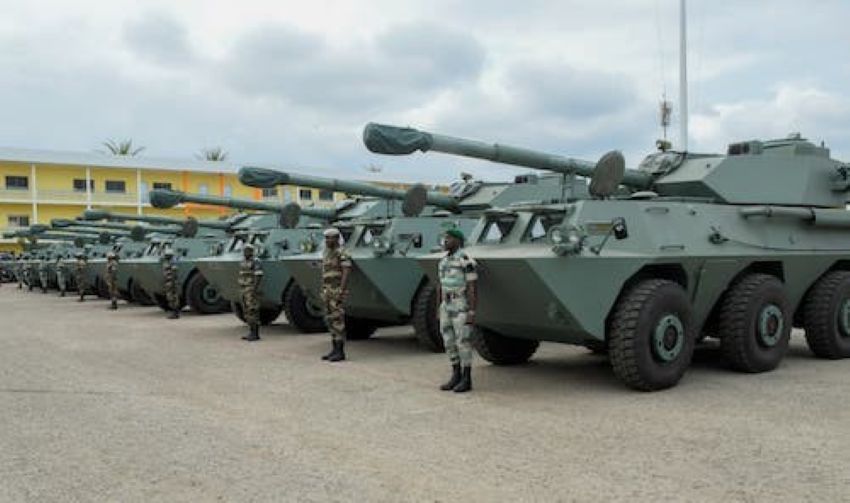
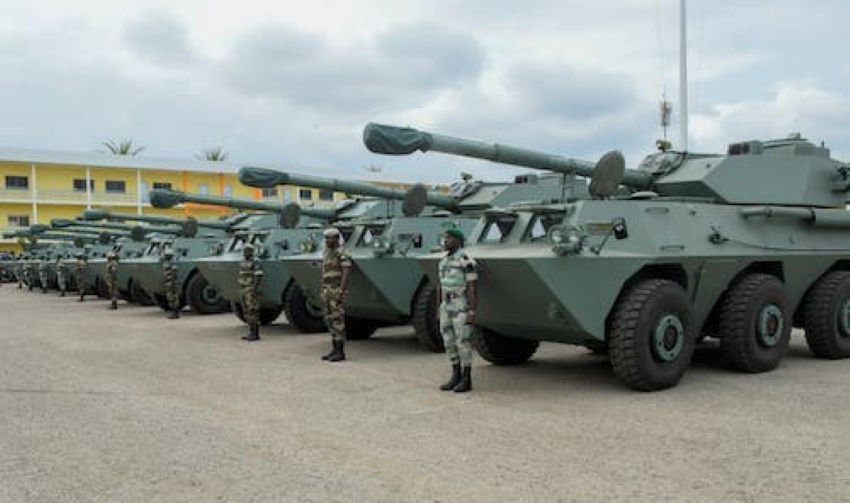
In line with this strategy, the Head of State announced the upcoming acquisition of Mi-35 attack helicopters and new frigates to strengthen surveillance and intervention capabilities. The 2026 contract with AD Con goes further, including military vehicles, cutting-edge drones, patrol vessels, and the refurbishment of two Mil Mi-17 transport helicopters by Serbia’s Yugoimport-SDPR.
This diversification reflects a shift in military doctrine. Modern armed forces no longer rely solely on heavy weaponry but prioritize mobility, real-time intelligence, and rapid deployment across multiple theaters. The investment underscores Gabon’s commitment to adapting to 21st-century security realities.
A strategic Israeli partnership
The selection of an Israeli firm is deliberate. Israel stands at the forefront of global security and defense innovation, particularly in surveillance technology, drone systems, and asymmetric warfare solutions. Under the AD Con agreement, several Israeli defense giants are expected to play key roles: Elbit Systems and Aeronautics for drone supply, and Israel Shipyards for patrol vessels, likely of the Shaldag MK V class, renowned for speed and coastal mission efficiency.
This decision also marks a departure from earlier alternatives. A previously considered plan involving Pakistani equipment through Burkinabe businessman Mahamadou Bonkoungou was ultimately abandoned in favor of the Israeli solution. While this is AD Con’s largest Gabonese contract to date, the company has prior experience in the country, having supplied military hardware from Ukraine to the Republican Guard during Ali Bongo Ondimba’s presidency in 2016.
Defense, sovereignty, and regional credibility
Beyond military hardware, this initiative aligns with a broader national sovereignty agenda. In an increasingly unstable global landscape, states lacking modern surveillance and projection tools face heightened vulnerability to external threats. Gabon’s military modernization reflects its determination to align with 21st-century security imperatives.
The acquisition of drones, enhanced naval capabilities, and advanced aerial assets are now vital instruments for protecting strategic infrastructure, securing borders, and ensuring economic stability. This military upgrade also signals Gabon’s ambition to play a more prominent role in regional security frameworks. As African nations increasingly take charge of their collective defense, a country’s ability to safeguard its territory bolsters its diplomatic credibility.
The FCFA 131 billion investment sends a clear message: national security is no longer viewed as a cost but as a strategic necessity. In a region where security challenges are rapidly evolving, control over land, sea, and air domains has become indispensable for economic development and sovereignty.