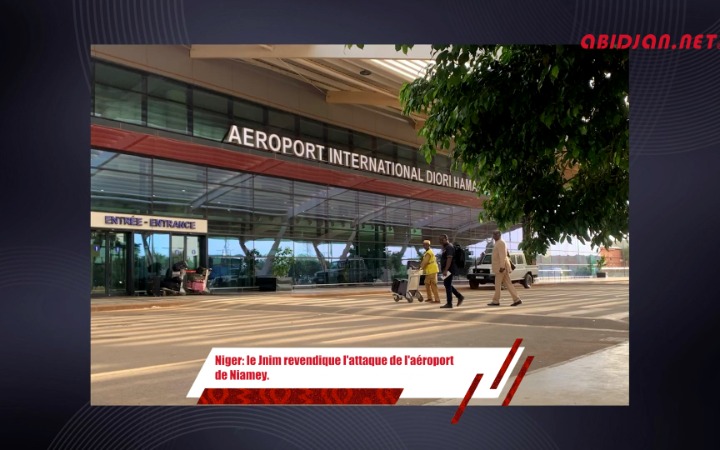
The Jamaat Nusrat al-Islam wal Muslimeen (JNIM) has officially taken credit for the recent assault on Niamey’s international airport, marking a significant escalation in regional security concerns.
In a statement released earlier today, the militant group confirmed its involvement in the coordinated attack, which left multiple security personnel injured and temporarily disrupted air operations at one of West Africa’s busiest aviation hubs. The assault has drawn immediate condemnation from regional authorities, who are now reassessing counterterrorism strategies across the Sahel.
The attack unfolded under the cover of night, with assailants targeting both the terminal and surrounding perimeter defenses. Eyewitness accounts describe heavy gunfire followed by explosions, prompting a swift response from Nigerien security forces and allied international partners. Authorities confirmed that the situation was brought under control within hours, though the full extent of damages remains under investigation.
Security implications for the region
The assault on Niamey’s airport underscores the persistent threat posed by armed groups operating across the Sahel belt. Analysts warn that such high-profile attacks could destabilize critical infrastructure, further complicating humanitarian and economic activities in already fragile states. The JNIM, an umbrella organization linked to al-Qaeda, has been responsible for numerous violent incidents in recent years, including kidnappings, ambushes, and suicide bombings.
Regional response underway
Nigerien authorities have heightened security measures at key installations, including airports, military bases, and border crossings. Collaborative efforts with neighboring countries are being strengthened to curb cross-border militant movements. Meanwhile, international partners continue to provide logistical and intelligence support to bolster local defense capabilities.
The timing of the attack coincides with growing regional tensions, as governments grapple with the dual challenges of insurgency and economic instability. Calls for unified action have intensified, with some leaders advocating for expanded military operations against militant strongholds.
Public reaction and aftermath
Residents of Niamey have expressed shock and outrage over the incident, with many questioning the effectiveness of current security protocols. Social media platforms have been flooded with messages of solidarity, as well as demands for swift justice. The government has assured the public that all perpetrators will be held accountable, while urging calm and vigilance.
As investigations progress, the focus remains on identifying key operatives behind the attack and dismantling their networks. Security experts emphasize that long-term stability in the Sahel will require not only military intervention but also sustained efforts to address underlying socio-economic grievances fueling militancy.