Former President Mohamed Bazoum Remains Arbitrarily Detained in Niger
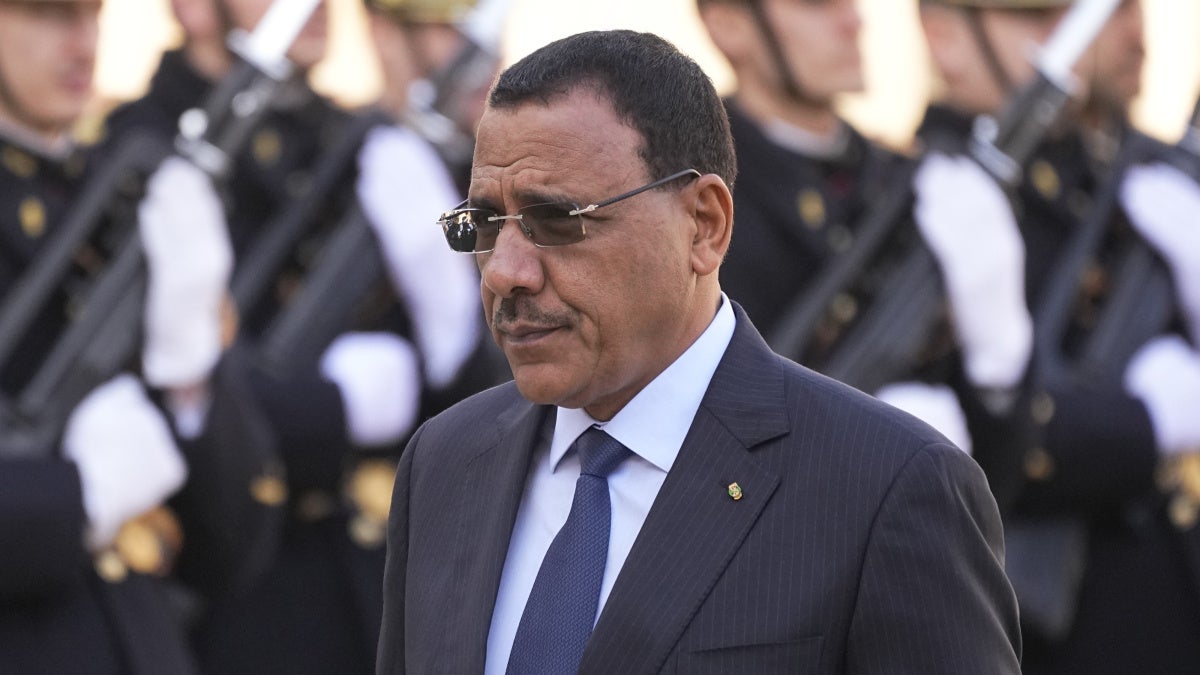
The military authorities in Niger must immediately release former President Mohamed Bazoum, who has been unlawfully held in detention for two years following a coup that ousted his government, human rights advocates warn.
On July 26, 2023, officers from the self-proclaimed National Council for the Safeguard of the Homeland (CNSP), led by General Abdourahamane Tiani, seized power in Niger, detaining Bazoum and his wife, Hadiza Bazoum. Since then, the couple has been held incommunicado at the presidential palace in Niamey, with no access to legal counsel or family members. In early 2024, the military junta stripped Bazoum of his presidential immunity, paving the way for his prosecution on politically motivated charges.
Legal and Political Repercussions
In August 2023, the junta announced its intent to prosecute Bazoum for high treason and undermining Niger’s internal and external security, though no preliminary hearings have been held. Bazoum’s legal team filed a complaint with the Economic Community of West African States (ECOWAS) Court of Justice in September, citing human rights violations. By December, the court ruled in his favor, declaring his detention arbitrary and demanding his immediate release. However, in January 2025, Niger, Burkina Faso, and Mali formally withdrew from ECOWAS, complicating regional accountability.
In April 2024, authorities initiated legal proceedings to strip Bazoum of his immunity, culminating in a June ruling by the Niger State Court—decried by observers as failing international fair trial standards. With his immunity revoked, the junta proceeded with plans to try him for treason, though no trial date has been set. The United Nations Working Group on Arbitrary Detention issued a landmark ruling in February 2025, condemning Bazoum’s detention as a violation of international law and demanding his unconditional release.
International Condemnation and Domestic Repression
« The military junta’s refusal to release Mohamed Bazoum—despite unanimous condemnation from global institutions—exposes its disregard for democracy and human rights, » stated Reed Brody, a member of Bazoum’s legal defense team. « His prolonged detention, devoid of charges or due process, sends a chilling message about the junta’s commitment to authoritarian rule. »
Human rights groups highlight that the junta’s crackdown extends beyond Bazoum, targeting political opponents, peaceful dissent, and independent media. By delaying a civilian transition and credible elections, the authorities risk entrenching military rule and further isolating Niger on the global stage. Analysts warn that each day of Bazoum’s detention erodes the nation’s democratic prospects and undermines regional stability.
A Call for Accountability
The international community continues to pressure the junta to comply with legal rulings, yet Bazoum remains a political hostage. Advocates stress that his immediate release is essential not only for justice but also to restore faith in Niger’s democratic institutions. « Two years of unlawful detention have made one thing clear: the junta’s priorities lie in power consolidation, not the rule of law, » concluded human rights researcher Ilaria Allegrozzi.