
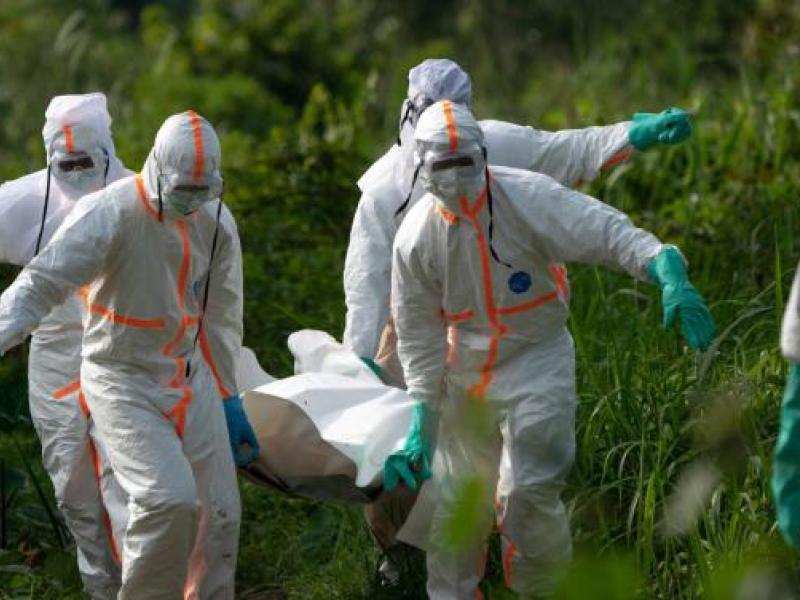
Ebola outbreak in eastern DRC reaches 550 confirmed cases with 101 deaths
Health authorities in the Democratic Republic of the Congo (DRC) have reported a worsening Ebola crisis in the eastern provinces, with the Ituri region remaining the hardest-hit area. According to the latest epidemiological update from the National Institute of Public Health (INSP), the outbreak has now reached 550 confirmed cases, including 101 deaths.
The new figures, recorded up to June 6, show a 27-case increase in confirmed infections within just 24 hours. Currently, 283 patients are receiving care in treatment centers or isolation facilities across the affected regions.
Ebola crisis deepens in Ituri province
The Ituri province continues to bear the brunt of the outbreak, accounting for the majority of cases and deaths. Of the 25 health zones currently battling the virus, 17 are in Ituri—a clear indication that the epidemic remains concentrated in this northeastern province.
The hardest-hit areas include:
- Aru
- Aungba
- Bambu
- Bunia
- Damas
- Gety
- Kilo
- Komanda
- Lita
- Logo
- Mambasa
- Mangala
- Mongbwalu
- Nizi
- Nyankunde
- Rimba
- Rwampara
Despite ongoing surveillance and prevention efforts, the virus continues to spread rapidly, highlighting the challenges faced by health teams on the ground.
Active hotspots in North Kivu and South Kivu
While Ituri remains the epicenter, neighboring provinces are also experiencing significant transmission. The Katwa health zone in North Kivu has emerged as a major hotspot, reporting 11 confirmed cases and 8 deaths. Other affected areas include:
- Beni: 5 cases, 3 deaths
- Butembo: 4 cases, 2 deaths
- Miti-Murhesa: 3 cases, 1 death
- Oïcha: 2 cases, 2 deaths
- Kalunguta: 1 case, 1 death
- Kyondo: 1 case, no deaths
- Goma: 1 case, no deaths
The overall case fatality rate stands at 17.7%, according to health officials, though some data is still undergoing verification. The INSP emphasizes that early detection and isolation of cases remain critical to controlling the spread.
Signs of progress amid the crisis
Amid the grim statistics, there have been some positive developments. Three previously confirmed patients have recovered and been discharged from treatment centers. Two of these recoveries occurred in Bunia, while the third was recorded in Katwa. These cases demonstrate the effectiveness of isolation and treatment protocols when properly implemented.
Health authorities continue to stress the importance of community engagement, particularly in high-risk areas. Prevention measures, including infection control in health facilities and contact tracing, are being reinforced to curb further transmission.
Freddy Upar, reporting from Bunia
Illustration: A burial ceremony for an Ebola patient.You may also like
In Bamako, the fuel blockade one year on: Mali’s economy held hostage
Dakar, 8 septembre 2026 — Ahmadou Alhaminou Lo promet une méthode resserrée au service du Sénégal 2050
Kpalimé witnessed a destructive midnight blaze that ravaged the Château market
In northern Togo, geopolitical rivalries overshadow the urgent needs of the population
In the National Assembly, Al Aminou Lô unveils his roadmap anchored in Senegal 2050