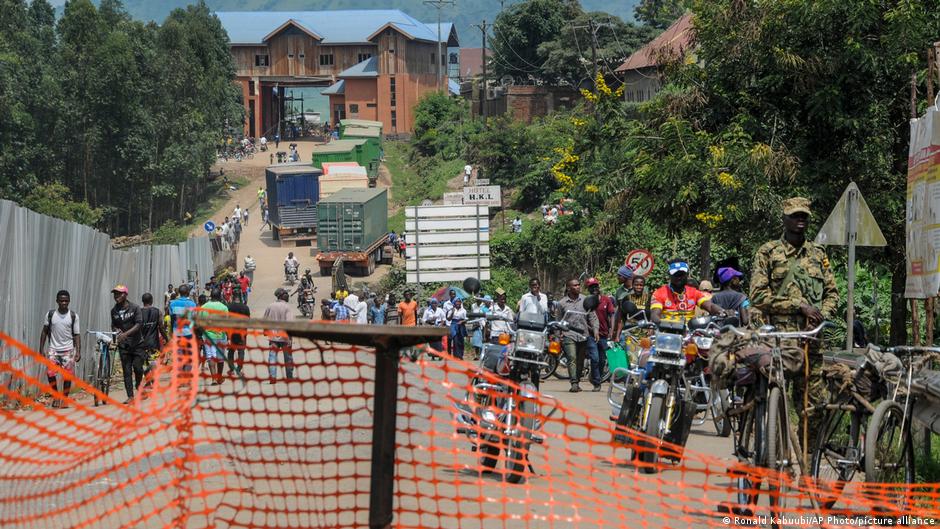
Ebola containment in DRC hinges on open borders and swift response
July 30, 2026With over 3,000 confirmed cases and nearly 1,500 deaths reported by the government, the Ebola outbreak in the Democratic Republic of the Congo continues its relentless march. Humanitarian groups warn that containment efforts are struggling to keep pace with the virus’s explosive spread.
Julien Harneis, the United Nations’ chief coordinator for Ebola response, recently highlighted the alarming trend: “Case numbers are doubling every 20 days,” a rate far outpacing current intervention strategies.
Keeping borders open to curb Ebola
In response to the crisis, several nations initially imposed travel restrictions or sealed their borders with the Democratic Republic of the Congo. Rwanda, for instance, went so far as to close all land crossings and bar entry to foreign visitors who had recently been in the DRC. Though partial reopening occurred in early July, travelers now face mandatory health screenings and handwashing protocols.
Uganda also temporarily shuttered key border posts with the DRC, though humanitarian aid, security operations, and essential trade continued to flow. Beyond Africa, Canada announced in July that it would deny entry to foreign nationals who had visited the DRC within the previous 21 days, alongside suspending certain immigration services for the DRC, Uganda, and South Sudan.
Yet, the United Nations stresses that maintaining open borders is critical. It ensures rapid delivery of medical supplies, unhindered movement of response teams, and safe passage for healthcare workers across the DRC. Blocking official crossings could push desperate populations toward unmonitored routes, complicating surveillance and control efforts.
Ebola’s ripple effect on food security
The World Food Programme (WFP) describes the outbreak as “a crisis layered upon another crisis.” The Ituri region, the epicenter of the Ebola epidemic, is among the hardest hit, with 1.9 million people now in urgent need of food assistance.
“Many patients are cared for not by aid workers or the government, but by their own families,” explains Butoto Bigiri Naum, head of Action for Community Development and Well-being (UGEAFI). This NGO collaborates with German organization Help to deliver emergency aid in Ebola-affected areas, supporting rural and nutritionally vulnerable populations.
He notes that border restrictions have disrupted food supplies and agricultural inputs, creating severe challenges: “Securing seeds and tools has become nearly impossible, leaving farmers stranded.”
According to the WFP, more than 2.65 million people in Ebola-affected health zones face acute food insecurity, including over 628,000 in emergency conditions. Women, children, and pregnant women bear the brunt of restricted access to food.
The outbreak exacerbates food insecurity by curbing movement, disrupting markets, and driving up prices. Families struggle to afford basic staples, while farmers—fearful of infection or labor shortages—abandon their fields. This threatens long-term harvests and could plunge communities into famine.
To avert disaster, the WFP provides food aid to Ebola patients, their close contacts, frontline workers, and affected households. This support helps families comply with quarantine measures while easing the burden of meeting basic nutritional needs. Food assistance also reduces displacement in search of sustenance and fosters conditions conducive to effective health interventions.
You may also like
Mali prison overcrowding: Bamako jail holds 10,000 in space built for 600 as mass arrests surge
World Bank brings education, jobs and entrepreneurship open days to Abidjan on 21-22 September 2026
At Tougan, Burkina Faso’s maize farmers sell at a loss and face debts as food sovereignty falters
Niger’s FPL opens its ranks to youth as security crisis deepens
Kidal: 43 dead as strikes wipe out desert water wells in northern Mali