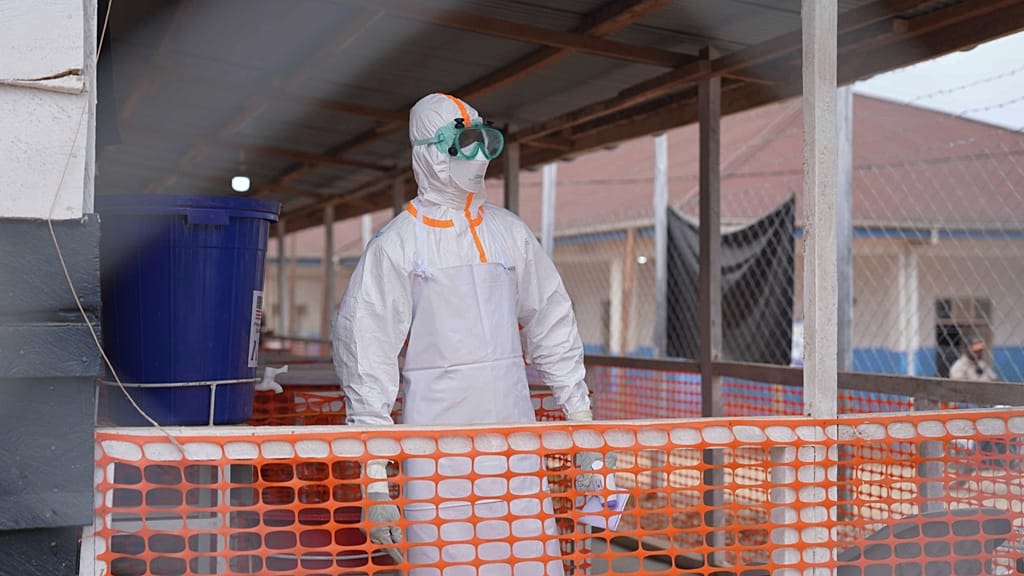
DR Congo’s Ebola death toll surpasses 2 000 amid worsening crisis
The death toll from the Ebola outbreak in the Democratic Republic of Congo has now exceeded 2 011, according to the latest official figures, with authorities warning the crisis could escalate into the country’s deadliest on record. Government data released overnight revealed a total of 4 381 confirmed cases.
While it took nearly nine weeks to reach the first 1 000 deaths, the figure doubled in just three weeks, signaling a rapid acceleration in the outbreak’s spread that outpaces containment and response efforts.
A key driver behind the surge in cases and fatalities is the difficulty health teams face in delivering critical aid to remote communities, hindered by ongoing rebel violence, deteriorating road networks, and strikes over unpaid wages.
The situation is “alarming”, warned Dr. Jean-Marie Akandabo, who oversees patient care at a local clinic in Ituri, in the northeast, and called for intensified efforts to curb the spread in affected areas.
This marks the 17th wave of the highly contagious disease in the country, already deemed the largest outbreak in DRC history. Officials now fear it “could become the deadliest ever recorded.”
The current outbreak’s case fatality rate stands at 45.9%, significantly higher than the 39.6% recorded during the West Africa Ebola epidemic of 2014–2016—the worst in history, which claimed over 11 000 lives from 28 000 cases.
Emergency response
The outbreak was officially declared on 15 May, though health officials note viral sequencing indicates it began several months earlier, in February. A national health emergency has since been declared in the DRC.
This outbreak differs from previous ones because the rare Bundibugyo strain driving it lacks approved vaccines or treatments. Clinical trials have now begun in Ituri Province, the epicenter of the crisis in eastern Congo.
Health workers report that the epidemic continues to outpace the response across the five affected provinces in the east. Many healthcare staff have gone on strike over unpaid wages since the outbreak was declared, and the WHO has noted that most new cases are occurring outside tracked contact lists, indicating transmission remains uncontrolled.
“Without an effective vaccine, control depends on early detection and safe isolation of cases until recovery—or, tragically, death.” explained Paul Hunter, professor of medicine at the University of East Anglia in the UK. In a conflict-ridden, communication-deprived region like this, routine surveillance is nearly impossible, and “identifying cases early enough to prevent spread may prove unattainable.”
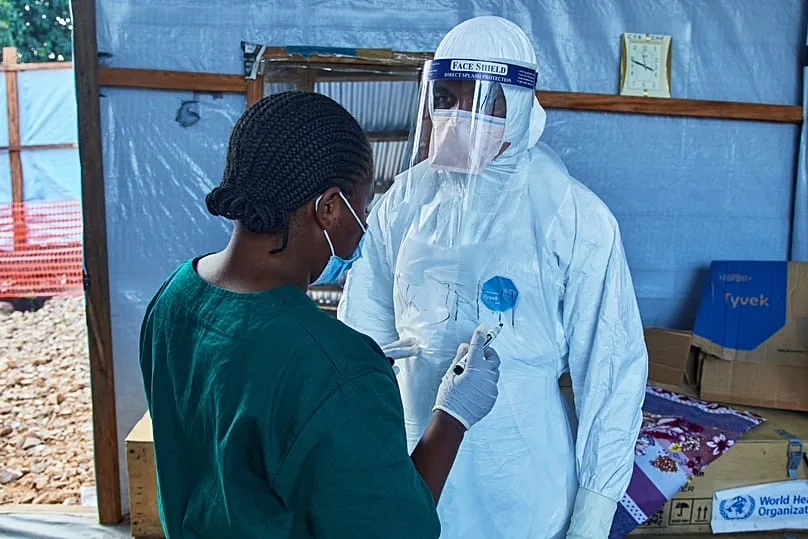
On Friday, WHO vaccine experts recommended launching large-scale human trials using the only licensed Ebola vaccine, Ervebo, to assess whether it provides cross-protection against the Bundibugyo strain currently spreading in the DRC, for which no specific vaccine exists.
Ervebo has proven safe and effective against the most common Ebola strain, Zaire, and preliminary data—including animal studies—suggest it may also offer some protection against the rare Bundibugyo strain driving the current outbreak.
Two candidate vaccines targeting the Bundibugyo strain are in early-stage human trials, while a third is under development and preparing for this phase.
The WHO’s Africa regional director, Dr. Mohamed Yakub Janabi, admitted officials are “running after the virus, which has a head start.”
Ebola spreads through contact with bodily fluids and causes severe hemorrhagic fever. The virus was first identified in 1976 near the Ebola River in what is now the Democratic Republic of Congo.
You may also like
Will Benin’s AEO exporters finally crack the Chinese market?
Northern Niger’s unanswered question: can Tiani’s government deliver water and power where it matters most?
Can Air Sénégal survive the Interpol smuggling probe? The stakes for crew, passengers and the airline’s future
As donor fatigue spreads, can Benin’s €544,042 UNAIDS pledge keep the HIV response on track?
Who pays the price when Burkina Faso’s public payroll contracts? Households weigh the cost of 1,917 fewer agents