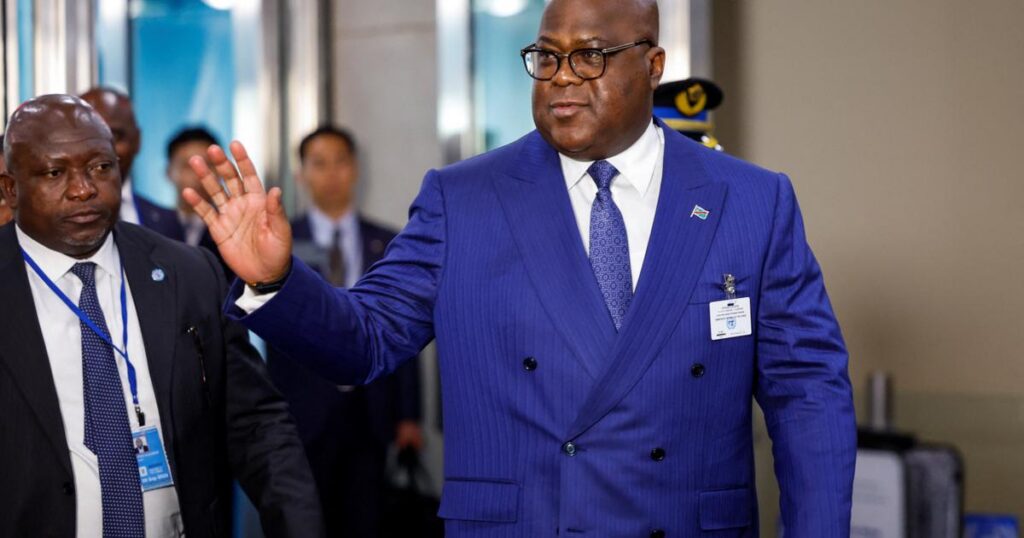
On August 13, in the tense lead-up to a deadline set by the Article 64 Coalition (C64)—a platform formed in May by the Democratic Republic of Congo’s (DRC) major opposition parties—President Félix Tshisekedi requested Parliament reconsider a bill outlining the conditions for organizing a constitutional referendum.
The coalition argues this proposal, championed by the ruling party since 2024, is a tactic to enable Tshisekedi to seek a third term, which the 2006 Constitution prohibits. Dieudonné Bolengetenge, Secretary-General of Ensemble pour la République (Moïse Katumbi’s party) and C64 spokesperson, had warned on August 12 that the coalition would no longer tolerate inaction from the president, vowing to escalate mobilizations unless a national dialogue was initiated.
The coalition had designated August 15 as a pivotal date to assess progress in political talks while urging citizens to “stand firm and resist” if the referendum bill under parliamentary review was not withdrawn. This call echoed sentiments expressed in May by Radio Okapi.
Coalition cautiously welcomes limited concessions
While Tshisekedi’s move did not fully satisfy the coalition’s demands, Prince Epenge, C64 co-founder, described it as “a small step in the right direction.” The coalition chose to maintain pressure despite the concession.
Earlier, a protest planned for July 22 in Kinshasa had been postponed following appeals from the Catholic and Protestant churches in the DRC, which urged political actors to prioritize dialogue over confrontation.
Civil society joins calls to abandon constitutional reform
In a memorandum sent to Tshisekedi and key national institutions on August 10, 65 Congolese civil society organizations warned that the proposed referendum risked “fueling political tensions, deepening social divides, and diverting attention from the nation’s core priorities.”
You may also like
Mali: did the JNIM ambush on Africa Corps near Niono expose a fatal gap in Russia’s Sahel strategy?
Will Mali’s 73.6 million dollar funding gap decide the fate of millions by 2027?
Guinea-Bissau’s December 2026 vote: can Embaló return legally, and can the result ever be trusted?
Can a $20 million bounty take down Ukraine’s drone war architect?
Gabon’s UN funding in 2025: can 10.5 billion CFA francs deliver real change?