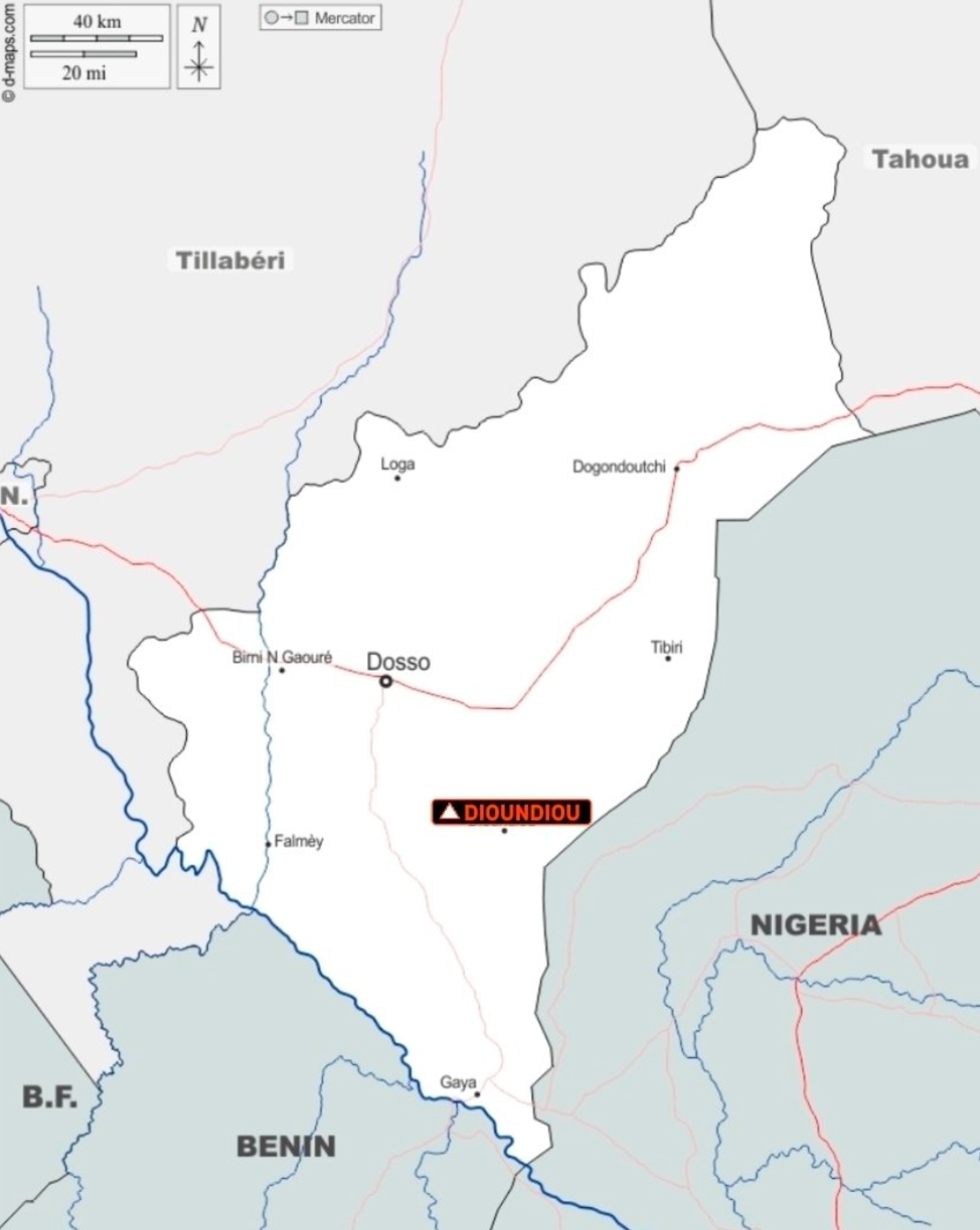
Another wave of terror has struck the southern region of Dosso, leaving two villages in ruins. Over the span of just four days, Libo I and Libo II in the Dioundou area became the latest targets of brutal violence. Early on the morning of May 26, 2026, armed assailants launched a deadly assault, claiming the lives of six civilians. By the time they returned on May 29, the attackers had completed their destructive mission, torching homes and stripping survivors of their last remaining possessions.
Two waves of devastation strike at the heart of Dioundou
The nightmare began in the dead of night on May 26, when armed individuals stormed Libo I and Libo II. Gunfire echoed through the villages as terrified residents scrambled for safety. Six people were killed in the initial attack, their lives cut short by the ruthless aggression of these armed groups that have plagued the region for months.
The horror did not end there. On May 29, the attackers returned with calculated precision. This time, their goal was not just to kill but to destroy. They set fire to homes and granaries, reducing the villagers’ food reserves to ashes. Before fleeing, they seized nearly all the livestock, stripping these communities of their only source of income and survival.
The shadow of ISSP Lakurawa looms over Dosso
Local accounts and field observations point overwhelmingly to the involvement of the ISSP Lakurawa group, an affiliate of the so-called Islamic State in the Sahel Province. Known for its affiliation with Daech, this faction has steadily expanded its influence across the Sahel, exploiting weak border controls and the state’s inability to maintain a strong presence in remote areas.
Their tactics are unmistakable: nighttime raids, summary executions, systematic theft of livestock, and destruction of essential infrastructure. For the people of Dioundou, an area that had previously remained relatively untouched compared to the volatile ‘three borders’ region, these attacks represent a dramatic shift and have instilled deep fear across the community.
Military junta’s promises crumble under rising violence
The tragic events in Libo I and Libo II expose the stark failure of the military regime, the National Council for the Safeguard of the Homeland (CNSP), to fulfill its core pledge: restoring security nationwide. Since seizing power in 2023, the situation has only worsened, with terror spreading unchecked.
The government’s decision to sever ties with Western partners and pivot toward new alliances—particularly with Russian forces and regional powers—has yet to translate into tangible protection for rural civilians. Joint patrols and newly announced defense strategies have fallen short in shielding vulnerable communities from mobile, heavily armed terror cells.
A widening security crisis: no village, no infrastructure is safe
The attack on Dioundou is not an isolated incident but part of a growing pattern of violence sweeping across Niger. In recent months, the audacity of armed groups has escalated dramatically. What was once limited to isolated villages has now expanded to high-value targets, including airport facilities and critical transport routes—areas previously thought to be under tight security.
If airports, symbols of national sovereignty and military hubs, can be threatened or targeted, how can one expect scattered military outposts to protect remote border villages like Libo I and Libo II? Recent attacks across the country reveal that terrorists have expanded their reach and continue to dictate the pace of violence.
The call for urgent national action
Today, Libo I and Libo II stand as hollowed-out shells of what they once were. A portion of the population has already fled, joining the growing ranks of internally displaced persons. The loss of six civilian lives and the destruction of livelihoods for hundreds of Nigeriens underscore the desperate urgency of the situation.
The nationalist rhetoric and political slogans of the junta no longer mask the grim reality on the ground. As the ISSP Lakurawa and other armed factions tighten their grip, Niger faces a spiraling security crisis. Without a fundamental reassessment of current military strategies and real, meaningful protection for civilians, the risk of entire regions slipping into chaos grows more acute with each passing day.