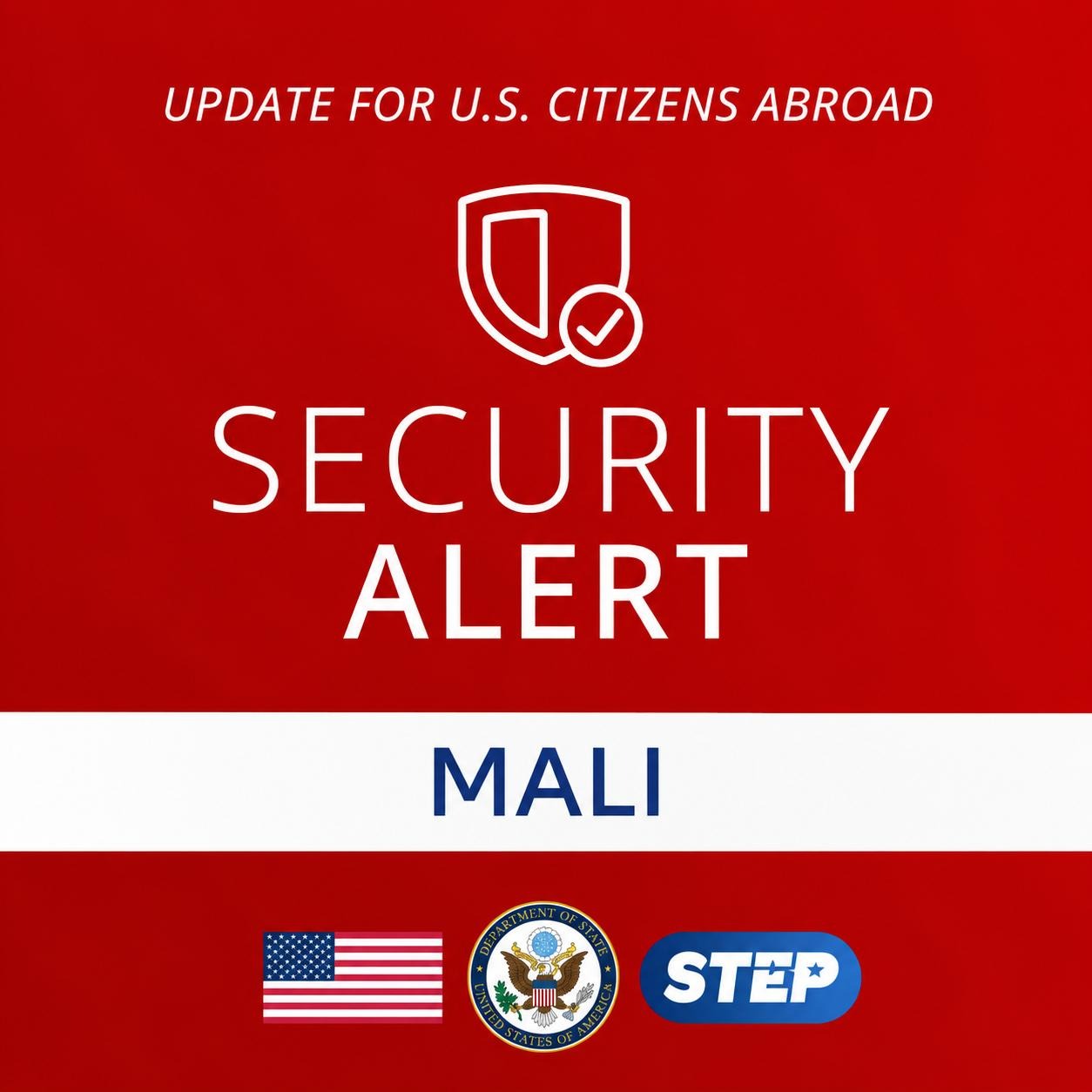
The United States Embassy in Bamako has issued a stringent security advisory for the weekend of May 30, 2026, urging American citizens in Mali to avoid all non-essential travel within the capital. The move reflects a tense national security environment, compounded by economic strangulation of key roadways and persistent terrorist threats.
An unusual timing raises questions
The timing of this advisory is deliberate and not coincidental. Starting this Saturday, all American nationals are advised to minimize public exposure, avoid gatherings in expatriate-heavy zones, and drastically reduce unnecessary movement across the city. Such measures do not occur without cause—when Washington restricts the freedom of movement for its citizens, it signals that intelligence services have detected credible, specific threats. Whether intercepted operational indicators, thwarted attack plots, or suspicious movements, the precautionary principle is in full effect. This announcement has cast a pall over Bamako, underscoring the fragile nature of the recent relative calm.
The growing shadow of JNIM and FLA near Bamako
This advisory is set against a worsening security backdrop for Mali. Bamako is no longer immune to attacks. The Group for the Support of Islam and Muslims (JNIM), Al-Qaeda’s primary Sahel affiliate, has repeatedly demonstrated its ability to strike at the heart of governmental and urban targets. Recent attacks on military installations and critical outskirts of the capital remain fresh in collective memory. Meanwhile, the deteriorating conditions in northern and central Mali, driven by the rebranded Permanent Strategic Framework (and allied factions such as the Azauad Liberation Front (FLA)), continue to exert relentless pressure on Malian armed forces (FAMa). The presence of sleeper cells and improvised explosive devices (IEDs) is a daily reality that security services are struggling to contain. The U.S. Embassy’s warning reaffirms that asymmetric threats retain a formidable projection capability.
Economic asphyxiation: roads as weapons of war
Beyond direct attacks, a strategy of economic asphyxiation is particularly alarming both for international partners and local populations. Over recent months, armed groups have escalated road blockades targeting critical supply routes. Fuel tankers destined for Bamako and commercial transport vehicles have become prime targets. These blockades are not merely an economic tactic—they generate widespread panic and isolate the capital from economic lifelines. By cutting off hydrocarbons and essential goods, extremist groups aim to fracture social cohesion and expose the state’s inability to secure vital transit corridors. For the U.S. Embassy, the vulnerability of peripheral roads elevates the risk of major incidents in the immediate vicinity of Bamako.
A diplomacy of caution amid uncertainty
While Malian transitional authorities attempt to reassure the public through increased patrols and reinforced checkpoints at city entrances, Western embassies adopt a more cautious stance. This divergence highlights the complexity of the situation: on one side, a political will to project control; on the other, a data-driven, risk-averse assessment by nations with advanced surveillance capabilities. This weekend, heightened vigilance will be the norm. Malian security forces have already intensified identity checks and vehicle inspections in key neighborhoods across Bamako to mitigate any potential threat.
The U.S. Embassy’s security alert serves as a stark reminder of Mali’s persistent crisis management reality. Between the lurking asymmetric threats from JNIM and the crippling impact of road blockades on daily life, Bamako remains shrouded in a heavy security blanket. As the weekend begins, prudence is paramount for all—nationals and expatriates alike—as the city waits to see if this alert will pass without incident.