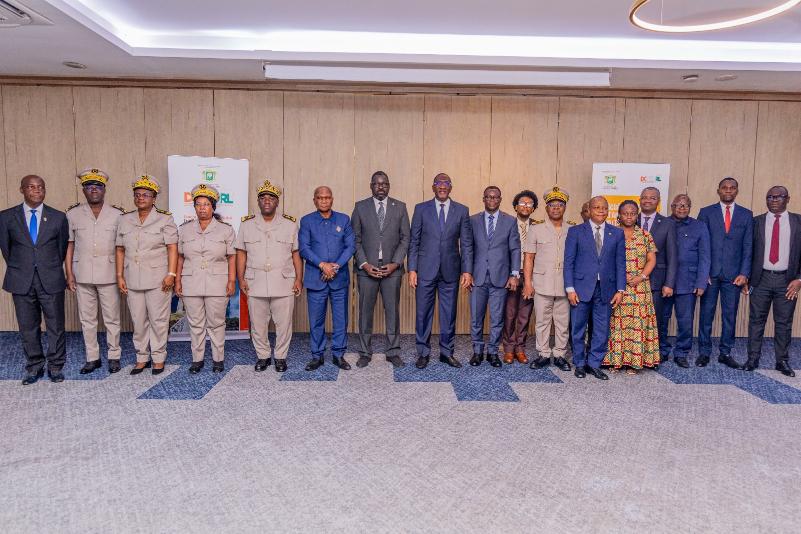
Abidjan recently hosted a pivotal national workshop to validate the study of Côte d’Ivoire’s first-ever National Territorial Development Framework (SNAT CI-2045). Chaired by Dr. Souleymane DIARRASSOUBA, Minister of Planning and Development, the event brought together key stakeholders including government institutions, local authorities, technical and financial partners, public administrations, private sector representatives, civil society, academics, experts, and media professionals.
The validation workshop marks a critical milestone toward adopting Côte d’Ivoire’s inaugural national territorial planning reference. Once finalized, the SNAT CI-2045 will provide the government with a robust framework to guide public and private investments, enhance policy effectiveness, and drive more balanced territorial development across the country.
Under the leadership of President Alassane Ouattara, the Ivorian Government continues to strengthen its strategic planning mechanisms to support the nation’s economic, social, and environmental transformation. Territorial planning lies at the heart of this vision, ensuring investments are strategically distributed, regional potential is unlocked, and development policies are better aligned for maximum impact.
The SNAT CI-2045 serves as the long-term blueprint for spatial development, defining where public and private investments should be directed while harmonizing state, local authority, and development actor efforts. Each territory will be assigned specific roles to foster synergy and avoid duplication in national development efforts.
Dr. Souleymane DIARRASSOUBA emphasized the framework’s role in translating medium-term development priorities into long-term territorial strategies. “The 2026-2030 National Development Plan sets our immediate priorities and investments, while the SNAT CI-2045 ensures these are implemented with a long-term perspective. Together, these documents provide a coherent public action framework across all regions. As the ministry responsible for territorial planning and local development, our mission is to ensure every territory plays its part in this national vision,” he stated.
The proposed orientations reflect a rigorous, multi-scale participatory approach, grounded in a comprehensive national territorial diagnosis. They address key challenges such as reducing regional disparities, managing rapid urbanization, boosting local competitiveness, improving governance, safeguarding natural resources, and deepening regional integration.
The SNAT CI-2045 envisions a Côte d’Ivoire of resilient, competitive territories where shared prosperity thrives. It is structured around five strategic pillars: balanced territorial development, efficient urban-rural networks, strengthened local governance, a high-performance inclusive economy, and accelerated climate transition.
Following the workshop, the draft framework will be submitted to the Government for review before being presented to Parliament for adoption into law. Once enacted, Côte d’Ivoire will have its first national territorial planning reference, guiding state action to direct investments where they will have the greatest impact and fostering balanced national development.
You may also like
Niger’s FPL opens its ranks to youth as security crisis deepens
Kidal: 43 dead as strikes wipe out desert water wells in northern Mali
Chad releases 150 Klessoum prisoners under Decree No. 2151/PR/2026 collective sentence relief
Benin’s rating leap to AA-: the moment regional capital started taking Cotonou seriously
Brigitte Tchede’s Cairo surge: Benin’s discus medal breakthrough that changes everything