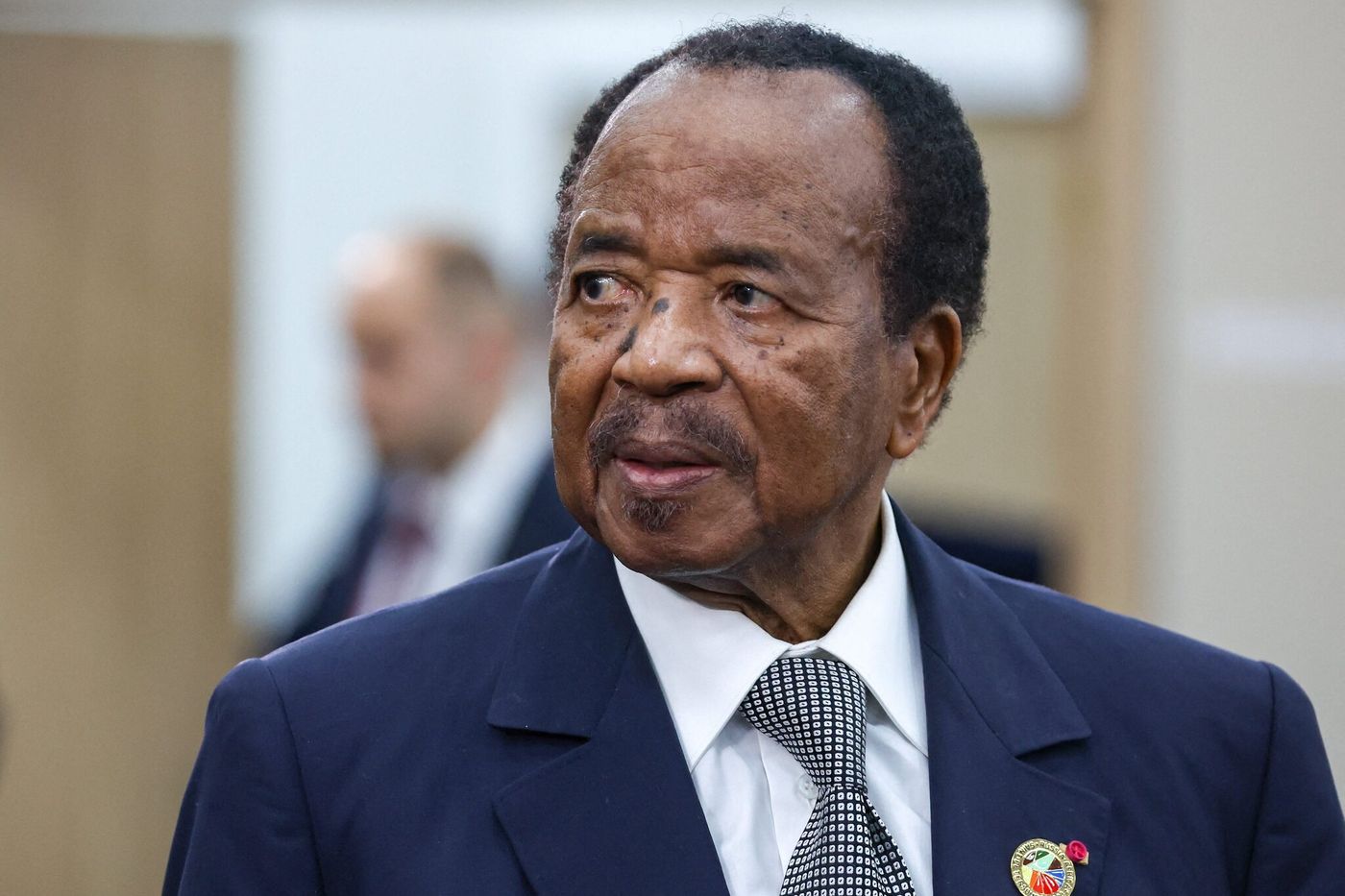
Paul Biya, Cameroon’s head of state since 1982 and the world’s longest-serving president, returned to Yaoundé on August 20 following more than two months abroad—a prolonged absence that reignited fierce debates across the nation about his capacity to govern.
At 93 years old, the veteran leader departed Yaoundé on June 7, reportedly for “a brief private stay in Europe,” with official accounts placing him in Geneva, Switzerland, alongside family and close advisors.
After 73 days away, Biya was greeted at Yaoundé’s international airport by a jubilant crowd of supporters, many waving flags and wearing attire emblazoned with his image. Waving from the window of a departing vehicle en route to the Etoudi Palace, he acknowledged the throng before being whisked away with his wife, Chantal Biya.
The president’s frequent trips to Geneva over the years have fueled persistent speculation about his health, though authorities have repeatedly dismissed reports of hospitalization. On June 18, Communications Minister René Emmanuel Sadi refuted claims that Biya was receiving medical treatment in a Swiss clinic, calling such assertions “groundless”.
This unusually extended absence has intensified criticism from opposition figures, who warn of “institutional paralysis” and a country drifting in “autopilot mode.” Demands for a new vice president and cabinet reshuffle have gone unanswered for months, stoking concerns over governance stability.
Voices from the tarmac
Supporters gathered at the airport framed the moment as a triumph of continuity. Gilles Owono, a 30-year-old teacher among the crowd, argued that presidential absences are “a normal feature of any democracy” and insisted Cameroon’s machinery of state continued operating smoothly.
James Fame Ndongo, a senior ruling party official and higher education minister, countered opposition claims in late July, insisting that “wherever he is, the president meticulously reviews every file presented by his team.”
Yet skepticism runs deep among critics. Prosper Nkou Mvondo, a prominent opposition leader, dismissed the spectacle outright: “It makes no difference whether he’s here or not. When he’s present, he does nothing. Why bother participating in this charade?”
Shadows over succession
Biya’s eighth-term victory in October 2025, marred by violent crackdowns on protests that the government acknowledged left “several dozen” dead, drew skepticism from Western capitals over the election’s legitimacy. The disputed results have since fueled whispers about the future beyond Biya’s rule.
With no vice president appointed, Senate President Aboubakary Abdoulaye would temporarily assume power in the event of a vacancy, pending fresh elections. The prolonged absence has only sharpened the jockeying for influence, even as the contours of a post-Biya era remain shrouded in uncertainty.