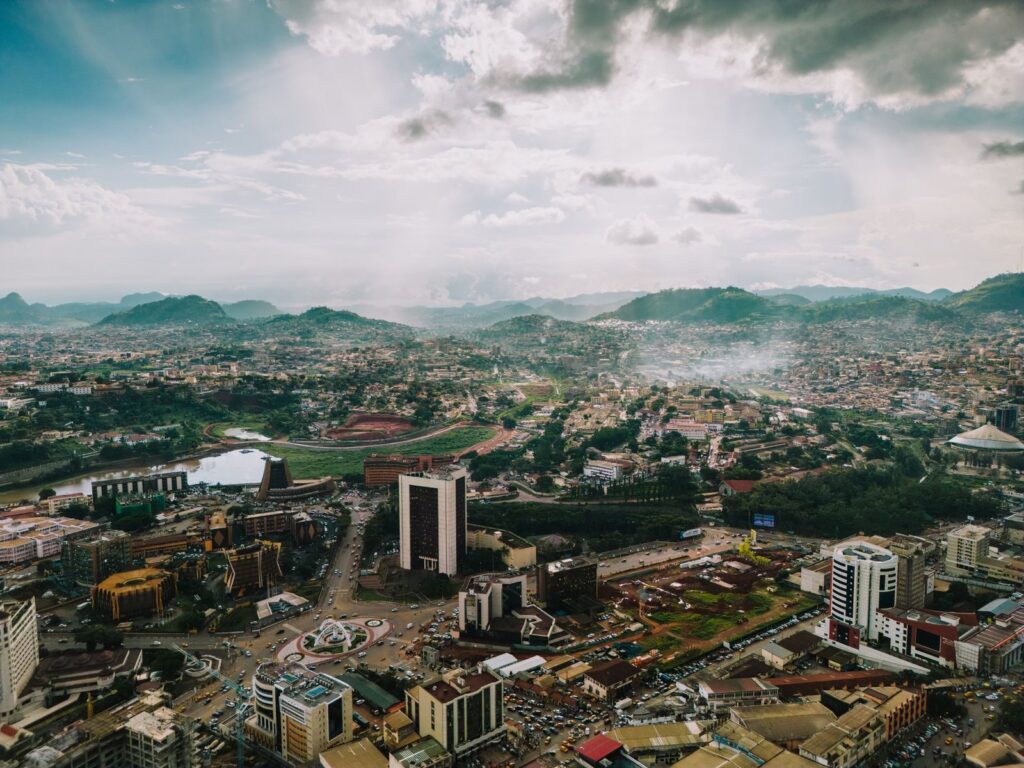
The prolonged absence of Paul Biya, Cameroon’s head of state since 1982, continues to dominate political discussions in Yaoundé. The silence from the Éttoudi Palace regarding the president’s activities, combined with his diminishing public appearances, is fueling uncertainty that now extends far beyond political circles. On social media, in newsrooms, and within diplomatic missions, the same pressing question lingers: where is the president, and how is he carrying out his duties?
An octogenarian leader shrouded in secrecy
At 91, Paul Biya has led Cameroon for over four decades. While his supporters argue that his longevity ensures stability, the aging leader’s prolonged stays abroad—particularly in Europe—have intensified public curiosity about his health. Official statements remain brief, doing little to quell speculation.
The scarcity of presidential appearances is not merely symbolic; it has tangible institutional consequences. Cameroon’s executive branch operates under extreme centralization, with the president at its core, making critical decisions on administration, security, and finance. Without his signature, key government operations stall. Local observers note that multiple economic and diplomatic files await presidential approval, yet remain pending.
Public skepticism grows beyond opposition ranks
Unease is no longer confined to the opposition. Even within the ruling Rassemblement démocratique du peuple camerounais (RDPC), party members privately express concern over the lack of structured presidential communication. The government, navigating this uncertainty, has repeatedly dismissed alarmist rumors, yet struggles to foster credible transparency about the president’s condition.
This opaqueness fuels speculation about a potential transition. Cameroon’s 2008 constitutional revisions outline a clear process: in the event of a presidential vacancy, the Senate president—currently Marcel Niat Njifenji, also in his 80s—would assume interim leadership. While legally sound, the political implications are fraught with risk, given the regime’s fragile internal power balance. Aspiring successors within government and military circles are treading carefully.
A pivotal moment for central Africa
The uncertainty surrounding Paul Biya resonates far beyond Cameroon’s borders. As the economic powerhouse of the Central African Economic and Monetary Community (CEMAC), Cameroon plays a vital role in the region’s stability. Any disruption in Yaoundé could destabilize the Central African CFA franc, disrupt trade routes supplying Chad and the Central African Republic, and undermine regional security cooperation against Boko Haram in the Lake Chad basin.
International partners, including France, the United States, and China, are monitoring the situation with quiet vigilance. France, historically aligned with Cameroon, views the country as a cornerstone of its residual African policy. Meanwhile, China has invested heavily in Cameroon’s infrastructure, particularly the deep-water port of Kribi, making the country’s institutional stability a priority for Beijing’s long-term interests.
Domestically, unresolved challenges persist. The anglophone crisis in the Northwest and Southwest regions, now in its eighth year, continues to simmer, while security tensions in the Far North and economic vulnerabilities demand steady leadership. The visible absence of the president reinforces perceptions of a government operating on autopilot, vulnerable to any sudden crisis that could accelerate political change.
How long this status quo can endure remains uncertain. The coming months may prove decisive not only for Cameroon’s political trajectory but also for the wider subregion.
You may also like
Gabon and Guinea-Bissau: a model for smooth political transitions
Paul biya’s record absence from Cameroon sparks debate
Le grand invité Afrique – Exploitation de l’or au Cameroun et en RDC: «Les opérateurs nationaux et étrangers doivent rendre des comptes»
Burkina Faso’s junta under Ibrahim Traoré shifts towards Soviet and North Korean model
How Burundi and Mali use enemy creation to keep power