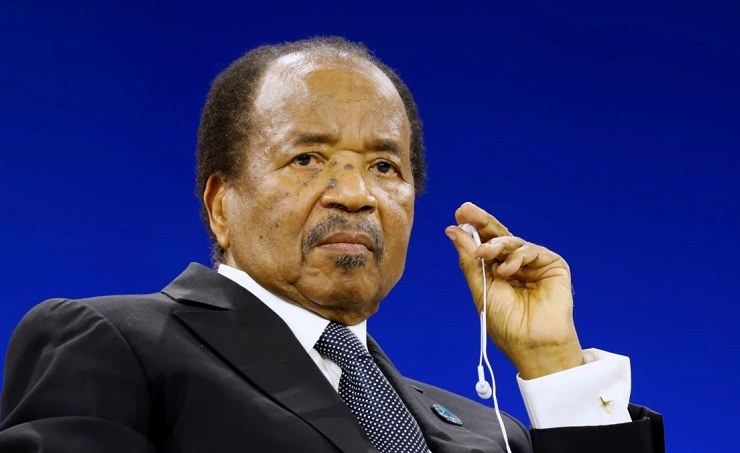
After 56 days shrouded in silence and speculation, Cameroon’s government has finally broken its silence: President Paul Biya is alive and his return is imminent. Yet doubts linger.
Government confirms presence of Cameroon’s veteran leader
The nation had held its breath for nearly two months, scanning the horizon for any sign of life from a president who had vanished from public view.
On August 2, 2026, government spokesperson and Minister of Communication René Emmanuel Sadi delivered a statement that put an end to weeks of uncertainty. « The president is alive, » he declared firmly. « There is no power vacuum. »
While the announcement brought a measure of relief, it also raised fresh questions about the whereabouts, health, and future of Africa’s longest-serving leader.
Paul Biya: A four-decade presidency at 93
Paul Biya, 93 years old, has led Cameroon since 1982—43 years of uninterrupted rule. He is the world’s oldest sitting head of state, a figure who embodies both stability and stasis for many.
On June 7, 2026, he departed Yaoundé with his wife, reportedly for a « brief private stay in Europe. » What was meant to be a short trip has instead stretched into an unprecedented absence, fueling widespread concern.
Media blackout fuels speculation
During his absence, official activity was limited to routine decrees and diplomatic messages—including congratulatory notes to France on its national holiday. No images, statements, or public appearances emerged from President Biya.
The silence was deafening. « 50 days—this is too much! » declared the Messager newspaper in a front-page headline. « Having left Cameroon on June 7 for what was described as a private European trip, Paul Biya has now spent over 50 days abroad, leaving a nation in limbo, a government in paralysis, and citizens gripped by uncertainty. »
Ruling party defends Biya’s absence
The Cameroon People’s Democratic Movement (RDPC), the president’s party, attempted to quell rumors. « Power is not vacant. The Lion has not left, » wrote Christophe Mien Zok, the party’s propaganda director, in a July 15 editorial.
Yet such assurances failed to calm tensions. Opposition figures grew vocal. Jean-Michel Nintcheu, a member of parliament from the opposition Social Democratic Front (SDF), formally petitioned the Constitutional Council to declare a power vacuum.
The United Democratic Cameroon (UDC) party argued that « the stability of a republic cannot rest on silence or speculation, » and pointed to the absence of a vice president—a position left vacant since constitutional amendments in April 2026.
Government confirms: « The president is alive »
Amid rising pressure, René Emmanuel Sadi spoke in a rare interview on August 2, 2026. His words were deliberate and measured.
He first dismissed claims of a power vacuum. « Those in the opposition who demand a formal declaration of vacancy should review the Constitution with greater rigor and objectivity, » he stated.
He then reaffirmed the constitutional reality: the Constitutional Council had not ruled on any vacancy. « President Paul Biya is alive. He has not resigned. »
But one question remained unanswered: when would he return? Sadi refused to give a date. « I cannot tell you exactly when President Paul Biya will return. And even if I knew, it is not for me to announce it. » He did, however, offer reassurance: « I can tell you he will be back very soon. »
Longest absence in decades
This absence surpasses all previous ones. It exceeds the 42-day trip in late 2024 and marks the longest foreign stay in Biya’s 43-year presidency. Over his tenure, he has spent an estimated 2,600 days abroad—nearly seven years away from Cameroon, a record among African heads of state.
Rumors persist that members of the presidential entourage, including family, are currently in Switzerland. Though unconfirmed by authorities, the claim has added to public anxiety.
Constitution remains silent on presidential absence
The legal debate has intensified. Opposition lawmakers have urged the Constitutional Council to rule on a vacancy. Some analysts argue that after 45 days abroad, the Council should intervene.
Yet the Constitution offers no clear guidance. « No law specifies a maximum duration for the president’s absence from national territory, » noted the UDC.
The government has relied on this legal ambiguity to justify the silence. Critics call it a « institutional void. »
A nation on edge
Cameroon waits. Citizens vent their frustrations online. « Paul Biya is the luckiest president in the world, » wrote one social media user. « He can do as he pleases, go where and when he wants, with no consequences. »
Others express skepticism. « Fifty days abroad—another record for Biya, and the longest trip yet. This only feeds rumors about his health, » commented another.
The promise of a prompt return may not be enough. The lack of a specific date, combined with the mystery surrounding the trip’s purpose, could reignite demands for transparency.
The question of what comes after Biya
Beyond the immediate uncertainty, a deeper issue looms: succession. At 93, Paul Biya is not just a president—he is the regime itself. But for how much longer?
The opposition UDC has called for « an institutional process to regulate prolonged absences of the head of state. » While framed as a demand for transparency, it also signals growing unease about governance after Biya.
Unanswered questions persist
Despite the government’s statement, key questions remain unanswered:
- Where is Paul Biya? Swiss media suggest Switzerland, but no official confirmation.
- What is the purpose of his stay? Described as « private, » but duration and circumstances raise concerns.
- When will he return? « Very soon, » says the minister. A promise, not a date.
- What is his health status? The minister confirms he is « alive. » No further details.
Can the government’s statement bring closure?
The government’s delayed response has left room for speculation. Its vague assurances risk failing to convince a public long accustomed to silence from the presidency.
René Emmanuel Sadi defended the government’s position, citing constitutional norms and promising a swift return. Yet in a system where power is highly personalized, the words of a minister carry less weight than the absence of the president himself.
Waiting for the Lion’s return
Cameroon holds its breath. The announcement of an imminent return is eagerly awaited—hoped to end two months of doubt.
But beyond the return lies a larger challenge: governing a country whose leader, at 93, frequently and for extended periods steps away from the helm.
« The stability of a republic cannot depend on silence or guesswork, » reminds the UDC. A lesson Cameroon’s government may need to heed.
For now, the nation waits. It waits for its president. It waits for answers. Most of all, it waits to see if the Lion will roar again.