As the Tabaski celebrations approach, Burkina Faso’s government has taken a bold step by banning livestock exports—a move designed to prioritize local consumers over regional market forces. While the intention behind this policy is to ease financial pressure on urban households during the festive season, it carries significant economic contradictions and potential pitfalls.
The paradox of purchasing power: urban gains, rural losses
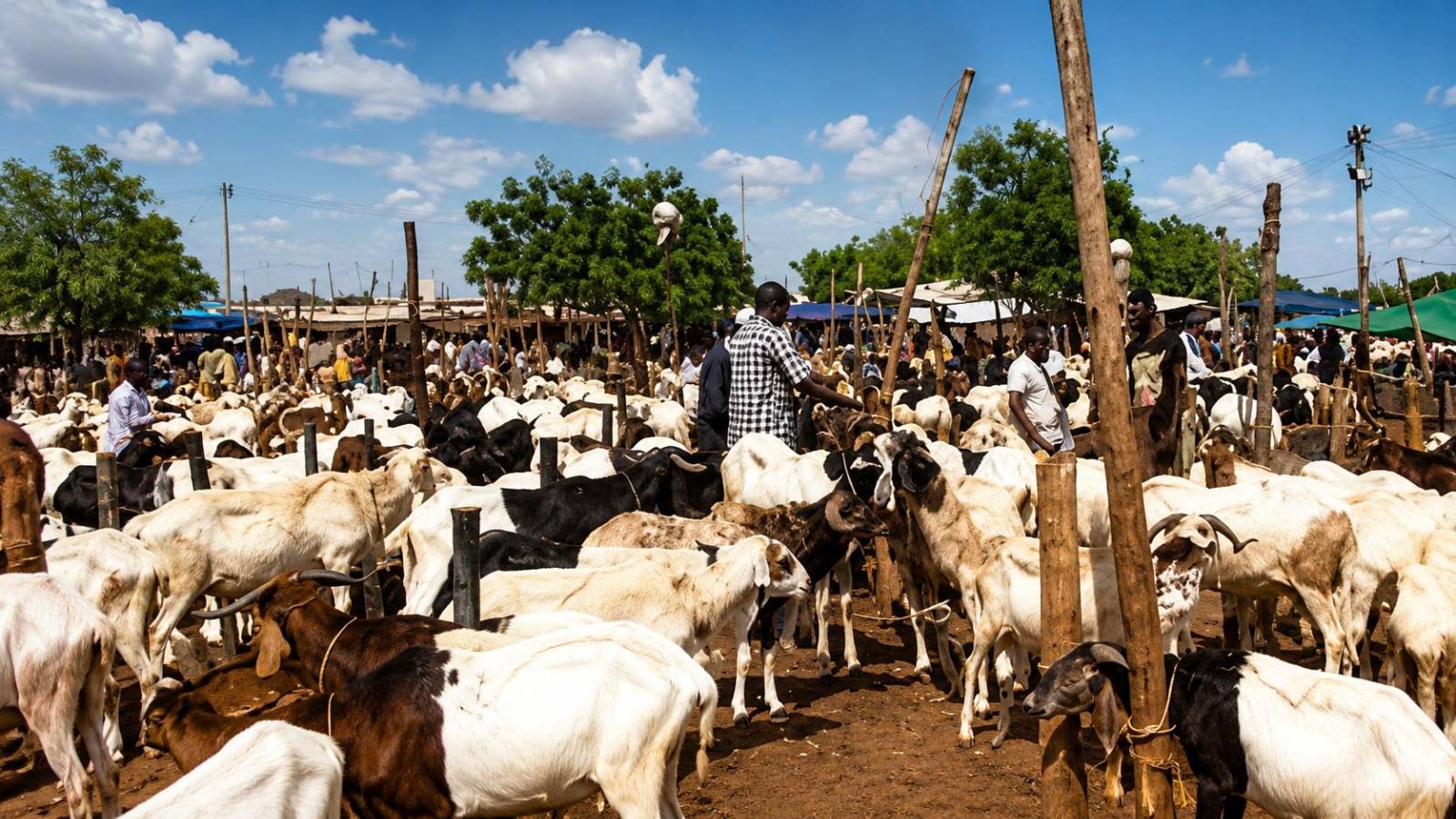
The government’s decision primarily benefits city dwellers, particularly families in Ouagadougou, where rising inflation has made essential goods more expensive. By restricting livestock exports, authorities aim to flood the domestic market with cheaper animals, ensuring lower prices for consumers. However, this strategy comes at a steep cost for rural communities, especially cattle farmers who rely on cross-border trade to sustain their livelihoods.
These producers are already grappling with severe challenges: recurring insecurity, rampant cattle theft, and dwindling grazing lands due to ongoing security crises. By cutting off their access to lucrative export markets in Côte d’Ivoire and Bénin, the state effectively deepens the economic strain on an already vulnerable rural population. In essence, the government is subsidizing urban celebrations by draining resources from the countryside.
The illusion of local consumption: can Burkina Faso absorb the surplus?
The rationale behind the export ban hinges on the assumption that Burkina Faso can absorb the entire livestock surplus domestically. Yet, this logic has critical flaws. The Tabaski festival is a time-limited event, and once the celebrations conclude, the country will be left with an oversupply of animals that must be sold or sheltered—both costly propositions.
Cattle require daily feeding, shelter, and veterinary care, all of which strain household budgets. If farmers cannot find buyers within Burkina Faso or are forced to sell at a loss, the livestock sector could face financial collapse in the coming months. While the state’s plan to develop modern abattoirs and boost local meat processing is a forward-thinking strategy, current infrastructure remains ill-equipped to handle such a sudden influx of livestock.
The geopolitical fallout: straining regional economic ties
This export restriction underscores Burkina Faso’s willingness to leverage its livestock resources as a political bargaining chip, prioritizing short-term domestic interests over regional economic solidarity. By severing vital trade flows to Côte d’Ivoire and Bénin, Ouagadougou risks alienating neighboring nations that have long depended on its livestock supply.
In response, these countries are already exploring alternative suppliers, with Côte d’Ivoire turning to Mauritania to fill the gap. Over time, Burkina Faso may struggle to reclaim its position in these traditional markets, as competitors capitalize on the void. This decision also highlights the fragility of West African economic integration, where immediate self-sufficiency goals are overshadowing long-standing trade agreements. From a macroeconomic perspective, this policy is a high-stakes gamble that threatens the viability of the livestock sector, undermines farmer livelihoods, and risks isolating Burkina Faso from its natural economic partners.