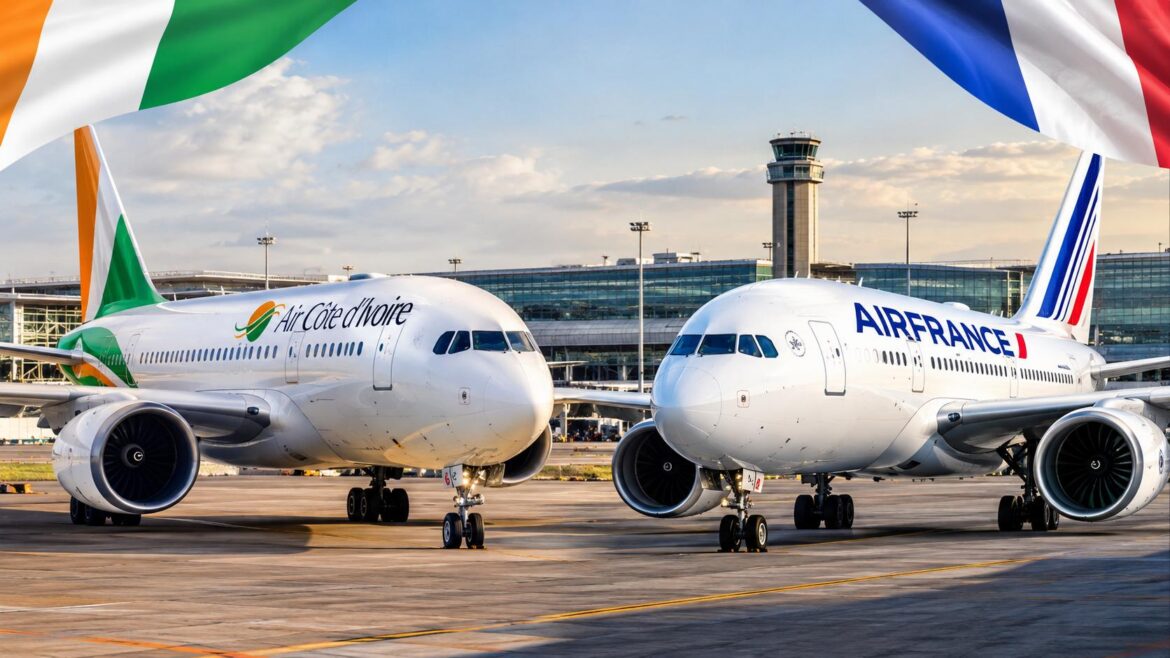
The partnership between Air Côte d’Ivoire and Air France is entering a new phase, with a strategic codeshare agreement set to launch on October 25, 2026. But what’s driving this move, and how will it shape the travel landscape between Abidjan and Paris? Let’s take a closer look at the decision-making behind this collaboration and its broader implications.
How the codeshare alliance transforms Paris-Abidjan travel
The upcoming codeshare agreement isn’t just another industry trend—it’s a carefully calibrated step to enhance connectivity between the two capitals. From October 2026, passengers booking flights on the Paris–Abidjan route will unknowingly step into a seamless travel ecosystem where both airlines sell seats under their own branding, regardless of which carrier actually operates the flight.
The core of the deal revolves around mutual code placement:
- Air France will list its flight numbers on Air Côte d’Ivoire’s Abidjan–Paris departures, broadening its market reach in West Africa.
- Air Côte d’Ivoire will do the same on Air France’s flights between the two cities, giving it a stronger foothold in European airspace.
This means travelers booking through either airline’s website or app will see a wider selection of departure times, frequencies, and pricing options—all under one familiar brand experience. The physical flight, however, remains in the hands of the operating carrier. No changes are required in how passengers book or travel; only the booking interface and loyalty accounting shift.
The unspoken logistics: why this alliance makes financial and operational sense
While the passenger-facing benefits are clear, the root of this codeshare lies in deeper operational and financial motivations. For Air Côte d’Ivoire, a fledgling carrier seeking global visibility, a partnership with Air France offers instant credibility and access to a vast international booking network. By aligning its codes on Air France’s high-traffic routes, the Ivorian airline gains exposure to millions of potential travelers who may not have previously considered Abidjan as a destination.
On the flip side, Air France strengthens its West African presence without deploying its own aircraft on the route—a cost-effective way to serve a growing market. This is especially relevant in a post-pandemic recovery phase where airlines remain cautious about over-expanding capacity.
A loyalty bridge: sMiles and Flying Blue to merge by year-end
The collaboration extends beyond flight sales. Both carriers are preparing to integrate their frequent flyer programs by the end of 2026, creating a seamless mileage and redemption system for travelers.
Here’s what it means for members:
- sMiles members (Air Côte d’Ivoire) will earn miles on Air France-operated Paris–Abidjan flights—miles that can later be redeemed across Air France’s entire global network.
- Flying Blue members (Air France) can accumulate and use miles on Air Côte d’Ivoire flights between Abidjan and Paris, integrating them into the larger European loyalty ecosystem.
Such a merger of programs is rare in the competitive airline industry, signaling a level of trust and integration rarely seen between carriers of different sizes. It also reflects a conscious effort to lock in customer loyalty at a time when traveler expectations are shifting toward seamless, connected experiences.
Strategic vision: Abidjan as a gateway to Africa and beyond
Air Côte d’Ivoire isn’t stopping at Paris. The codeshare is just the beginning. By mid-2027, the airline plans to expand this model to other international routes within Air France’s global network. The goal is clear: to position Abidjan as a central hub linking West Africa with Europe, the Americas, and Asia.
By leveraging Air France’s distribution channels and brand recognition, Air Côte d’Ivoire aims to position itself not just as a regional player, but as a key transit point for international travelers. This aligns with Côte d’Ivoire’s ongoing economic and infrastructural growth, positioning the country as a rising star in West African aviation.
The strategy mirrors historical airline alliances where smaller carriers hitch their growth to larger, established partners. In this case, Air Côte d’Ivoire is not only securing access to Air France’s vast customer base but also importing best practices in safety, operations, and customer service.
What travelers should expect: flexibility, choice, and new rewards
From mid-2026 onward, passengers flying between Paris and Abidjan will notice a shift in their booking experience. On either airline’s platform, they’ll encounter:
- More flight options with varied departure times.
- Streamlined booking under one trusted airline interface.
- Easier access to loyalty benefits across both programs.
- No change in flight duration, service standards, or safety protocols.
Crucially, the operating carrier remains responsible for the journey itself—whether it’s an Air France jet or an Air Côte d’Ivoire aircraft. The only visible difference for the traveler is the flight number and loyalty points credited. This transparency ensures no surprises at the airport or in service quality.
The real transformation, however, lies beneath the surface: a rare moment of industry collaboration that prioritizes passenger convenience and airline sustainability over competitive rivalry.
The big picture: is this a model for Africa-Europe air travel?
Beyond the Paris-Abidjan route, this codeshare could become a blueprint for other African carriers seeking to gain traction in global aviation. It demonstrates how strategic partnerships—rather than direct competition—can bridge continents, boost tourism, and strengthen economic ties.
The success of this alliance may encourage more francophone and European airlines to explore similar models across Africa, particularly on high-demand routes where demand outpaces direct service capacity. If proven viable, it could redefine how smaller carriers integrate into the global network without heavy capital investment.
For now, all eyes are on October 25, 2026—the day the codeshare officially takes flight. If it delivers on its promise, it won’t just be a new route that opens—it could be the start of a smarter, more connected aviation ecosystem between Africa and Europe.