The government of Burkina Faso, led by Captain Ibrahim Traoré, has long positioned itself as a champion of economic independence, distancing itself from traditional financial partners and emphasizing self-reliance. Yet, recent developments reveal a more complex financial reality. Behind the rhetoric of sovereignty lies a persistent reliance on external funding, particularly from the International Monetary Fund (IMF).
IMF funding on the horizon: a case of policy vs. practice
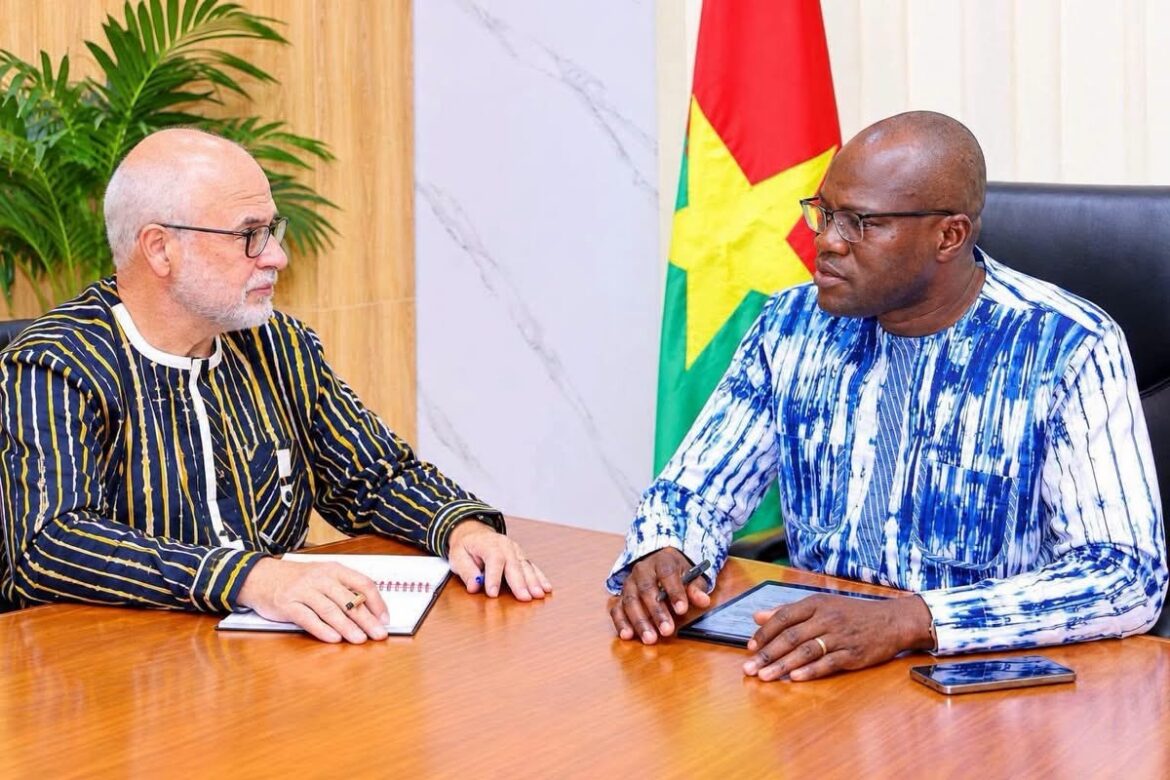
On November 4, 2026, the IMF announced a preliminary agreement with Burkinabè authorities, potentially unlocking $87.67 million (49.6 billion FCFA) in new financing. This funding, tied to existing programs such as the Extended Credit Facility (ECF) and the Resilience and Sustainability Facility (RSF), is contingent on the IMF executive board’s approval, expected in mid-January 2027. While $65.38 million is allocated under the ECF and $22.29 million under the RSF, these funds are not yet disbursed but represent a structured pathway to financial support.
The paradox of proclaimed independence and persistent financial dependence
Burkina Faso’s pursuit of IMF funding is not inherently problematic. Financial crises, economic shocks, and development needs often necessitate external assistance. However, the disconnect between official discourse and financial reality raises critical questions. If the country can fund its development through domestic resources, why does it continue to seek international financing? Conversely, if IMF support remains essential, why frame financial sovereignty as a fait accompli?
The contradiction is not just rhetorical; it reflects deeper structural challenges. The regime’s insistence on self-sufficiency clashes with the practical necessity of maintaining external financial lifelines, creating a perception fair or not that policies are driven more by political messaging than economic pragmatism.
Gold as a catalyst: potential and limitations of local resources
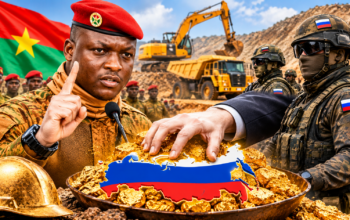
Burkina Faso’s gold sector has expanded significantly, with high global gold prices and mining reforms boosting state revenue. The IMF itself acknowledges these factors as key drivers of economic activity and fiscal performance. Yet, the question remains: how effectively are these revenues converted into tangible benefits for citizens?
Revenue generation from mining is only the first step. The real test lies in its allocation how much reaches public coffers, how it is distributed, and whether it translates into improved infrastructure, education, or healthcare. Without transparent reporting, gold revenues risk remaining an abstract concept rather than a concrete tool for development.
IMF recommendations: transparency as a non-negotiable pillar
In its June 2026 assessment, the IMF underscored critical priorities for Burkina Faso: boosting domestic revenue mobilization, improving public financial management, enhancing governance, and safeguarding social spending for vulnerable populations. The institution also emphasized prudent debt management and greater transparency in the use of public resources.
These recommendations point to a broader issue: the discrepancy between political narratives and institutional expectations. While the government champions financial autonomy, citizens deserve clarity on how public funds are deployed. The IMF’s conditions are not mere bureaucratic hurdles; they represent a framework designed to ensure fiscal responsibility and accountability.
Beyond the rhetoric: what citizens truly need
For many Burkinabè, the debate over IMF funding is overshadowed by more immediate concerns: access to healthcare, stable employment, and reliable public services. The government’s insistence on financial sovereignty must be matched by concrete actions that improve lives. If gold and other resources are mobilized in line with IMF-led reforms, then sovereignty becomes more than a slogan it becomes a measurable reality.
However, sovereignty cannot be achieved by rejecting external partnerships and then quietly relying on them when circumstances demand. True financial independence requires a commitment to transparency, a clear strategy for resource utilization, and a willingness to align policies with citizens’ needs rather than political expediency.
By Pierre Tchuente — Journalist