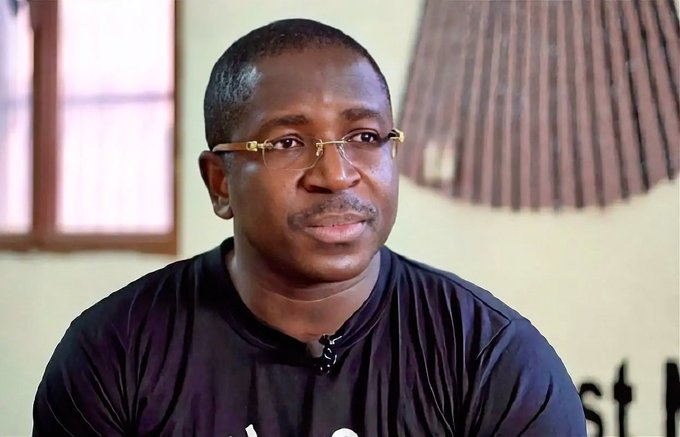
The case of Guy Hervé Kam continues to raise numerous questions in Burkina Faso. The lawyer, co-founder of the Balai Citoyen civic movement and president of the Sens political movement, was hospitalised in early June after experiencing health problems, while he has been in detention since January 2024 without yet being brought to trial.
A well-known figure in Burkinabè civil society, Guy Hervé Kam was arrested in a context marked by the tightening of the political and security climate in the country. More than a year and a half after his arrest, no trial date has been made public, fueling concerns among his relatives, his lawyers, and several human rights organisations.
The prolonged detention of a political figure without trial raises fundamental questions about respect for judicial guarantees. The Burkinabè Constitution, as well as the country’s international commitments, notably the African Charter on Human and Peoples’ Rights and the International Covenant on Civil and Political Rights, nevertheless enshrine the right of every person to be tried within a reasonable time and to benefit from a fair trial.
Concerns have intensified with the announcement of his hospitalisation. His supporters fear that prolonged detention, combined with the deterioration of his health, will further aggravate his situation. Several observers recall that access to medical care constitutes a fundamental right for any person deprived of liberty.
Since the transitional authorities came to power, several critical voices, political leaders, journalists, and civil society actors have been subjected to arrests or restrictive measures. Organisations such as Amnesty International and Human Rights Watch have already alerted to the shrinking of civic space in Burkina Faso and the violations of public freedoms observed in recent months.
For many human rights defenders, the Guy Hervé Kam affair now extends beyond his personal case. It raises the broader question of judicial independence, respect for the rule of law, and the place granted to political pluralism in a country facing serious security challenges.
While awaiting a possible court appearance, the hospitalisation of the opposition figure brings renewed attention to the need to guarantee conditions consistent with fundamental human rights principles for every detained person, regardless of their political opinions.
You may also like
South Africa’s mass shooting crisis: can Johannesburg and Cape Town ever feel safe again?
Can Ibrahim Traoré’s 300 armored vehicles claim survive scrutiny? Inside Faso Armored’s made-in-Burkina Faso gamble
Can Washington force third-country deportations? Ivory Coast’s refusal raises the stakes
Will Benin’s AEO exporters finally crack the Chinese market?
Northern Niger’s unanswered question: can Tiani’s government deliver water and power where it matters most?