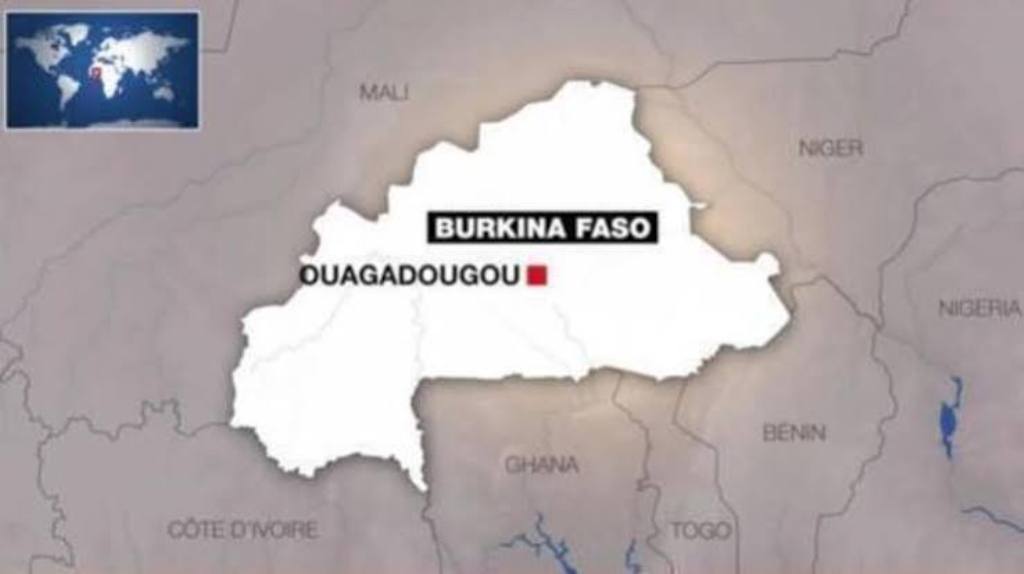
New military drills for journalists in Burkina Faso spark debate
The government of Burkina Faso has rolled out an annual military training program for journalists, framed as a patriotic initiative to strengthen national resilience against terrorist threats. Over 40 journalists from both public and private media outlets recently completed the week-long session at the Pabré Police Academy, located 20 kilometers from Ouagadougou. The move follows a similar requirement imposed last year on high school graduates seeking their baccalaureate diploma.
During the training, participants were addressed by Minister of Communication and government spokesperson Pingdwendé Gilbert Ouédraogo, who appeared in military fatigues alongside journalists holding rifles. In a video broadcast by the national television, he challenged the group: “Will you be patriotic and professional journalists?” To which the journalists responded in unison, standing at attention: “Affirmative!”
Lassina Traoré, director general of the Police Academy, emphasized that the program aims to familiarize journalists with the operational realities and values guiding the country’s defense and security forces. Yet, the initiative has drawn sharp criticism from press freedom advocates, who warn against conflating journalistic duty with military service.
Press freedom under pressure in Burkina Faso
The timing of this announcement raises concerns, particularly as journalists in Burkina Faso are increasingly subjected to coercion. In recent years, several reporters have been forcibly conscripted into combat roles, while others face systemic pressures from authorities. The case of Serge Oulon, a journalist still detained two years after his abduction in Ouagadougou, serves as a stark reminder of the shrinking space for independent reporting in the country.
Critics argue that the military-style training risks transforming journalists into propaganda tools for the state’s security narrative. “Journalists are not soldiers and should not be turned into mouthpieces for war efforts, dressed in uniforms and armed,” stated a spokesperson from Reporters Without Borders.
Balancing patriotism and press integrity
While the government portrays the program as a necessary step to foster national unity amid escalating jihadist violence, the move has intensified debates over the boundaries between patriotism and press freedom. With Burkina Faso’s security situation deteriorating, the question remains: can journalists fulfill their role as watchdogs while navigating the expectations of a regime prioritizing military solutions?
You may also like
Burkina Faso: what does Ibrahim Traoré’s four-year record truly mean for the displaced and the silenced?
Cameroon’s Vision 4 suspension: does silencing a broadcaster protect the Martinez Zogo trial or undermine press freedom?
Thali oil permit: can Prime Global Energies’ $15 million rescue finally unlock Cameroon’s stalled Njom-3 well?
Can West Africa’s peace hold without the Entente Council and UNOWAS pact?
Can Lomé’s quiet diplomacy finally deliver peace to eastern DRC?