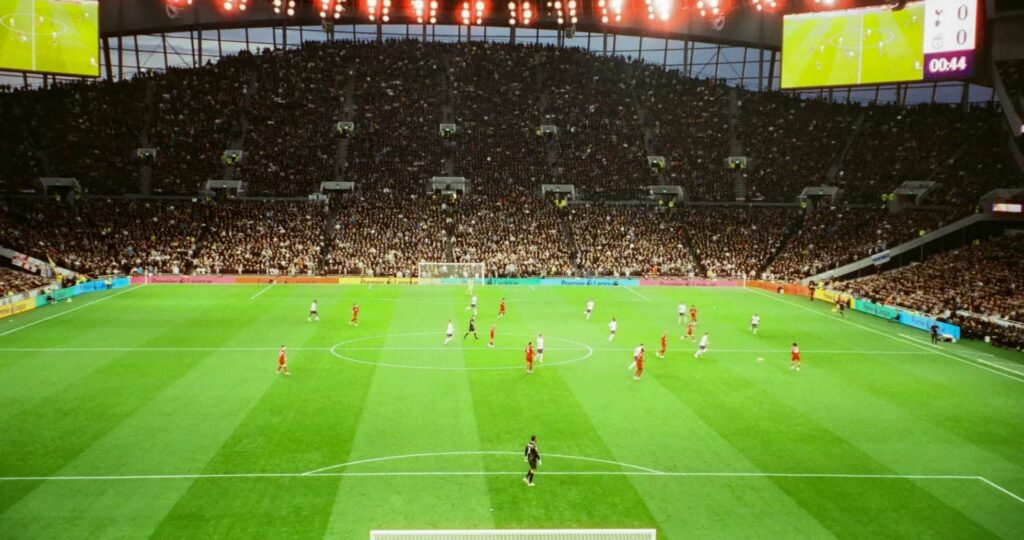
Bodo/Glimt vs Union St. Gilloise: high-stakes champions league return match set for dramatic finish
The Aspmyra Stadion is set to host a blockbuster clash as Bodo/Glimt welcomes Union St. Gilloise for the second leg of their nail-biting UEFA Champions League qualifier. With the first leg ending 3-3, this return match promises fireworks and high drama, potentially shaping the fate of both clubs in Europe’s premier competition.
🔥🏆 Exclusive promo alert for our readers: Put your sports knowledge to the test! Use the promo code PINBET2026 at Pin-Up when placing your bet. It’s simple: place 1 bet = get 1 Free Bet (up to $10). Don’t miss the chance to boost your bankroll ahead of the big game! 🎁 👉 Claim your Free Bet now ➔
Head-to-head tactical breakdown
The two sides have crossed paths twice recently in European competition. On October 4, 2024, during the UEFA Europa League League Stage at the King Baudouin Stadium in Brussels, the match ended 0-0 after a cautious and tightly contested affair. Fast forward to August 4, 2026, for the first leg of this Champions League qualifier in Oostende’s AlbertPark, where the teams produced another thrilling draw, 3-3, with the score already level at 2-2 at halftime. Across these two official encounters, the record stands at two draws—one goalless and one action-packed—highlighting a balanced rivalry where neither side has yet gained the upper hand.
Season outlook and form analysis
- Current campaign performance: In the 2026 UEFA Champions League, Bodo/Glimt has played one away game, drawing 3-3. Union St. Gilloise, playing at home, also finished their single match with a 3-3 draw. Both teams remain unbeaten but without a single victory, leaving everything to be decided in this second leg on Norwegian soil.
- Key metrics: In the current Champions League phase, Bodo/Glimt averages 3.0 goals scored and 3.0 conceded per match, with no clean sheets, one penalty won and converted, and a 4-3-3 formation. Union St. Gilloise mirrors these numbers (3.0 goals for and against per match, no clean sheets), lining up in a 3-4-1-2 system. Union has seen more yellow cards, with bookings spread across different phases, potentially impacting their ability to control intensity in the return leg.
- Form trajectory: Both clubs are rated “D” in this Champions League campaign, reflecting a neutral start: one match, one draw, no wins or losses. Momentum isn’t positive or negative, but the ability to tighten up defensively compared to the 3-3 first leg will be crucial.
Tactical efficiency on display
Champions League data reveals two attacking-minded but defensively vulnerable teams: 3 goals scored and conceded in a single game, with no defensive mastery. Bodo/Glimt’s 4-3-3 setup shows creativity and penalty conversion but exposes their backline during quick transitions. Union St. Gilloise’s 3-4-1-2 formation also generates chances, but their three-at-the-back system struggled when pace increased, as evidenced by the three goals conceded at home.
In this setup, both teams have similar attack indices, showing comparable offensive power, while defensive indices remain average, lacking control in key moments. Discipline could be the deciding factor: Union’s yellow cards were spread across nearly the entire match, suggesting sometimes uncontrolled aggression, whereas Bodo/Glimt’s bookings were concentrated in one phase, hinting at steadier composure. Over 90 minutes (or more), minimizing unnecessary fouls and better defending the box may prove more decisive than sheer attacking quality.
Season impact and stakes
This second leg carries immense weight. A win would propel either Bodo/Glimt or Union St. Gilloise into the next round of the UEFA Champions League, with significant sporting and financial implications. For Bodo/Glimt, a home victory would cement their status as a club on the rise in Europe, boosting their appeal to players and securing domestic dominance. For Union St. Gilloise, advancing after a 3-3 first leg would confirm their continental progress and establish them as a regular fixture in top European nights.
Conversely, an early exit at this stage would force the losing side to settle for a less prestigious European path or focus solely on domestic competitions, with a notable loss in potential earnings. In such a tight duel, every detail—card management, set-piece efficiency, bench depth—could redefine the season’s trajectory: the winner gains a real chance to make 2026 memorable on the European stage, while the loser must reset ambitions and refocus on league and cup competitions.
You may also like
Will the AES ever launch its own currency? The question Traoré keeps leaving unanswered
Can Ibrahim Traoré’s 300 armored vehicles claim survive scrutiny? Inside Faso Armored’s made-in-Burkina Faso gamble
Can Washington force third-country deportations? Ivory Coast’s refusal raises the stakes
Will Benin’s AEO exporters finally crack the Chinese market?
Northern Niger’s unanswered question: can Tiani’s government deliver water and power where it matters most?