
A joint expert committee has sparked cautious optimism over a potential thaw in the three-year standoff between Bénin and Niger. After months of stalled negotiations, both nations have outlined a framework for reopening their shared border, though lingering political conditions may still delay final approval.
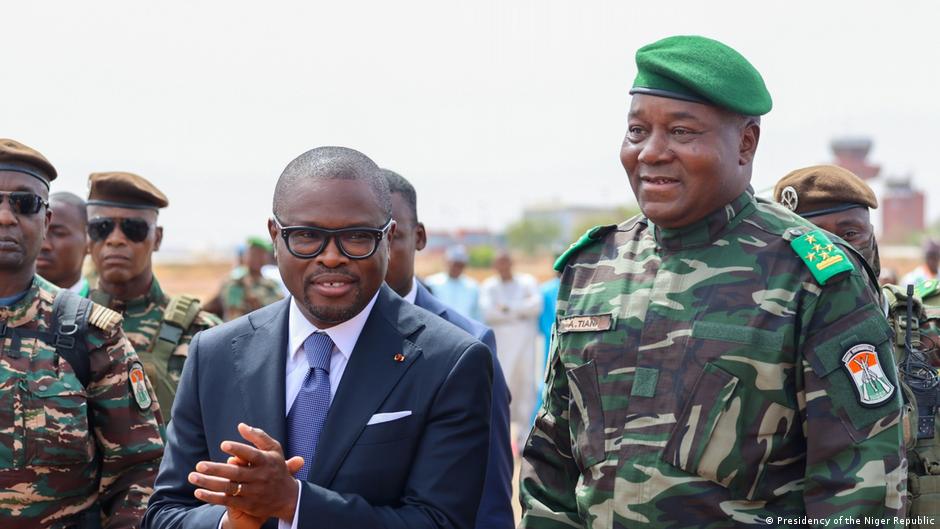
The breakthrough follows high-level diplomatic engagement, including a landmark meeting in Niamey between Romuald Wadagni, Bénin‘s newly elected president, and General Abdourahamane Tiani, Niger’s military leader. The committee’s report highlights progress on security protocols, transit agreements, and economic considerations—key pillars for restoring cross-border trade.
Three non-negotiable demands from Niamey
Niger’s leadership has set clear red lines before endorsing any border reopening. First, it demands a formal mutual defense pact with Bénin, explicitly prohibiting either nation from harboring forces hostile to the other. While analysts like Régis Hounkpè, executive director of InterGlobe Conseils, call this a “basic necessity,” the clause carries symbolic weight in a climate of deep mistrust.
“The principle is straightforward,” explains Hounkpè. Both countries must commit to non-aggression. The challenge lies in ensuring these words translate into action—especially given the recent military transitions in both nations.”
The second condition mandates real-time intelligence sharing through a joint task force focused on counterterrorism and cross-border trafficking. Hounkpè praises this move as “mutually beneficial,” emphasizing its role in dismantling illicit networks that thrive in unmonitored border zones.
The final demand targets military transparency. Niger seeks full disclosure of Bénin‘s foreign military partnerships near their shared frontier, particularly concerns over potential French or Western military presence. Hounkpè frames this as a sovereignty issue: “Bénin is entitled to alliances, but these must not undermine Niger‘s security. Pragmatism dictates that no nation benefits from destabilizing its neighbors.”
Economic fallout of a closed border
The closure has crippled critical trade arteries. As a landlocked state, Niger relies on Bénin‘s port of Cotonou for 70% of its imports, including fuel, construction materials, and food staples. Alternative routes through Nigeria and Togo add 30–50% to logistics costs, straining already fragile supply chains.
The economic toll extends beyond Niger. Bénin‘s port congestion has slashed transit revenues by up to 60% in some sectors, while diverted trade flows risk eroding its status as a regional hub. The suspended Niger–Bénin oil pipeline—designed to export 90,000 barrels daily—has compounded losses, with blocked shipments costing tens of millions per month.
Human cost: markets, mobility, and survival
The border shutdown has devastated local economies. At Malanville and Gaya checkpoints, traders report customer losses of nearly 50%, with many businesses shuttered permanently. Essential goods like rice and fuel have become scarce, driving prices upward and pushing vulnerable communities into deeper poverty.
For families separated by the closed frontier, mobility has become perilous. River crossings replace safer land routes, while smuggling and extortion networks exploit the chaos. Hounkpè warns of a vicious cycle: “When trade grinds to a halt, insecurity thrives. The people pay the highest price.”
Path forward: economic survival over ideology
Hounkpè argues that Bénin and Niger share an inescapable reality: “Geography demands cooperation. Leaders may engage in geopolitics, but economics dictates survival.” The committee’s progress suggests a phased reopening could begin with high-priority goods, subject to enhanced inspections.
If successful, the agreement might set a precedent for the Economic Community of West African States (ECOWAS) and the Alliance of Sahel States (AES), mirroring recent détente between Mali and Côte d’Ivoire. For now, the focus remains on turning technical agreements into tangible relief for businesses and communities along the border.
You may also like
Côte d’Ivoire : le Burida redistribue 795,4 millions FCFA à 5 435 ayants droit
Paris FC vs Lyon: kick-off time and TV channel for the Ligue 1 matchday 4 clash
Niger: Tiani’s purge and the hidden fractures within the junta
Everest Finance dévoile Sama Naffa, une solution d’épargne inclusive au Sénégal
Niger military reshuffle after foiled mutiny