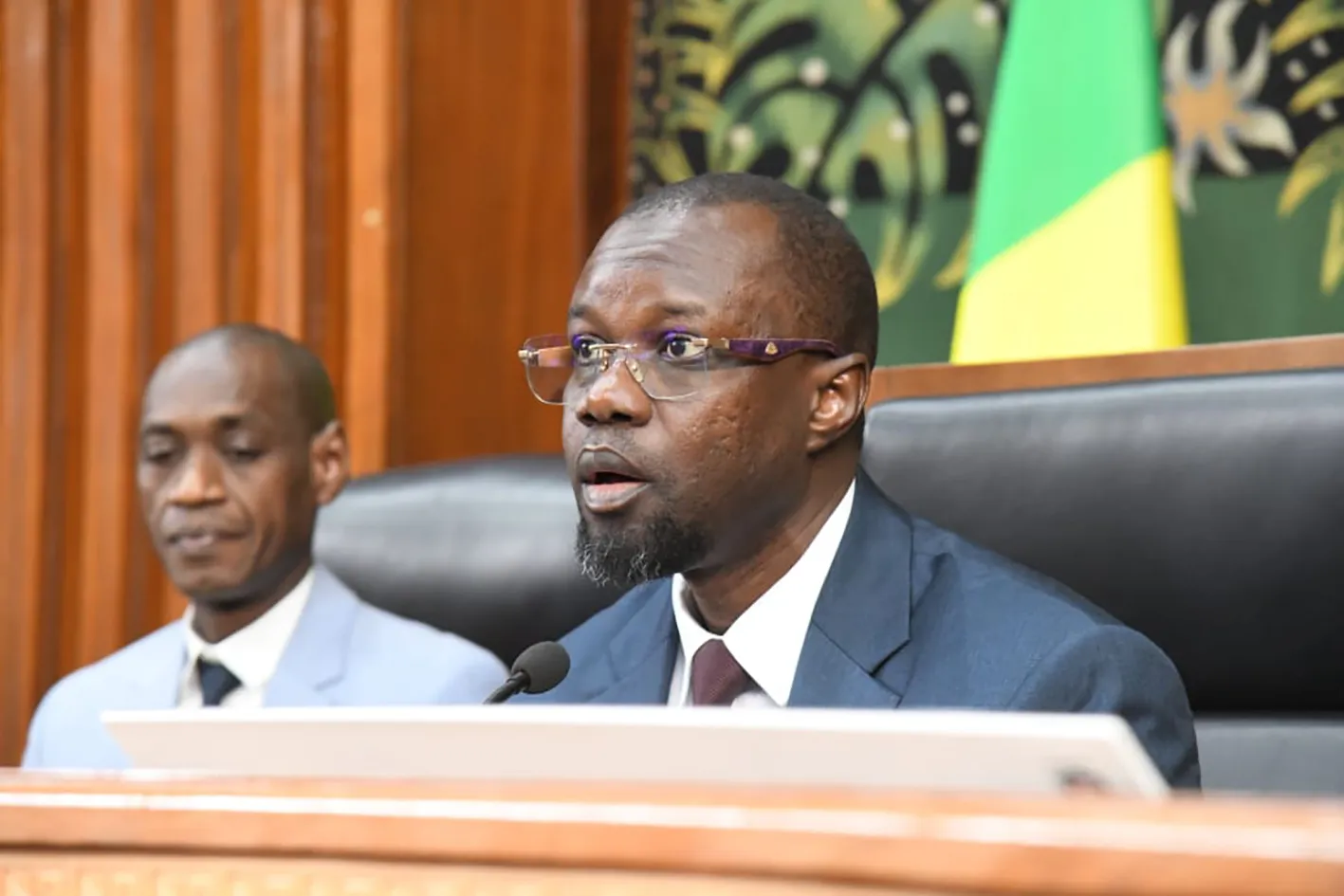
In a decisive clarification during a parliamentary session focused on labor and social security codes, Ousmane Sonko, President of Senegal’s National Assembly, firmly denied allegations of issuing an ultimatum to the President of the Republic. Addressing lawmakers and the public alike, he emphasized the baseless nature of claims suggesting institutional tension between the legislative and executive branches.
Reaffirming constitutional authority
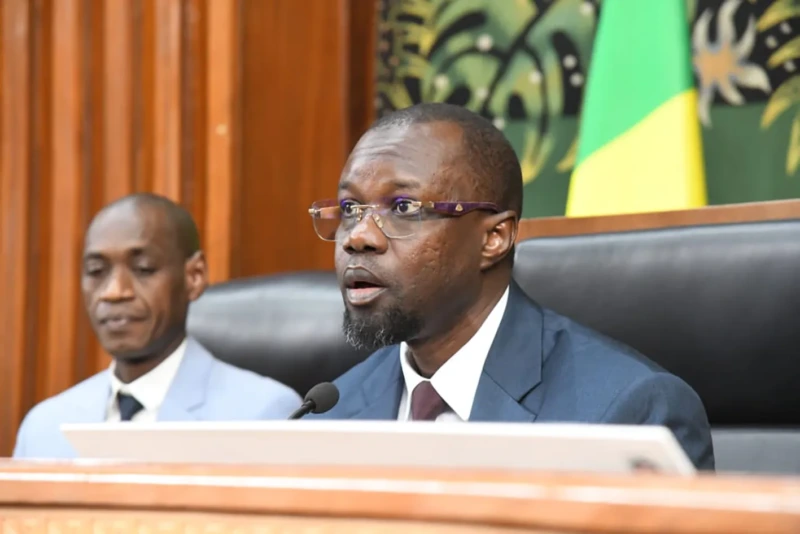
With unwavering conviction, Sonko stated, “That is false; we did not issue an ultimatum to the president.” His remarks came as a direct response to political interpretations that had fueled speculation about a potential standoff between state institutions. The National Assembly President underscored that the ongoing constitutional revision process operates strictly within the constitutional framework, without any attempt to overstep executive authority.
Highlighting the legal foundations of the initiative, Sonko explained that the constitutional amendment falls under the derived constituent power, as outlined in the Constitution and validated by the Constitutional Council’s jurisprudence. He cited the January 18, 2006 decision of the Constitutional Council as a key reference, affirming that the Assembly’s approach adheres to the requirement of a three-fifths majority.
Institutional stability reassured
Sonko dismissed claims of a crisis at the highest levels of government, describing the current situation as a normal functioning of state institutions through a “dialogue of powers.” He stressed that each branch of government exercises its powers without encroaching on the others, all under the oversight of the Constitutional Council. The Assembly President firmly rejected the notion of institutional confrontation, asserting that the constitutional reform process is neither an act of usurpation nor a form of pressure on the executive branch.
“Those hoping for turmoil at the heart of the state will find none here,” Sonko declared, closing his address. He reiterated that the constitutional revision procedure will proceed according to the established legal provisions, regardless of whether the executive branch formally expresses its opinion on the matter. The focus, he emphasized, remains on upholding constitutional mechanisms in a stable and legally sound environment.