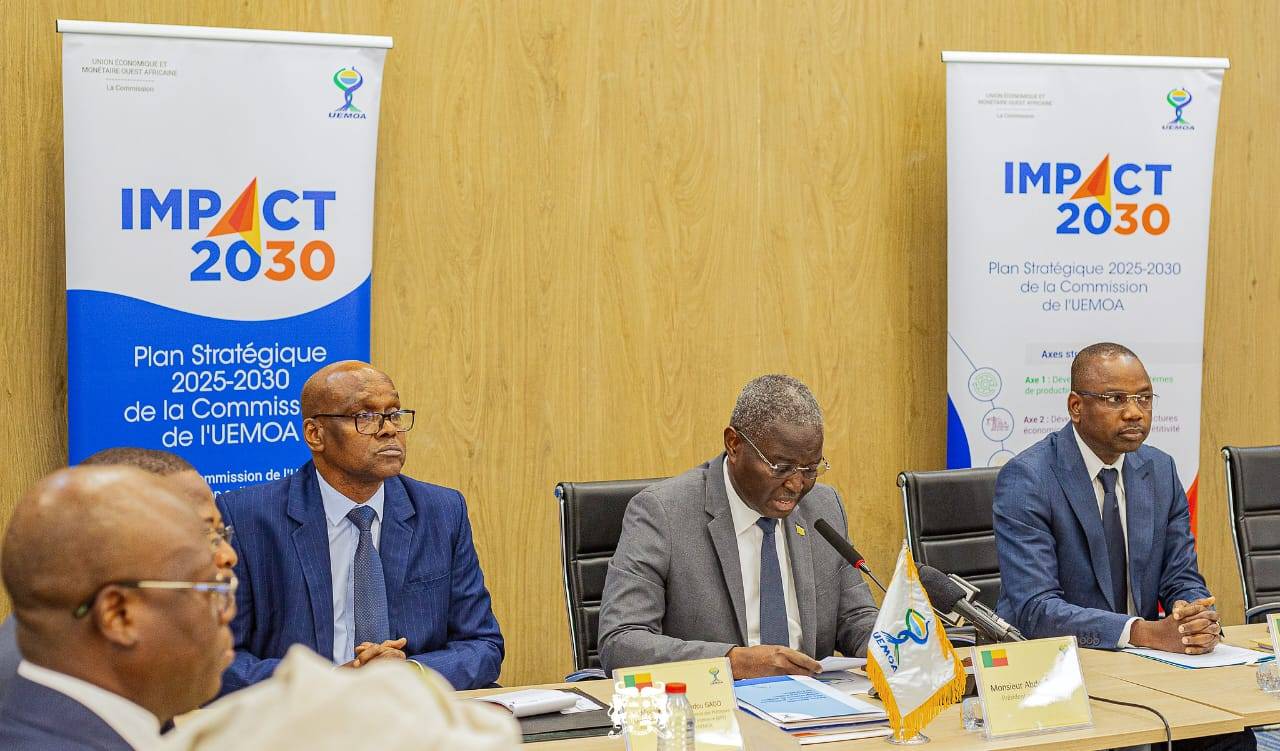
The Ministry of Economy and Finance in Cotonou recently hosted the 2026 edition of the Annual Political Review of Community Reforms, Policies, Programs, and Projects under the West African Economic and Monetary Union (UEMOA). Following a rigorous assessment of 145 regulatory texts, Benin achieved a 73% implementation rate—surpassing the 70% satisfactory threshold. This milestone underscores the country’s unwavering commitment to advancing regional economic integration.
Cotonou’s role in strengthening UEMOA integration
The Annual Political Review serves as a critical platform for evaluating how member states align their national laws with UEMOA’s community legislation. This year’s session in Benin brought together officials from the UEMOA Commission and key Béninois ministries to scrutinize the transposition and execution of adopted reforms. The review aimed to pinpoint administrative or technical obstacles that could hinder the bloc’s collective progress.
Three pillars of the 2026 assessment
The evaluation framework for 2026 encompassed 145 community texts, with a focus on three foundational areas for West African development:
- Economic governance and convergence: This includes harmonizing budgetary frameworks, strengthening multilateral surveillance, and enhancing transparency in public financial management.
- Common market dynamics: Priorities include facilitating the free movement of people, goods, services, and capital, alongside simplifying business establishment procedures.
- Sectoral policy alignment: Key initiatives span transportation, energy, agriculture, environmental sustainability, and digital transformation, ensuring national strategies align with UEMOA’s vision.
Bénin’s 73% milestone: progress and potential
With a 73% overall compliance rate, Benin not only met but exceeded the 70% benchmark—a critical threshold for recognition in UEMOA’s reform tracking system. This achievement reflects years of consistent policy adjustments and signals a strong foundation for further advancement. However, the remaining 27% highlights areas requiring targeted interventions to accelerate integration.
Leadership perspectives on the review’s outcomes
During post-results discussions, both UEMOA and Béninois officials emphasized the review’s role as a catalyst for strategic transformation. The President of the UEMOA Commission highlighted the importance of Benin’s proactive stance, urging continued momentum to address pending directives in future sessions.
The Béninois Minister of Economy and Finance, Aristide Medenou, praised the administrative teams for their disciplined approach, attributing the result to a robust system of tracking community texts and cross-departmental collaboration. He noted that the review process helps identify regulatory bottlenecks, fosters knowledge-sharing, and paves the way for concrete solutions to expedite pending reforms.
Challenges ahead and a roadmap for 2027
While the 73% score is commendable, the 27% gap represents a clear priority for the coming months. Complex sectoral policies demand enhanced inter-ministerial coordination to streamline transposition efforts. The government has reaffirmed its commitment to sustaining reform momentum, with plans to present measurable progress in next year’s review.
UEMOA’s integration future: stability meets opportunity
By surpassing the 70% threshold in 2026, Benin has demonstrated how disciplined governance and institutional follow-through can turn regional commitments into tangible legal and economic realities. As the UEMOA bloc navigates broader economic challenges, Cotonou’s adherence to fiscal discipline and regulatory alignment not only bolsters its international standing but also strengthens the bloc’s efforts to create a more seamless and competitive regional market.